

Record Long U.S. Dollar Speculative Positioning Raises Risks
Sunday, August 16, 2026
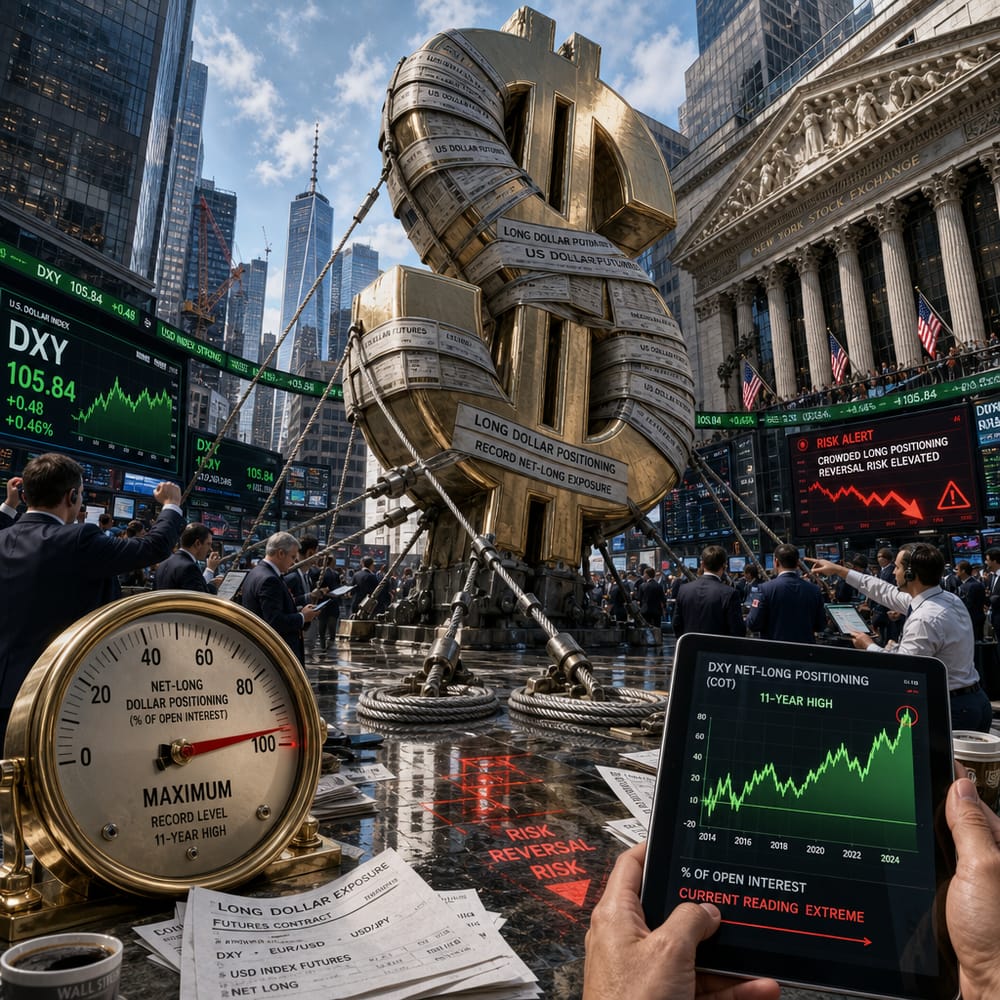
When a crowd swarms to one side of a seesaw, anyone with playground experience knows what comes next. Right now, the seesaw in question is the U.S. dollar, and traders have piled onto the “strong dollar” side like it’s the last lifeboat on the Titanic. But when everyone’s betting on one outcome, that’s when things get interesting—and risky.
The latest buzz in currency markets: U.S. dollar net-long speculative positions have hit a jaw-dropping 11-year high. Translation? Investors are betting heavily that the dollar will keep climbing. But before you wave that star-spangled banner, remember this: what goes up with too much gusto often comes crashing down with a spectacular thud.
WHAT COULD TIP THE BALANCE?
First, let’s consider the economic tea leaves. One factor that could turn the dollar's trajectory from a mighty eagle into a downed duck is the Federal Reserve's monetary policy. If the Fed decides to ease off the gas pedal on interest rate hikes, the dollar might not look so tantalizing. Lower rates could weaken its allure compared to other currencies, sending those traders scampering off in search of greener pastures.
Next, let’s talk economic data. If upcoming U.S. reports disappoint—think slower growth, weaker consumer spending, or a cooling labor market—traders might take that as a cue to reassess their dollar devotion. And remember, in the world of speculative trading, sentiment can pivot quicker than a TikTok trend.
Then there's global politics—never a dull player in currency markets. Any unexpected geopolitical shakeups could make traders rethink their strategies faster than you can say "Brexit." If other major economies, like the Eurozone, start looking more stable or attractive, we might see some of that dollar strength migrate across the pond.
HEDGING AGAINST THE DOLLAR DRAMA
So, what’s a savvy trader to do when the dollar’s perched on the precipice of potential peril? Hedging, my friends, is the name of the game. Consider it financial insurance when you’re navigating the stormy seas of currency markets.
One popular approach is to diversify. Spread your investments across different currencies or assets that tend to perform well when the dollar doesn't. Think of it as not putting all your eggs in one (very American) basket.
Options contracts are another tool in the trader's arsenal. These financial instruments allow you to lock in a price for the future, giving you the right—but not the obligation—to buy or sell the currency at a set rate. It’s like reserving a table at a trendy restaurant; if the dollar party goes south, you’ve still got your spot secured.
Lastly, there’s the classic move of shifting focus to commodities like gold. Generally, when the dollar weakens, gold shines brighter. Traders often flock to this golden haven as a way to hedge against currency fluctuations.
THE BOTTOM LINE
In the financial playground, the dollar seesaw is teetering under the weight of heavy speculative bets. While its current strength might feel invincible, history tells us that extremes rarely last. The factors that could trigger a seismic shift are lurking, and being prepared is key.
So, as you scroll on your phone and sip your morning coffee, keep an eye on this currency caper. Because when traders start to shuffle their feet on one side of the seesaw, the smart ones are already bracing for the ride on the other side.
This article is for informational purposes only and is not investment advice. Always do your own research or consult a licensed financial professional before making investment decisions.
© Copyright 2024. All Rights Reserved.
© Copyright 2024. All Rights Reserved.