

Record Highs Then Reversals—Volatility Returns as Bonds and Yields Swing
Saturday, October 10, 2026
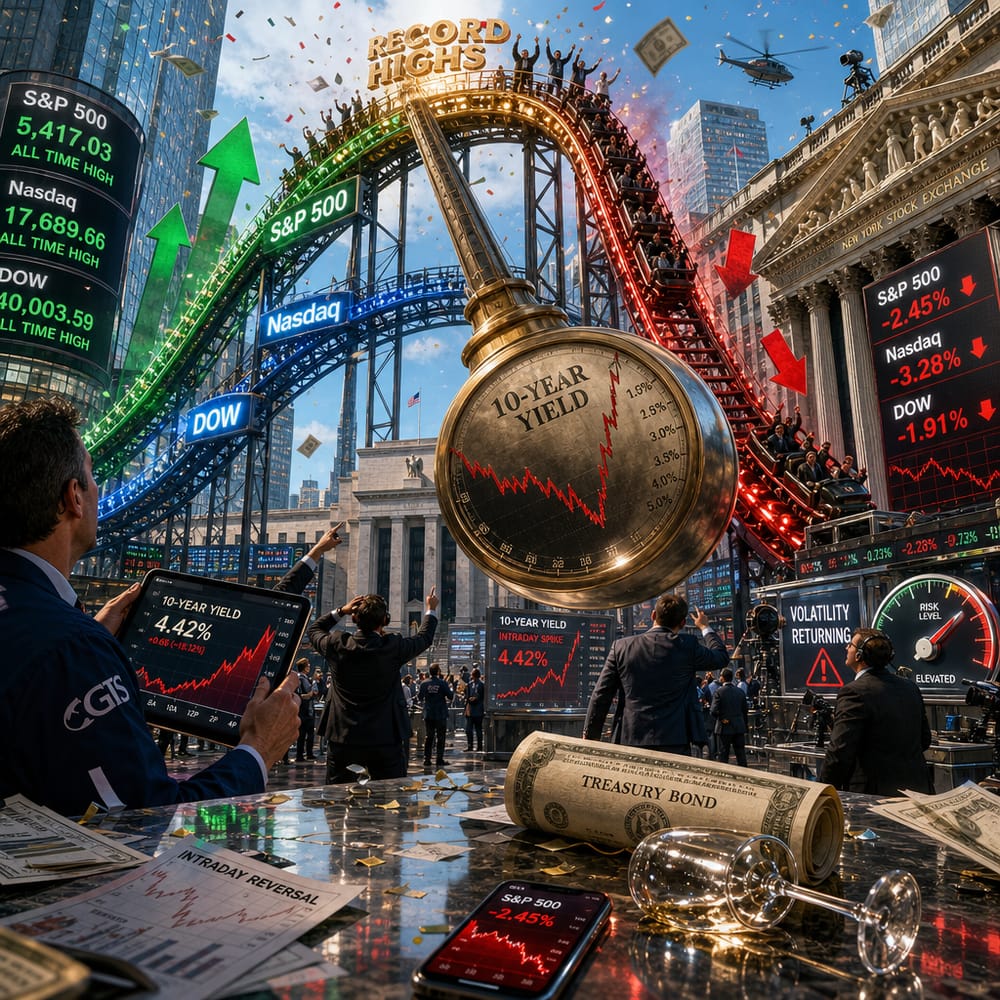
RECORD HIGHS THEN REVERSALS—VOLATILITY RETURNS AS BONDS AND YIELDS SWING
Wall Street was like that kid on a roller coaster, screaming with excitement one moment and clutching the lap bar in utter fear the next. Just when the S&P 500, Nasdaq, and Dow Jones were puffing their chests at or near record highs, along came the 10-year Treasury yield to throw a wet blanket over the party. Investors, buckle up—it’s going to get bumpy.
The big question: Why did a bond yield cause such a ruckus in the stock market? The answer lies in the intricate dance between interest rates and equities. The 10-year Treasury yield, a key barometer of economic sentiment, spiked—a sign that investors were demanding more interest for lending Uncle Sam their money. High yields often signal expectations of inflation or better economic growth. But they also mean higher borrowing costs for companies and consumers, which isn’t exactly music to investors' ears.
The result? A midweek sell-off that had traders scrambling like cats avoiding a bath. The S&P 500 saw its gains reverse as if someone hit the rewind button. The tech-heavy Nasdaq, which had been flying high, took a nose dive. Even the Dow, the lumbering giant that it is, couldn’t escape the gravitational pull of rising yields.
So, which sectors bore the brunt of this bond yield whiplash? Tech stocks were the drama queens of the week, feeling the heat more than others. Higher yields make the future profits of these companies look smaller when discounted back to present value. It's a bit like going to the movies and realizing your loyalty points mean less than you thought—suddenly, that popcorn seems overpriced.
Meanwhile, financial stocks, which tend to love higher rates, were like the only kids in class who understood the math lesson while the rest were scribbling in the margins. Banks and financial institutions generally do better when interest rates rise because they can charge more for loans than what they pay for deposits. It's a classic case of one man’s loss being another's gain.
Adding another layer of volatility was the age-old wild card: oil prices. Recent geopolitical tensions—cue the attack on a Saudi airport—sent oil prices swings as dramatic as a daytime soap opera. Higher oil prices generally fuel inflation fears, adding another reason for the bond yields to surge. Investors are left feeling like they’re watching a bad reality TV show unable to change the channel.
But why do oil prices make everyone so jittery? Think of oil prices like the heartbeat of the global economy. When prices jump, it means higher costs for transportation and production, which companies often pass on to consumers. This can lead to inflation, and central banks might hike interest rates to cool things down, which is a red flag for investors.
And speaking of flags, as Wall Street watched the 10-year Treasury yields yo-yo, market participants were left waving the white one. The atmosphere was not unlike a high-stakes poker game where everyone was bluffing, but no one was quite sure if they were holding a winning hand.
So, what’s an investor to do in this topsy-turvy market? Remember, in the roller coaster world of investing, what goes up must come down, and vice versa. While volatility can make your stomach churn, it also provides opportunities for those savvy enough to spot them. Diversification remains your trusty sidekick, spreading risk like peanut butter on toast.
In a world where record highs can swiftly turn into market tremors caused by bond yield antics and oil price shocks, staying informed is key. Keep your eyes on the 10-year Treasury yield—it’s like the canary in the coal mine for the stock market—and be ready to adjust your strategy as the winds of the financial world shift.
As the market continues its wild ride, remember that it's not just about surviving the volatility but thriving in it. Prepare for more twists and turns, and keep your wits about you. After all, in the grand circus of the financial markets, the only thing certain is uncertainty itself.
This article is for informational purposes only and is not investment advice. Always do your own research or consult a licensed financial professional before making investment decisions.
© Copyright 2024. All Rights Reserved.
© Copyright 2024. All Rights Reserved.