

Record-Highs Rekindled: How Easing Yields and Oil Prices Powered S&P 500 & Nasdaq to New Heights
Tuesday, October 06, 2026
RECORD-HIGHS REKINDLED: HOW EASING YIELDS AND OIL PRICES POWERED S&P 500 & NASDAQ TO NEW HEIGHTS
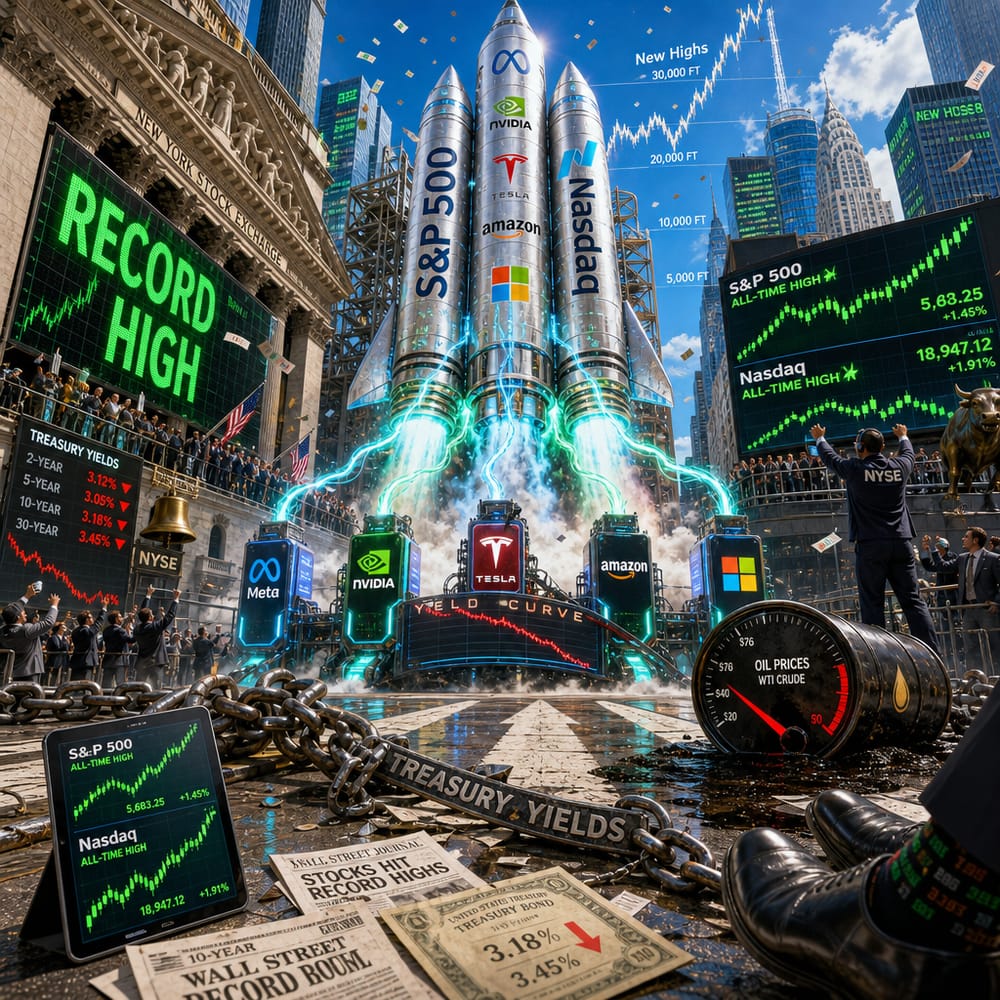
If you blinked last week, you might have missed the S&P 500 and Nasdaq sashaying their way into record-high territory, leaving a cloud of confetti and a whiff of euphoria in their wake. What's the secret sauce, you ask? A tantalizing cocktail of declining Treasury yields and oil prices, spiked with a generous splash of mega-cap stock magic. Let's dive into the thrilling tale of how these indices danced their way to the top.
Picture this: a high-stakes game where Treasury yields and oil prices set the rules. Now, why should you care if Treasury yields—a fancy term for the interest rate on U.S. government bonds—decide to nosedive? Well, traditionally, when yields drop, it's like a green light for equities. Investors, on the hunt for better returns, often abandon the bond ship and set sail toward stock market shores. It's akin to swapping a lukewarm latte for a steaming espresso shot—it's all about the kick.
And oh, did the tech sector feel that caffeine jolt! As yields eased, tech giants like Meta, Nvidia, and Microsoft danced with delight. Lower rates make borrowing cheaper, an essential factor for growth-centric tech firms that often operate on future potential rather than immediate profits. With lower interest burdens, these companies can focus on innovation, expansion, and buying up rivals or new technology like you might stockpile Halloween candy—except with billions of dollars.
But wait, there’s more drama unfolding in the oil markets. Oil prices took a breather, stabilizing despite geopolitical rumbles. If you're wondering why oil prices matter to your stock portfolio, think of it this way: lower oil prices mean lower operational costs for businesses that rely on oil, directly or indirectly. For companies like Amazon and Tesla, which have significant transportation and production costs, cheaper oil translates to plumper margins and happier investors. It’s like finding out your favorite coffee shop is offering free refills for a month—you’ve suddenly got more budget for that second scone.
So, with the Treasury yields playing nice and oil prices behaving for a spell, the markets saw an optimism-fueled rally. Investors saw the chance to pounce, sending stocks soaring faster than a reality TV star’s Instagram likes. Tech stocks, particularly, were the belle of the ball. Nvidia, still riding high on its AI and semiconductor successes, saw its share price glitter. Meanwhile, Meta wasn’t just busy rebranding its social empire but also padding its stock price, thanks to bright prospects in AI and digital advertising.
But what sectors are the real winners here? It's not just tech throwing a party. Consumer discretionary stocks, which include companies selling non-essential goods and services, love low yields and tame oil prices. Why? Because when borrowing is cheap and costs are contained, consumers are more likely to splurge on everything from the latest iPhone models to summer vacations.
Yet, amid all the confetti, it’s crucial not to ignore the elephant in the room. The bond market’s recent antics and the oil market’s unpredictability remind us that market euphoria can be as fleeting as a TikTok trend. The current high-flying market sentiment could quickly change if yields spike again or if oil prices decide to stage an encore performance to higher levels.
So, what’s the takeaway in this whirlwind of financial drama? Keep your eye on the Treasury yields and oil prices—they’re the backstage crew holding the strings to this market vaudeville. For retail investors, it’s a reminder to stay nimble and informed. With tech stocks on a potential upswing, this could be a prime time to evaluate whether adding a dash of tech to your portfolio makes sense, given your risk appetite and investment horizon.
But remember, in this grand theater of markets, the plot can twist in moments. Keep your popcorn handy, and stay tuned for more financial shenanigans.
This article is for informational purposes only and is not investment advice. Always do your own research or consult a licensed financial professional before making investment decisions.
© Copyright 2024. All Rights Reserved.
© Copyright 2024. All Rights Reserved.