

Record-High 30-Year Treasury Yield at Auction
Tuesday, August 18, 2026
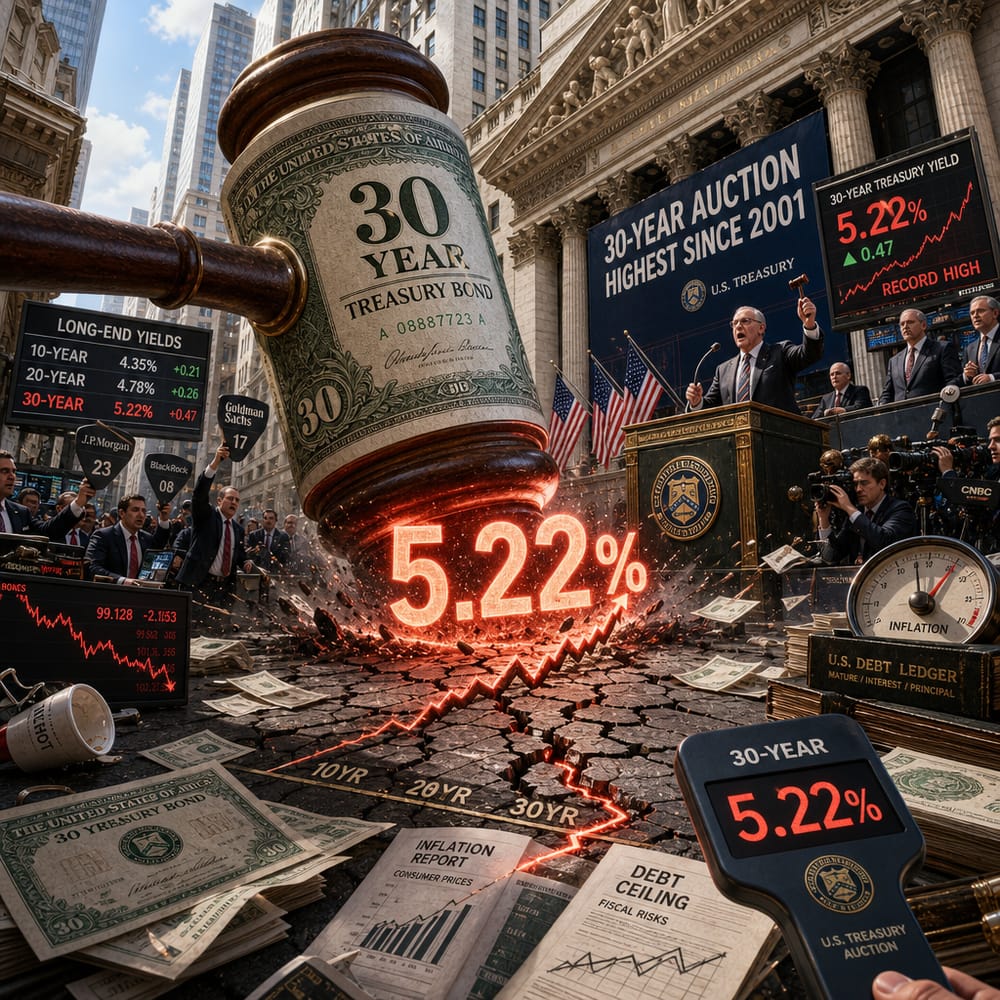
U.S. Treasury Yields Hit Record Highs: What It Means for Your Wallet and Uncle Sam's
Hold onto your hats, folks, because the U.S. Treasury just auctioned off 30-year bonds with a yield that's the highest since 2001. We're talking a cool 5.22%. This isn't just Wall Street gibberish—this is the kind of news that trickles down to Main Street, affecting everything from your mortgage interest rates to Uncle Sam's spending habits. Let's dive into why this matters for you, me, and the guy down the street buying his third cup of coffee for the day.
So, what's driving this demand for higher yields? In simple terms, investors are getting nervous. With the U.S. debt situation resembling a scene from a financial disaster movie and inflation concerns hotter than a summer in Death Valley, investors want more bang for their buck—or, in this case, more yield for their bond. Inflation erodes the purchasing power of future bond payments, so to keep investors interested, yields have to climb like a rock climber scaling a mountain.
But here's the kicker: as these yields rise, so do the borrowing costs for the government. Think of it like this—when you get a higher interest rate on your credit card, it means you end up paying more over time. Similarly, the U.S. government will now face increased costs to finance its debt. And with national borrowing already at eye-watering levels, this is like adding another layer of sprinkles onto an already overloaded sundae.
Now, you might be wondering, how does this affect future government borrowing? Remember, when it costs more to borrow, Uncle Sam might need to tighten his belt. And by "belt," we mean potentially scaling back on spending projects. Infrastructure, social programs, education—none of these are off the table when it comes to trimming the fat. This could lead to a grudge match between government spending priorities and higher borrowing costs. It’s a financial tug-of-war where, unfortunately, something's got to give.
The potential economic consequences of sustained high yields go even further. Higher yields can make government debt less appealing if investors expect even higher yields in the future. This could create a vicious cycle where the government has to offer even more attractive rates to entice buyers, pushing borrowing costs further up. And who ultimately bears these costs? Look in the mirror, because it could be you and me in the form of higher taxes or reduced public services.
But it's not all doom and gloom. Some savvy investors might see this as an opportunity. With higher yields on government bonds, they could find a relatively safe haven with a decent return. If you're looking to beef up your investment portfolio, now might be a good time to scout around. Just make sure you're not putting all your eggs in one basket, because as we've seen, markets can swing faster than a pendulum in a hurricane.
What's interesting is how this situation spills over into the stock market. Higher yields make bonds more attractive compared to stocks, which can lead to a shift in investor focus. This means tech stocks and other high-flying sectors might see some turbulence as investors reassess risk and return.
But let's not forget the wildcard—the Federal Reserve. How it reacts to these surging yields will be crucial. The Fed could decide to step in, either to stabilize markets or to adjust its monetary stance. We're living in a time where every move by the Fed is scrutinized down to the last decimal point, and for good reason. Its decisions could either calm or further stir the financial waters.
In short, the record-high 30-year Treasury yields are more than just numbers—they're a bellwether. They signal shifts that stretch from Wall Street to the very fabric of our economy. As these changes ripple through, keep your eyes peeled and your financial strategies flexible. Because in the world of finance, being prepared isn’t just smart—it’s essential. Whether you're a seasoned investor or someone just trying to keep up with the news, these yield spikes are a big deal, so adjust your financial sails accordingly.
This article is for informational purposes only and is not investment advice. Always do your own research or consult a licensed financial professional before making investment decisions.
© Copyright 2024. All Rights Reserved.
© Copyright 2024. All Rights Reserved.