

Rebounding Treasury Yields and Dollar Dynamics
Saturday, August 22, 2026
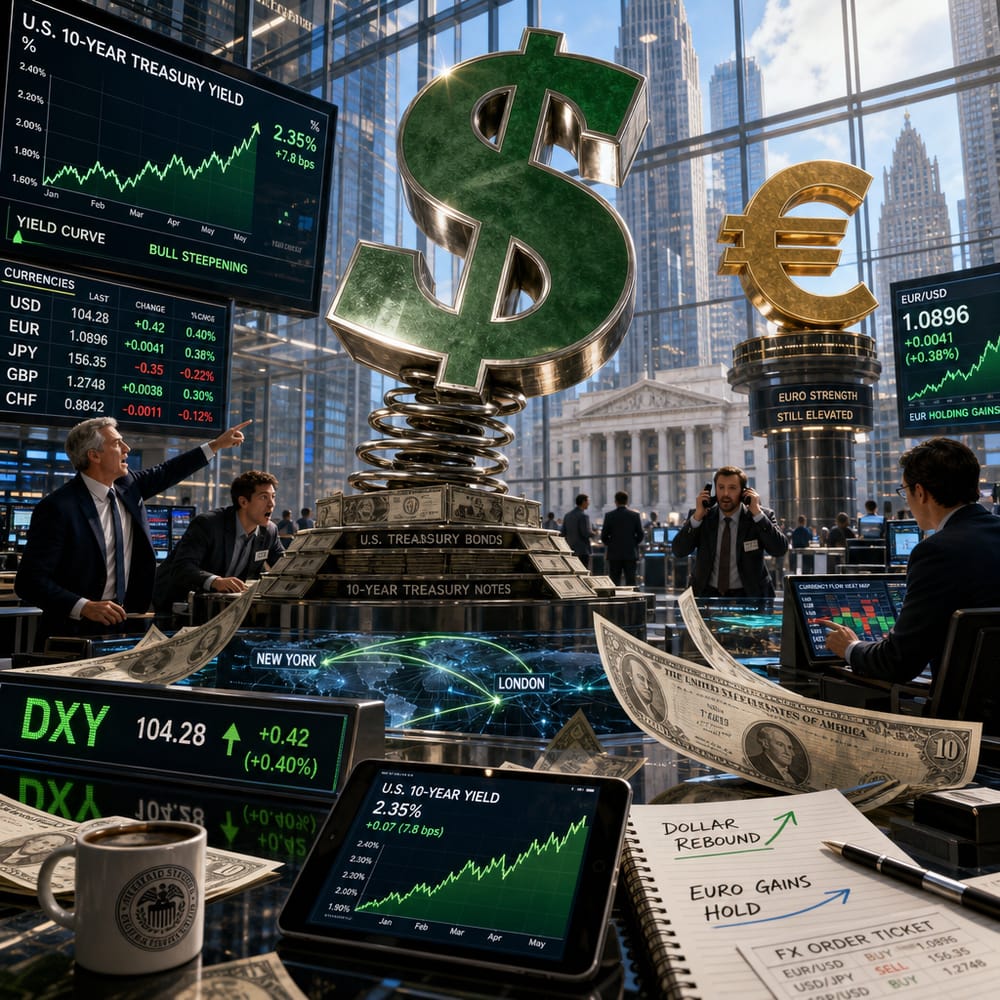
TREASURY YIELDS REBOUND AND DOLLAR DYNAMICS: THE TANGO OF GLOBAL CURRENCIES
There's a new dance hit in town, and it's got the financial markets moving like they're at a wedding after too many cocktails. The name of this tune? "Rebounding Treasury Yields and Dollar Dynamics." While it might not have the catchy ring of a Top 40 single, it's really shaking things up in the economic world.
Now, why should you care about Treasury yields playing peek-a-boo or the dollar doing a little shuffle? Because these are the moves that can sway the value of your investments, your vacation money, and yes, even your morning coffee prices.
WHAT'S TRIGGERING TREASURY YIELDS TO BOOGIE?
Imagine Treasury yields as the responsible older sibling of the financial family. When these yields rise, they're signaling that Uncle Sam's IOUs (i.e., government bonds) are getting more attractive. Investors need a good reason to park their money in something as safe as a T-bill, and right now, the reason is snazzy higher returns.
The rebound in Treasury yields comes with expectations that the Federal Reserve might keep its foot on the interest rate pedal for a bit longer. Why? Because inflation is like that unwanted house guest who just won't leave. The Fed’s got the task of keeping prices in check, and higher rates are their way of dialing down the heat.
THE EURO'S SWANKY STRUT
While the dollar's making its moves, the euro's putting on a little fashion show of its own. For now, it’s holding its ground against the greenback, strutting around with the confidence of a runway model.
How sustainable is this euro glamour parade? Well, the markets are betting on the European Central Bank to stay hawkish—that is, keeping interest rates high to tame inflation. But just like any trendy outfit, what’s hot one season might cool down the next. If the ECB shifts its stance or if Europe’s economy catches a cold, the euro might need to rethink its wardrobe.
RISKS THAT COULD RAIN ON YOUR INVESTMENT PARADE
The interplay of rising yields and currency valuations is a bit like a high-stakes poker game. For investors, here are a few wild cards to keep in mind:
1. Interest Rate Surprises: If the Fed gets more aggressive with rate hikes than expected, it could push Treasury yields up further, making the dollar more appealing. This might send the euro and other currencies back to wardrobe planning.
2. Economic Health Check: Unexpected economic data can throw a wrench in the works. If the U.S. economy shows signs of slowing down, it might prompt a rethink from the Fed, which could then influence yields and, by extension, the dollar.
3. Geopolitical Twists and Turns: Trade wars, political shifts, and global conflicts can act like plot twists in a financial thriller. For instance, the recent trade tiff between the U.S. and Canada could have ripple effects that influence currency dynamics.
PLAYING THE FINANCIAL FOXTROT
So, what should the everyday investor do while Treasury yields and the dollar do their cha-cha? The key is not to get too caught up in the daily dance steps. Instead, focus on the long-term choreography of your investment strategy. Diversification is the ultimate dance partner, ensuring that you're not left solo when the music changes unexpectedly.
Keep an eye on economic indicators, central bank policies, and geopolitical developments—these will give you clues about where the markets might shimmy next. And remember, the financial world is like a dance floor: full of rhythms, changes, and the occasional misstep. Stay nimble, stay informed, and you'll be able to waltz through the ups and downs with grace.
Whether you’re rocking to the beat of rebounding yields or watching the euro's latest fashion walk, one thing's for sure: it’s always a good time to be tuned into what's happening on the global stage. After all, in the world of finance, the only constant is change, often set to a lively tune!
This article is for informational purposes only and is not investment advice. Always do your own research or consult a licensed financial professional before making investment decisions.
© Copyright 2024. All Rights Reserved.
© Copyright 2024. All Rights Reserved.