

RBA’s “Hold” Messaging Dampens AUD, Narrowed Yield Expectations
Saturday, August 29, 2026
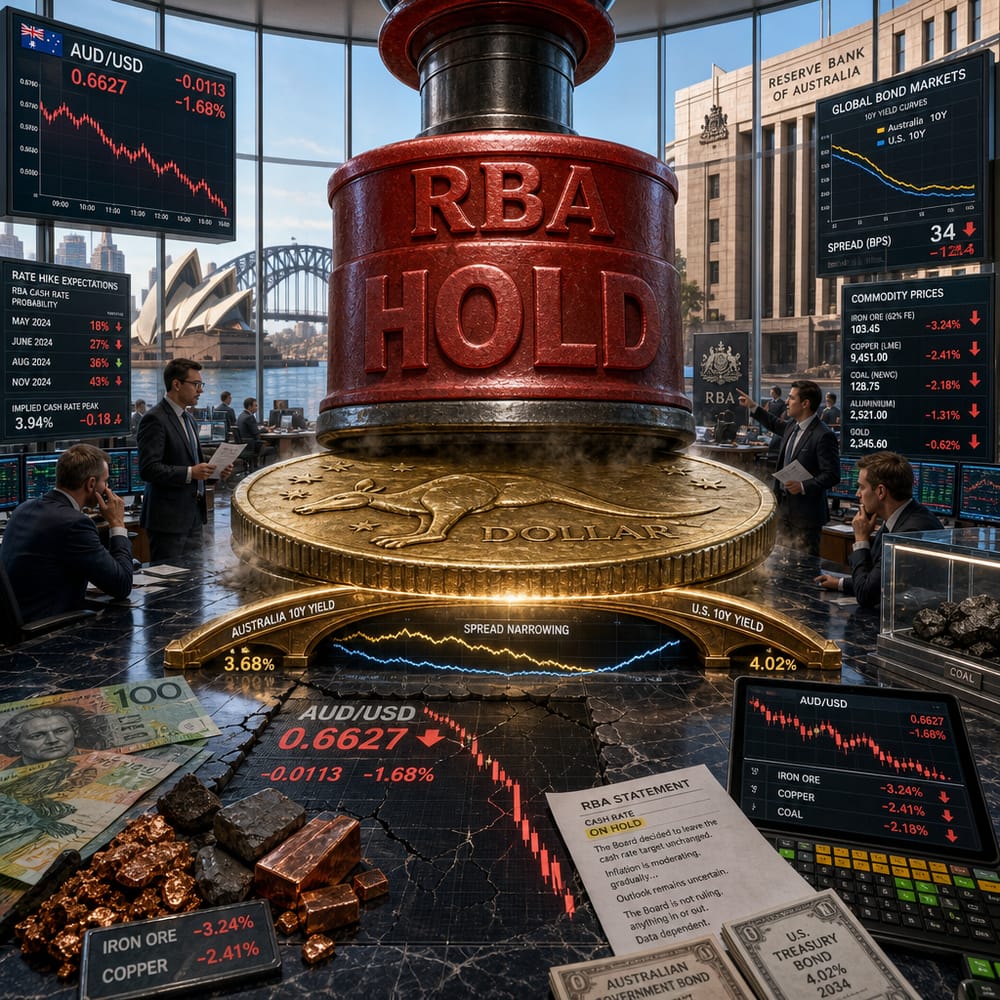
WHEN CENTRAL BANKS WHISPER, CURRENCY MARKETS LISTEN
Imagine your best friend tells you they're thinking of a big life change — maybe a new job, a cross-country move, or even a drastic haircut. But then they back off, claiming it's just not the right time. That's kind of what happened with the Reserve Bank of Australia (RBA) recently. They hinted at hiking interest rates, got everyone buzzing, and then decided to chill. The result? The Australian Dollar (AUD) took a bit of a nosedive.
THE RBA'S HOLD BUTTON
So, why did the RBA hit the pause button? In the world of central banking, it's not entirely uncommon to do the economic equivalent of dipping your toes in the water before taking the plunge. The RBA, ever the cautious swimmer, is worried about inflation and the softening of commodity prices – what Australia relies heavily on, like iron ore and coal. By holding off on rate hikes, they're essentially saying, "Let's see how things pan out first."
This decision sent ripples through the currency market, and the first to feel the splash was the Australian Dollar. In simple terms, when central banks keep interest rates low, it can make a currency less attractive to investors hunting for higher returns, leading them to look elsewhere – like a tourist at a food market opting for the next stall over.
IMPACT ON AUD/USD
The AUD/USD currency pair – that’s Aussie dollars measured against the good ol’ greenback – reacted faster than a coffee addict at a Starbucks sale. With Australia’s interest rates not giving any reasons to party, and the dollar hungry for global dominance, the AUD lost some of its sparkle.
A weaker AUD might sound like bad news for Australians planning their next trip to Disney World, but it's not all grim. A cheaper Aussie dollar often means that Australian goods are more attractive on the global stage, possibly boosting exports. But the flip side? Imports become pricier, and let’s just say Australians might feel that in their online shopping carts.
THE GLOBAL RIPPLE
But why should you, an everyday investor scrolling through this article, care? Well, the AUD's performance affects trade and investment flows down under, and that has a way of making waves across global currency markets. Think of it as a butterfly effect – the RBA flaps its wings, and currencies around the world adjust their sails.
For the keen-eyed trader, fluctuations in the AUD/USD are like gold dust. It opens doors for speculation – will the AUD recover, or will it continue to drift? It's a bit like investing in the stock market but with the added drama of foreign exchange rates.
WHAT NEXT?
Now, here's where things get interesting. While the RBA's latest move may have caused a stir, it's their future communications that investors will have their eyes and ears peeled for. Every speech, report, or statement from the Aussie central bank will be scrutinized for clues. Will they change course and hike rates if inflation rears its ugly head? Or is this a long-term strategy of monetary restraint?
If the RBA suddenly decides it's time for a rate hike after all, the AUD could bounce back with the vigor of a kangaroo on a trampoline. But if they continue to play it safe, you might want to hang onto those U.S. dollars a little longer.
FINAL THOUGHTS
In this age of information overload, central banks are like the whisperers of the financial world. Their announcements can turn markets on their heads, and investors would do well to listen closely. The RBA's decision to hold, while a temporary dip for the AUD, is a testament to the delicate balancing act that is global economics.
As for you, the retail investor, there's opportunity in every market move. Whether it's taking advantage of a cheaper Aussie trip or positioning your portfolio to ride the forex waves, keep your finger on the pulse, and be ready to adapt. After all, in the world of investing, fortune favors not just the bold, but also the informed.
This article is for informational purposes only and is not investment advice. Always do your own research or consult a licensed financial professional before making investment decisions.
© Copyright 2024. All Rights Reserved.
© Copyright 2024. All Rights Reserved.