

Rate-Hike Expectations Shift After Weak Jobs Data
Wednesday, August 12, 2026
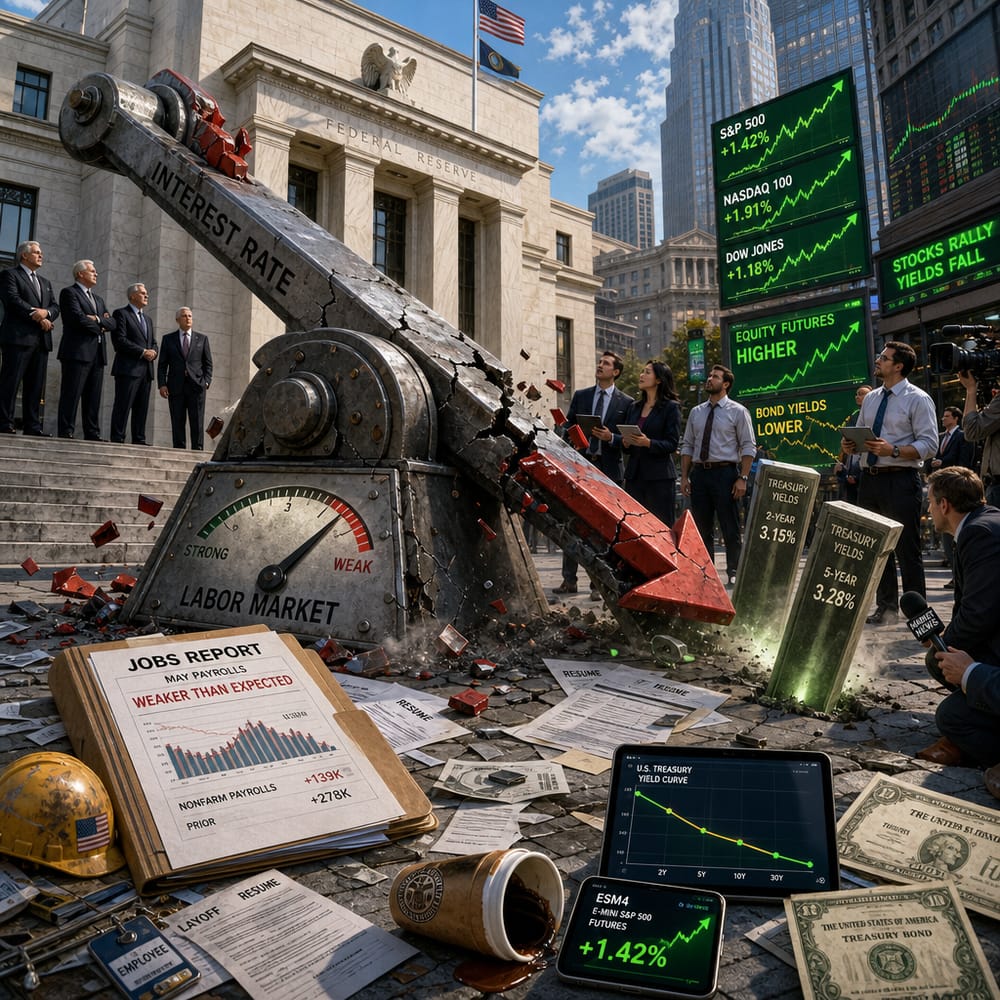
RATE-HIKE EXPECTATIONS SHIFT AFTER WEAK JOBS DATA
It’s like the financial equivalent of spotting an endangered species in your backyard—a weak jobs report has just thrown rate-hike expectations into a tizzy, and Wall Street is responding like it found gold in its garden. Let's break it down.
Investors have been caught in a game of 'Will they, won't they?' with the Federal Reserve's interest rates, with everyone speculating like they're trying to predict the end of a soap opera. But the recent jobs report, which was about as impressive as a wet firecracker, has turned down the volume on the hawkish rate hike chatter. Put simply, softer job growth has opened the door to a more relaxed Fed, and markets are loving it.
In response, stocks have been flirting with new highs. Picture equities as the popular kids in school, suddenly more approachable now that the big, bad Fed bully might be loosening its grip. Investors are doing the financial cha-cha, shifting money back into stocks as Treasury yields, the poker-faced sidekicks of the financial world, take a step down.
So, why does this all matter? Because if you’ve got a 401(k) or any stake in the market, these rate shenanigans directly impact your financial future. When rates are up, borrowing costs climb, which can slow down economic growth and make those stock portfolios feel a bit lighter. But when the Fed takes its foot off the gas, as it might now be considering, borrowing becomes cheaper, stocks can soar, and everyone’s financial horizons look a tad sunnier.
But hold your horses—before you go all-in on this bullish sentiment, remember that Wall Street’s crystal ball is notoriously fuzzy. Rate hikes—or the lack thereof—are a big player in the long-term economic game. If rates stay lower, we could see more borrowing, more spending, and perhaps an inflation uptick down the line. But it could also mean a fatter, happier stock market in the near term.
Investors are currently adjusting their portfolios like they're rearranging furniture for a surprise visit. They’re leaning into stocks, particularly those that benefit when rates stay low, like technology and real estate. Meanwhile, growth stocks are having their moment, as they typically thrive when borrowing costs are lower.
But let's not forget the bond market, the less glamorous but stalwart sibling to equities. As bond yields drop, they become less attractive, leading investors to ditch them for the potentially higher returns of stocks. It’s like choosing between a sensible minivan and a flashy sports car—right now, the market’s clearly revving the engine of the latter.
What’s the catch? Well, if the Fed decides to raise rates down the road—because, let’s face it, they might have to if inflation rears its ugly head again—the party could end as quickly as it started. So, as you sip your coffee and scroll through the latest financial memes, remember that today’s market euphoria could be tomorrow’s "What were we thinking?"
In the grand scheme, if rate hikes are tempered, we might get some breathing room in the economy. Businesses and consumers alike could enjoy a financial environment that encourages investment and spending, bolstering economic growth. But it's a delicate dance; too much, too fast, and we could wind up overheating, leading to inflation or another rate hike in disguise.
So, what's next for the savvy retail investor? Keep your eyes peeled on economic data like inflation reports and job numbers. As these pieces of the puzzle shift, so too could the Fed’s game plan. And remember, while the market enjoys a rate reprieve now, it’s always wise to diversify your portfolio—that way, you’re prepared, no matter which way the Fed winds blow.
In this financial opera, the curtain’s far from coming down. Stay tuned, keep nimble, and remember—when it comes to interest rates and the stock market, the only constant is change.
This article is for informational purposes only and is not investment advice. Always do your own research or consult a licensed financial professional before making investment decisions.
© Copyright 2024. All Rights Reserved.
© Copyright 2024. All Rights Reserved.