

Quarter-End Winners and Losers: Which Stocks Enter July With the Best Momentum?
Tuesday, June 30, 2026
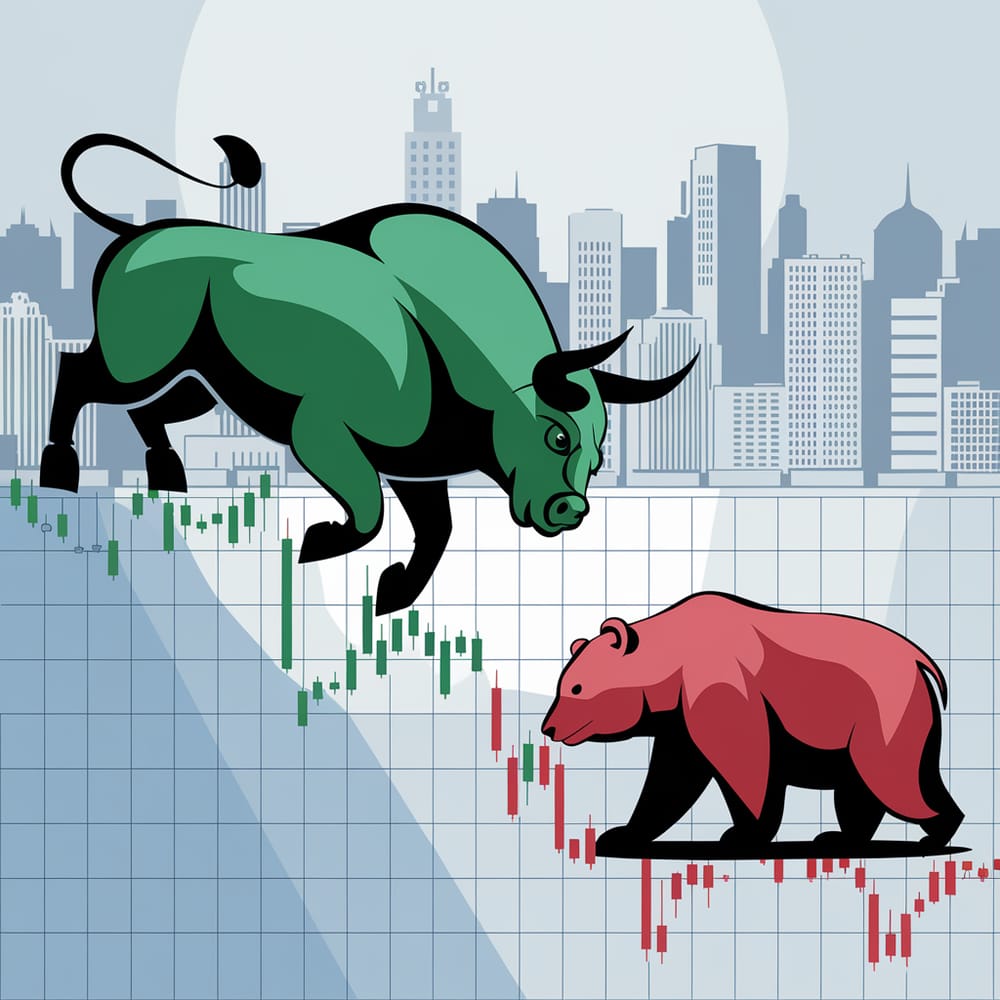
Quarter-end has a funny way of exposing the market’s real favorites.
During the quarter, every stock has a story. Every dip has a bull case. Every rally has an explanation. But when fund managers hit the final trading days of June and start cleaning up portfolios, the tape gets more honest.
Winners get defended.
Laggards get dumped.
Crowded trades get trimmed.
New leadership starts showing itself.
And as Wall Street turns the page into July, the market is sending a very different message than it did earlier in the year. This is no longer just a simple “buy mega-cap tech and go to sleep” tape. Leadership is rotating. AI infrastructure is trying to rebound. Industrials and financials are holding up. Defensives have quietly worked. Small caps are still searching for proof. And the laggards may only rebound if they show real earnings support.
The question for traders is now simple: which stocks and sectors enter July with the best momentum — and which ones are just hoping for a reset?
The Quarter-End Rotation
The broad market still looks strong on the surface.
The S&P 500, Nasdaq, and Dow all posted major quarterly gains, with the Nasdaq leading the charge after a powerful recovery from earlier volatility. But the final stretch of June was not just about indexes climbing. It was about what kind of stocks investors were willing to own into quarter-end.
That distinction matters.
A broad index can rise while leadership underneath it changes completely. That is exactly what makes July interesting. The market is no longer rewarding every AI name automatically. It is no longer ignoring valuation. It is no longer treating defensives like dead money. And it is starting to separate the companies with durable earnings momentum from the stocks that simply rode the first half’s liquidity wave.
This is the setup heading into July:
AI infrastructure is trying to regain leadership.
Industrials are still acting like real-economy winners.
Financials are quietly holding up as yields stay elevated.
Defensives are working as investors hedge growth risk.
Small caps are improving, but not yet leading.
Consumer discretionary remains selective.
Energy is still hostage to geopolitics and oil volatility.
That is not a boring market.
That is a rotation market.
AI Infrastructure: Still the Main Event
The biggest question for July is whether AI infrastructure reclaims full leadership.
Semiconductors were under pressure during the June chip selloff, but they bounced hard into quarter-end. That matters because the AI trade has not disappeared. It has simply become more selective.
This is the new version of the AI trade:
Not every AI stock wins.
Not every expensive multiple gets protected.
Not every chip name gets a free pass.
But the companies directly tied to AI infrastructure — GPUs, memory, networking, power, servers, and semiconductor equipment — are still where traders look first when risk appetite returns.
Nvidia remains the emotional center of the trade. AMD is gaining attention as a second-wave AI server and CPU story. Broadcom still has custom AI silicon and networking exposure. Micron remains tied to high-bandwidth memory. Applied Materials and Lam Research sit on the equipment side of the capex cycle.
That is the July watchlist basket.
If SMH and SOXX keep outperforming QQQ and SPY, that tells traders the AI infrastructure trade is not dead. It is repairing. If the semiconductor ETFs stall while the Nasdaq rises, the market may be rotating away from chip leadership and into broader tech or non-tech sectors.
The key is confirmation.
AI infrastructure does not need another hype cycle. It needs buyers with conviction.
Industrials: The Quiet Momentum Trade
Industrials may be one of the cleanest leadership groups entering July.
This is not the flashiest sector. It does not have the same social-media energy as Nvidia, Tesla, or crypto. But industrials have been quietly benefiting from several major themes at once: infrastructure spending, reshoring, electrification, defense demand, automation, data-center construction, and power-grid investment.
That makes the sector more than a cyclical recovery play.
It is becoming part of the AI infrastructure trade without always being labeled that way.
Data centers need power equipment. Factories need automation. Utilities need grid upgrades. Defense contractors benefit from geopolitical spending. Construction and engineering firms benefit from long-cycle infrastructure projects.
That is why traders should keep XLI on the July board.
If industrials keep holding up while tech chops around, that signals leadership is broadening. If industrials start outperforming alongside semiconductors, the market may be pricing a deeper capex cycle, not just a software-and-chip rally.
The best kind of rally is not one where only mega-cap tech works.
It is one where the picks-and-shovels economy starts working too.
Financials: Higher Yields Are a Double-Edged Tailwind
Financials are another important July group.
The sector has been helped by a more stable yield curve, elevated long-term rates, and improving confidence that the economy is not rolling over. Banks generally like a world where loan demand holds up, credit remains manageable, and the curve gives them room to earn a spread.
But this is not a simple “higher yields are good for banks” story.
If yields rise because growth is strong, banks can benefit. If yields rise because inflation, deficits, or stress are pushing bond investors to demand more compensation, that becomes a different kind of risk.
That is why XLF and KRE matter in July.
XLF tells you whether investors are comfortable owning the large financials. KRE tells you whether the market is willing to take more risk in regional banks. If both start improving together, that is a bullish signal for economic confidence and market breadth.
If XLF holds up but KRE lags, the market may still prefer quality and scale over true risk-on exposure.
For July, financials are not the loudest trade.
But they may be one of the most important tells.
Defensives: Not Dead Money Anymore
One of the more interesting quarter-end signals is that defensive sectors quietly worked.
Healthcare, utilities, consumer staples, and real estate have all had moments of relative strength as investors balanced growth exposure with more stable businesses. This does not necessarily mean the market is turning bearish. It may simply mean investors are no longer comfortable owning only the most expensive growth stocks.
That is a healthy kind of rotation.
Defensives matter because they show whether fund managers are hedging. If utilities, staples, and healthcare keep outperforming while yields fall, the market may be shifting toward a more cautious July posture. If they lag while industrials, banks, semiconductors, and small caps rally, the market is choosing risk.
Healthcare is especially interesting.
It has been a messy group because of managed-care pressure, regulatory risk, and uneven biotech performance. But if UnitedHealth and other large healthcare names stabilize, XLV could become a July rebound candidate.
Staples are a different story. They can work if consumers keep trading down and investors want stability. But they can lag badly if the market moves back into full risk-on mode.
Defensives are not the growth engine.
They are the market’s insurance policy.
Consumer Discretionary: Selective, Not Broad
Consumer discretionary remains one of the trickiest groups heading into July.
The consumer is not collapsing, but the consumer is clearly more selective. That creates winners and losers inside the same sector.
Premium brands face pressure if shoppers become more price-sensitive. Value retailers can benefit from trade-down behavior. Travel and leisure can work if high-income consumers stay strong. Autos remain complicated because rates, affordability, EV pricing, and input costs all matter.
That means XLY alone may not tell the full story.
The better July watchlist is split into two lanes.
The first lane is value retail: Walmart, Costco, TJX, Ross, Dollar Tree, and Dollar General. These names benefit if consumers keep hunting for deals.
The second lane is premium discretionary: Nike, Tesla, luxury-adjacent brands, and higher-ticket consumer names. These need stronger confidence, better product cycles, or clearer margin recovery.
This is not a sector where traders can just buy everything.
It is a stock-picker’s sector.
Small Caps: The Rebound Candidate That Still Needs Proof
Small caps are always tempting at the start of a new month.
They look cheaper. They are underowned. They can move fast if rates fall. They benefit if investors believe the economy is broadening beyond mega-cap leaders.
But IWM still needs proof.
Small caps are more sensitive to interest rates, credit conditions, labor costs, and domestic economic momentum. If yields stay elevated and earnings estimates do not improve, small caps can remain stuck even while the S&P 500 grinds higher.
That makes July a big test.
If IWM starts outperforming SPY and QQQ, the market is saying risk appetite is broadening. That would be a major bullish signal. It would mean investors are willing to move beyond the safety of mega-cap balance sheets and into smaller, more economically sensitive companies.
If IWM lags again, the message is different.
It means the rally is still narrow, even if the indexes look healthy.
Small caps do not need to lead every day.
But they do need to participate.
Energy: The Geopolitical Wild Card
Energy remains the hardest sector to read.
Oil has been volatile because of geopolitical headlines, Iran risk, peace-talk hopes, supply concerns, and shifting demand expectations. That makes XLE less of a clean momentum trade and more of a macro event trade.
The bull case is simple: if oil stabilizes or rises, energy stocks can regain leadership quickly, especially because valuations are not stretched compared with high-growth sectors.
The bear case is also simple: if peace-talk optimism lowers the geopolitical premium and global demand concerns return, energy can lag even if the broader market rises.
For July, energy belongs on the watchlist, but it is not a clean all-weather leader.
It is a tactical trade.
The key signal is whether energy can rally without needing a crisis headline. If XLE only works when geopolitical stress rises, the move is fragile. If XLE works because cash flows, dividends, buybacks, and supply discipline are attracting buyers, the sector has a stronger July case.
The July Watchlist
The cleanest July watchlist is not just a list of tickers. It is a map of market leadership.
The first group is AI infrastructure: Nvidia, AMD, Broadcom, Micron, Applied Materials, Lam Research, SMH, and SOXX. This is the leadership repair trade. If these names keep bouncing with volume, July risk appetite is alive.
The second group is industrial capex: XLI, electrical equipment, defense, automation, construction, and data-center infrastructure names. This is the broadening trade. If industrials keep leading, the market is looking beyond software and GPUs.
The third group is financials: XLF, KRE, large banks, regional banks, brokers, and insurers. This is the curve-and-confidence trade. If financials improve, the market is saying the economy can handle higher yields.
The fourth group is defensives: XLV, XLU, XLP, and select healthcare names. This is the hedge trade. If these lead, investors may be getting more cautious.
The fifth group is small caps: IWM and rate-sensitive domestic stocks. This is the breadth test. If small caps wake up, the rally becomes much healthier.
The sixth group is consumer value: WMT, COST, TJX, ROST, DG, and DLTR. This is the trade-down consumer trade. If shoppers stay bargain-focused, these names can keep attracting attention.
That is the July board.
Not one trade.
Six tests.
The Takeaway for Investors
Quarter-end is not just an accounting date. It is a market checkpoint.
The stocks entering July with the best momentum are the ones tied to durable themes: AI infrastructure, industrial capex, value retail, and financials that can handle a higher-yield environment. The laggards that could rebound are healthcare, small caps, select consumer names, and energy — but only if the macro setup cooperates.
The key point is that leadership is rotating.
AI is still important, but it is no longer the only game in town. Industrials are acting better. Financials are quietly relevant. Defensives are no longer dead. Small caps remain the missing confirmation. Consumer stocks are splitting between bargain winners and premium pressure.
For traders, July is not about chasing whatever worked last quarter.
It is about watching what gets defended after quarter-end.
If semiconductors lead, AI infrastructure is back. If industrials and financials lead, the rally is broadening. If utilities, staples, and healthcare lead, investors are hedging. If small caps finally outperform, the market may be entering a healthier risk-on phase.
The market is entering July with momentum.
Now traders need to find out whether that momentum is broad enough to last.
This article is for informational purposes only and is not investment advice. Always do your own research or consult a licensed financial professional before making investment decisions.
© Copyright 2024. All Rights Reserved.
© Copyright 2024. All Rights Reserved.