

Q3 GDP Revised Up; Consumer Spending Slows
Thursday, November 26, 2026
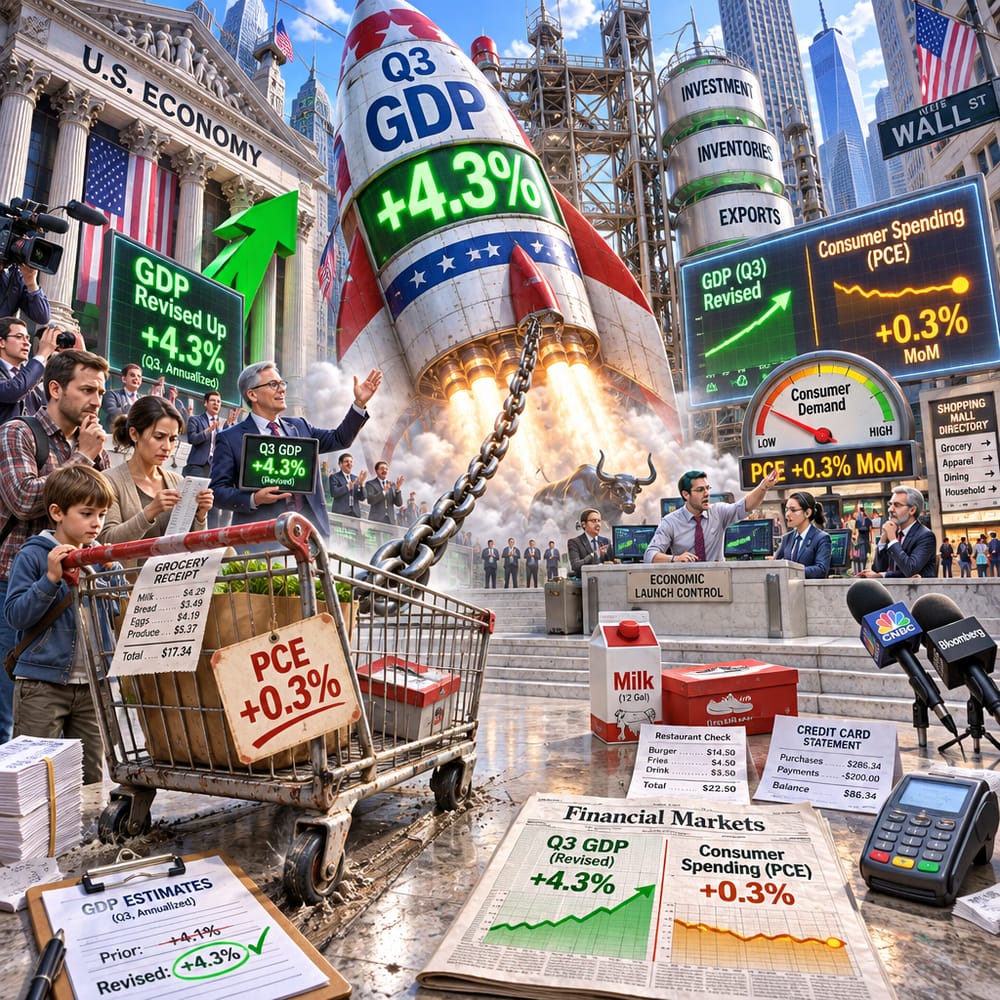
The U.S. economy just got a growth spurt, but don’t pop the champagne just yet. The third quarter GDP growth rate was revised up to a sizzling 4.3% annualized. Impressive, right? But before we get too excited, there’s a plot twist — consumer spending hit the brakes, growing only 0.3% month-over-month. It’s like you're sprinting in a marathon and suddenly tripping over your untied shoelaces.
So, why did the GDP get a makeover? The usual suspects are business investments and government spending. Companies splurged on equipment and infrastructure, while the government opened its wallet wider than expected. But wait, there’s more — exports also played their part, with the U.S. selling more goods than before. These factors combined to give the GDP its revised glow-up.
But let's dive into the heart of the matter. If consumer spending is slowing down, what gives? Personal Consumption Expenditures (or PCE), which tracks what you and I shell out for goods and services, are tapering off. In plain English, our wallets aren't opening as wide as they used to. Rising interest rates, inflation fatigue, or maybe just post-summer vacation blues are putting the brakes on spending. In any case, when consumer spending puts its feet up, it’s a hefty message, considering it accounts for about 70% of the U.S. GDP.
Now, the big question is: what happens next? If consumer spending continues its leisurely pace, future economic growth might hit a speed bump. When folks curb their spending habits, businesses take notice. They may pump the brakes on hiring or expansion plans, leading to a ripple effect that could slow GDP growth in the future. It's the economic equivalent of a chain reaction — one domino falls, and others could follow.
And then, there’s the Federal Reserve, sitting in its monetary policy hot seat. Like a seasoned tightrope walker, the Fed must balance the act of fostering economic growth with keeping inflation in check. With consumer spending cooling, the Fed might hold back on further interest rate hikes. Or maybe they’ll decide to play it safe until they see more signs of economic chill. Either way, their decisions in the coming months will shape the contours of our economic landscape.
But wait, there’s a silver lining. Despite consumer hesitancy, businesses are still investing and governments are spending. It speaks volumes about underlying confidence in economic stability — at least for now. This momentum could help cushion the impact of any immediate slowdown in consumer spending. However, the underlying economic vulnerabilities can't be ignored, as strong GDP growth with a side of tepid consumer activity isn’t the most balanced meal.
While we navigate these choppy waters, keep an eye on sectors sensitive to consumer spending. Retail, hospitality, and travel might feel the squeeze. Conversely, industries tied to business investments, like technology and infrastructure, could benefit from current trends. And don’t forget to watch the Fed, which will have its hands full deciding whether to keep rate hikes on ice or warm them up again.
So, what's the takeaway? The U.S. economy is a complex beast, full of contradictions. We're seeing robust GDP growth at the same time as cooling consumer spending, suggesting possible vulnerabilities. For now, it’s a waiting game to see how these factors play out.
Remember, in the grand theater of economics, every twist and turn tells a story. And as retail investors, understanding the narrative helps us make smarter decisions. So keep your eyes peeled, your ears tuned, and your portfolios ready for whatever plot twist comes next.
This article is for informational purposes only and is not investment advice. Always do your own research or consult a licensed financial professional before making investment decisions.
© Copyright 2024. All Rights Reserved.
© Copyright 2024. All Rights Reserved.