

Q2 GDP Slows to 1.5%, But Consumer Spending Surges
Friday, August 14, 2026
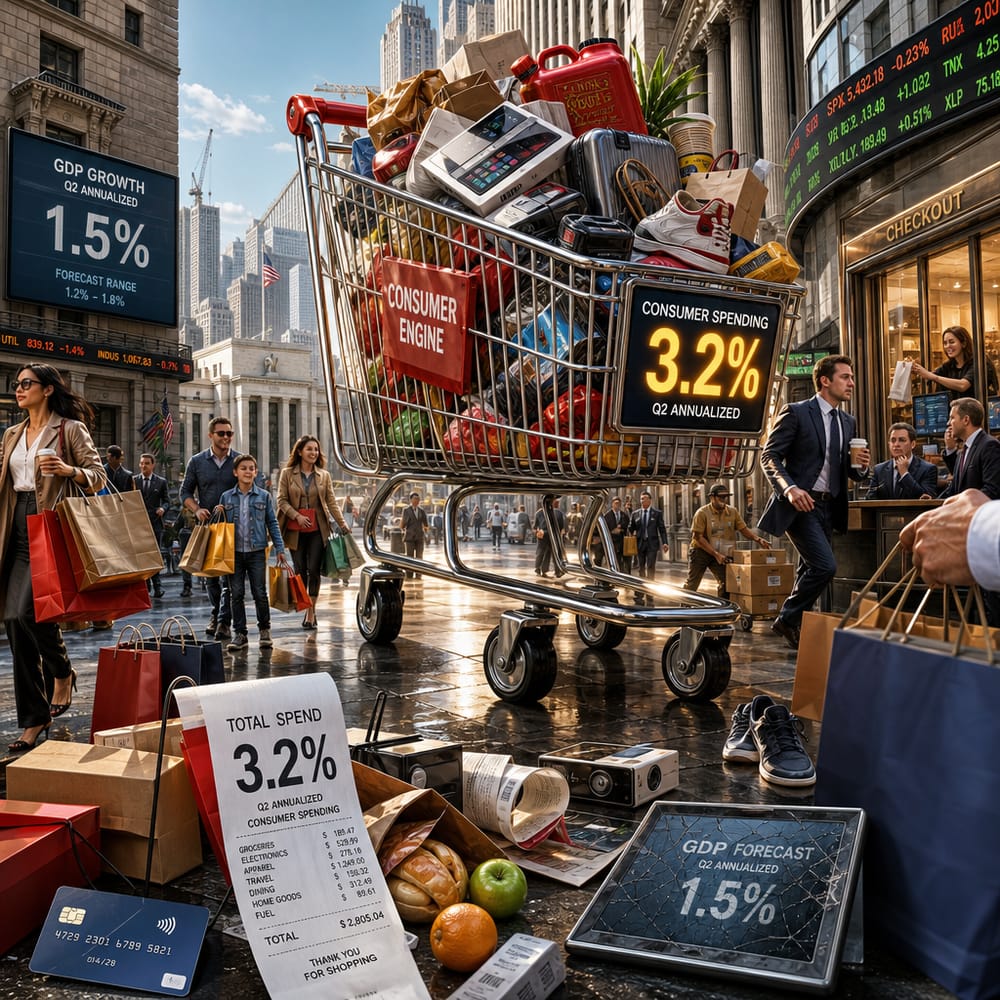
The U.S. economy is like a high-stakes game of Jenga right now. As one block pulls away, another teeters dangerously, but still somehow, it holds together. Q2 rolled in with a chill 1.5% GDP growth, leaving economists scratching their heads and retail investors wondering if they should panic or just keep scrolling. Yet, amidst the slower economic cadence, Americans are flexing their consumer muscles, ramping up spending by a robust 3.2%. Confused? Let’s dig into the paradox making headlines.
Picture this: the economy is pedaling along at a sluggish 1.5% annualized pace while consumers are throwing caution—and perhaps dollars—to the wind. Why the wild spending spree, you ask, when GDP growth is taking a siesta? Well, let’s just say, Uncle Sam's got a few tricks up his sleeve, and Americans are feeling adventurous.
WHAT'S DRIVING THE CONSUMER SPENDING BONANZA?
First off, let's give props to the labor market. Like a sturdy dad holding up the Slip ‘N Slide on the Fourth of July, employment remains robust, giving consumers the confidence to spend. The job market isn't just limping along—it’s strutting its stuff, with unemployment rates hovering around historic lows. A paycheck in your pocket tends to encourage a little retail therapy, even if the economy is humming a slower tune.
Next, the tale of two economies—interest rates and inflation. The Federal Reserve's delicate dance with interest rates is keeping borrowing costs relatively manageable. Meanwhile, inflation, while not vanquished, has been tamed enough to make consumer goods feel somewhat affordable again. Picture Goldilocks finding her porridge just right.
Finally, let’s not forget the nostalgia factor. Post-pandemic, there's a palpable urge to do more, buy more, experience more. Americans are making up for lost time, whether it’s travel, dining out, or splurging on hobbies. It’s like the country collectively decided to treat itself because, well, YOLO.
WHAT DOES THIS MEAN FOR THE ECONOMY?
So what’s the catch? This consumer spending binge might be just what the economy ordered to stave off recession fears, or at least delay them. But it’s not all sunshine and rainbows. The disconnect between tepid GDP growth and surging consumer spending is a bit like a sugar rush—it feels great but can’t last forever.
As we look ahead, economists are cautiously optimistic. Consumer spending makes up about two-thirds of the U.S. economy, so robust spending can prop up GDP, even if other sectors are faltering. However, we can’t ignore the underlying factors: slower growth indicates businesses might be hesitating on investments or scaling back due to future uncertainties. Think of it as a high-wire act—one false move and we might wobble.
Future economic forecasts will hinge on whether this spending spree can sustain or if it's a flash in the pan. The trick is maintaining the balancing act between growth, inflation, and interest rates. If consumers keep their confidence and wallets open, GDP might just perk back up in the coming quarters.
IMPLICATIONS FOR INVESTORS
For investors navigating this conundrum, the name of the game is cautious optimism. Consumer-focused sectors, like retail and leisure, could see upticks given the current spending uptick. But don't sleep on the broader market dynamics—tech sectors are still being bouyed by strong earnings and big gains from strategic investments, like those reported by giants riding the AI wave.
And here’s a little nugget for you: as consumers indulge, sectors tied to pastimes and hobbies, like crafts and gaming, are seeing a surge. Companies like Nintendo are riding this wave, and investments in these areas could provide a nice cushion for your portfolio.
In the end, the ongoing narrative of slower GDP paired with high consumer spending is a reminder of the economy’s complexity. It’s less a straightforward race and more a dance, choreographed with uncertainty and opportunity. Retail investors, keep your eyes peeled and your portfolios diversified—you never know when the music will change.
This article is for informational purposes only and is not investment advice. Always do your own research or consult a licensed financial professional before making investment decisions.
© Copyright 2024. All Rights Reserved.
© Copyright 2024. All Rights Reserved.