

Q2 GDP Slows Despite Strong Private Demand
Friday, August 21, 2026
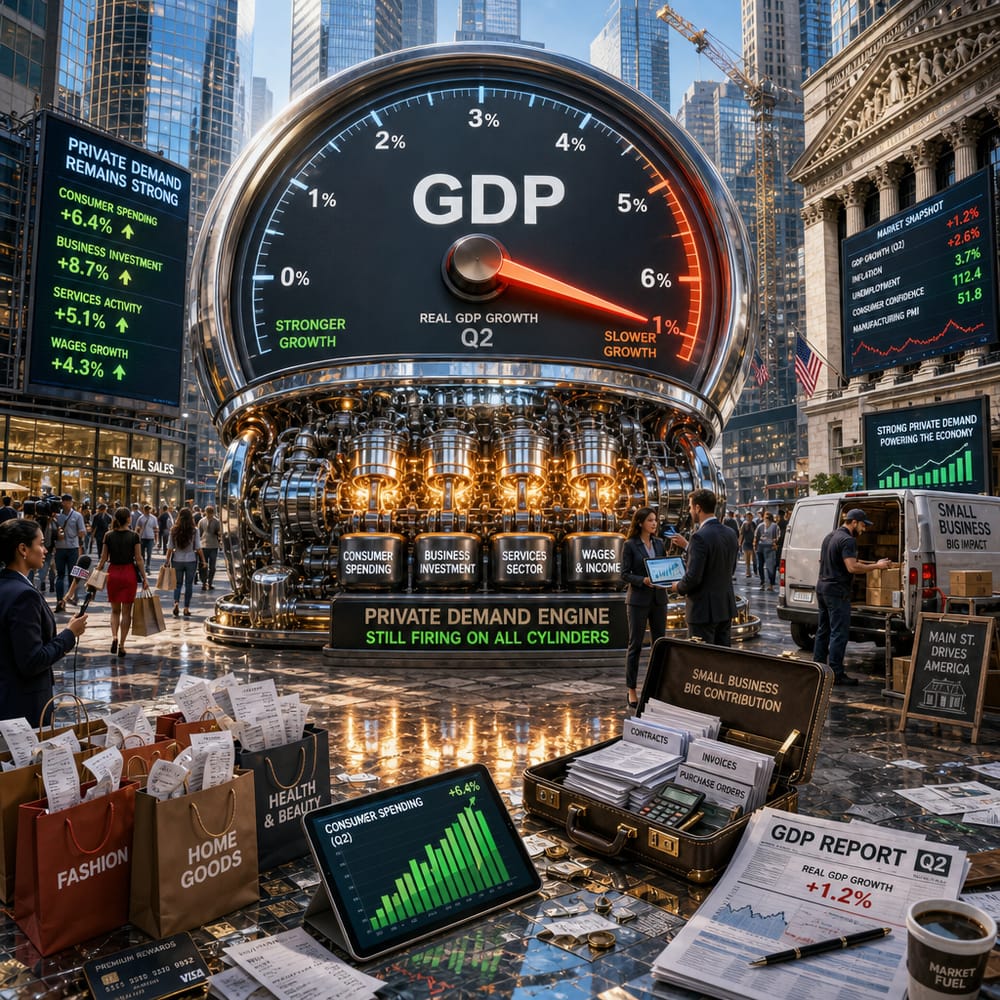
THE GROWTH PAUSE: Q2 GDP SLOWS BUT CONSUMERS KEEP SPENDING
You'd think the U.S. economy had just run out of gas and drifted to the shoulder. But no, it’s more like a cautious slowdown at a yellow light. The latest GDP numbers throw a bit of cold water on those expecting a rip-roaring economic surge in Q2. However, the gritty engine of the economy—the ever-energetic U.S. consumer—just doesn’t seem ready to give up the race.
So, what's the scene? The headline is that U.S. GDP growth slowed in the second quarter. What used to be a sprint feels more like a jog. But beneath the surface, there's still some pep in the step of consumer and private-sector spending. Think of it as a pothole in the middle of an otherwise smooth road.
WHAT'S KEEPING THE LIGHTS ON?
Let’s break it down. Consumer spending, the rockstar that usually takes the economy on tour, is still belting out hits. Despite the slowdown, Americans are spending on experiences: travel, dining, and entertainment. It’s not just because TikTok told them to; it’s a post-lockdown freedom dance. Meanwhile, sectors like healthcare and tech are keeping the cash registers ringing.
But wait, there’s more. Housing, that beautiful enigma, is defying gravity. Even with interest rates offering up a bit of a challenge, people are still diving into the market, whether for a place to live or to flip for profit. Housing might be a little tighter than a hipster’s jeans, but it’s not stopping people from trying to squeeze in.
WHY THE SLOWDOWN?
Okay, so if people are still spending, why the GDP crawl? Well, it’s a bit of a blame game with some usual suspects. Higher oil prices are back in the headlines, putting the squeeze on consumer wallets. And let’s not forget the looming shadow of rising inflation, driven by increased cost of goods across the board.
Then there’s the Treasury yields, which are soaring like a seagull on a Coney Island breeze. Rising yields can make borrowing more expensive, and that can suck the wind out of the sails of both businesses and consumers. It’s like the economy downed an espresso only to find out it was decaf.
GOVERNMENT POLICY AND FUTURE GROWTH
The question of the day: How does government policy change the game? Treasury Secretary Scott Bessent recently announced an increase in government debt purchases, a move that some, like billionaire investor Ray Dalio, read as a sign of caution. It's like the government putting on a flotation device in anticipation of stormy seas.
Inflationary pressures might call for a more aggressive interest rate strategy. However, balancing act would be an understatement when it comes to policy adjustments that can stimulate growth without triggering runaway inflation.
WHAT'S NEXT?
Future GDP growth is like a Netflix season finale—there's speculation, but nobody really knows what's coming. The key will be watching how these consumer spending patterns evolve, especially as they meet the headwinds of higher prices and tighter monetary policy.
Consider this your friendly reminder that while government strategies can set the stage, it’s the private sector and the consumer spending power that are the real stars of the show. The economy is riding two horses: resilient consumer demand and cautious policy moves. How well it manages to stay on both will ultimately decide the course of the road ahead.
So, retail investors, keep your eyes on the consumer spending trends and government policy adjustments. These are the dials that will determine whether the economy finds a fast lane or continues this cautious pace. After all, a yellow light is just a transition phase, not a permanent stop.
This article is for informational purposes only and is not investment advice. Always do your own research or consult a licensed financial professional before making investment decisions.
© Copyright 2024. All Rights Reserved.
© Copyright 2024. All Rights Reserved.