

Q2 GDP: Modest Growth with Upward Revisions to Inflation
Friday, August 28, 2026
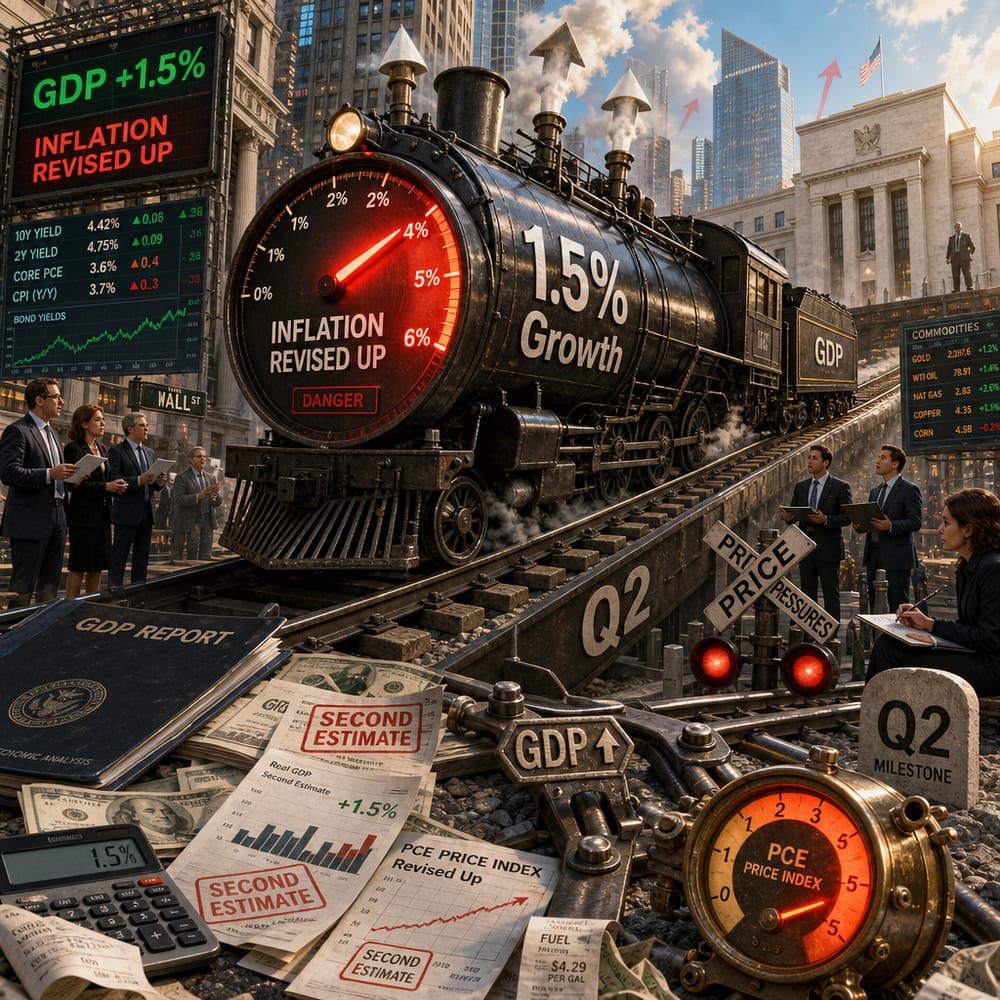
Hold onto your hats, because in the rollercoaster world of economic news, the latest twist is here: the second estimate of the U.S. Gross Domestic Product (GDP) for the second quarter of 2026 is out, and it's a revelation of modest growth mixed with a side of spicy inflation. But before you hit the snooze button, hear me out. This isn't just number crunching; it’s the kind of economic soap opera that affects your wallet, your investments, and maybe even that dream vacation to the Bahamas.
First, let's talk growth. The U.S. economy expanded at a tepid 1.5% annual rate in the second quarter. Not exactly fireworks, but it’s steady as she goes. It's like eating your vegetables: not exciting, but it keeps you healthy. The takeaway here is that the economy is still chugging along, dodging recession talks like a pro.
Now, onto the real headline-grabber: inflation. This time, the inflation indicators got a makeover, and let’s just say they didn’t get the flattering kind. Revisions nudged them upwards, flagging persistent price pressures. It’s the economic equivalent of realizing your jeans have been tighter than you thought all summer. The Personal Consumption Expenditures (PCE) price index, the Fed's favorite inflation measure, is showing the central bank they might need to do more than just whisper sweet nothings about interest rates.
Federal Reserve Chairman Kevin Warsh, the man with the monetary plan, made it clear that the Fed might need to keep its finger on the interest rate trigger if inflation doesn’t get with the program. His recent speech in Jackson Hole was a masterclass in financial diplomacy, hinting that more aggressive hikes could be on the horizon if inflation doesn’t simmer down.
So what does all this mean for you, dear reader? Well, the tea leaves suggest a couple of things. First, the inflation revisions could mean higher borrowing costs down the road. That could affect everything from mortgage rates to that credit card debt you’ve been meaning to tackle. It’s time to get strategic with your personal finances.
For investors, the upward revision in inflation data means it's time to brace for potential volatility. If the Fed decides to hike rates further, bond yields could rise and stocks might face some turbulence. Keep an eye on sectors that traditionally do well in a high-rate environment — think utilities and consumer staples that offer steady dividends.
Now, let's dive into the possible policy responses. Warsh and the Fed are walking a tightrope here. Raise rates too fast, and they risk stifling growth. Move too slowly, and inflation might just party on. It's the central bank equivalent of trying to maintain the perfect room temperature at a family gathering — someone’s always going to complain.
The revised GDP and inflation figures are crucial for shaping future economic policies. They serve as a compass for the Fed's next steps, so investors and economists will be glued to every word from the Fed like it's the latest episode of a binge-worthy series. The market, like a cat on a hot tin roof, is sensitive to hints of what's coming next. Short-term Treasury yields jumped after Warsh's comments, a sign that traders are bracing for rate hikes.
In conclusion, the modest GDP growth reminds us that the economy is stable, but it’s not time to break out the champagne. The upward shift in inflation figures is a wake-up call that the Fed might not be done with its rate-hiking journey. As retail investors, staying informed and nimble is key. Keep an eye on the economic indicators, watch how the Fed reacts, and adjust your strategies accordingly.
So, the next time you're sipping your morning coffee and scrolling through your phone, remember that behind those bland numbers lie stories of strategic decisions, market movements, and economic ripples that could stretch far and wide. It’s a drama worth following — after all, it’s your money on the line.
This article is for informational purposes only and is not investment advice. Always do your own research or consult a licensed financial professional before making investment decisions.
© Copyright 2024. All Rights Reserved.
© Copyright 2024. All Rights Reserved.