

Q2 GDP Growth Slows Amid Inflation Concerns
Sunday, August 30, 2026
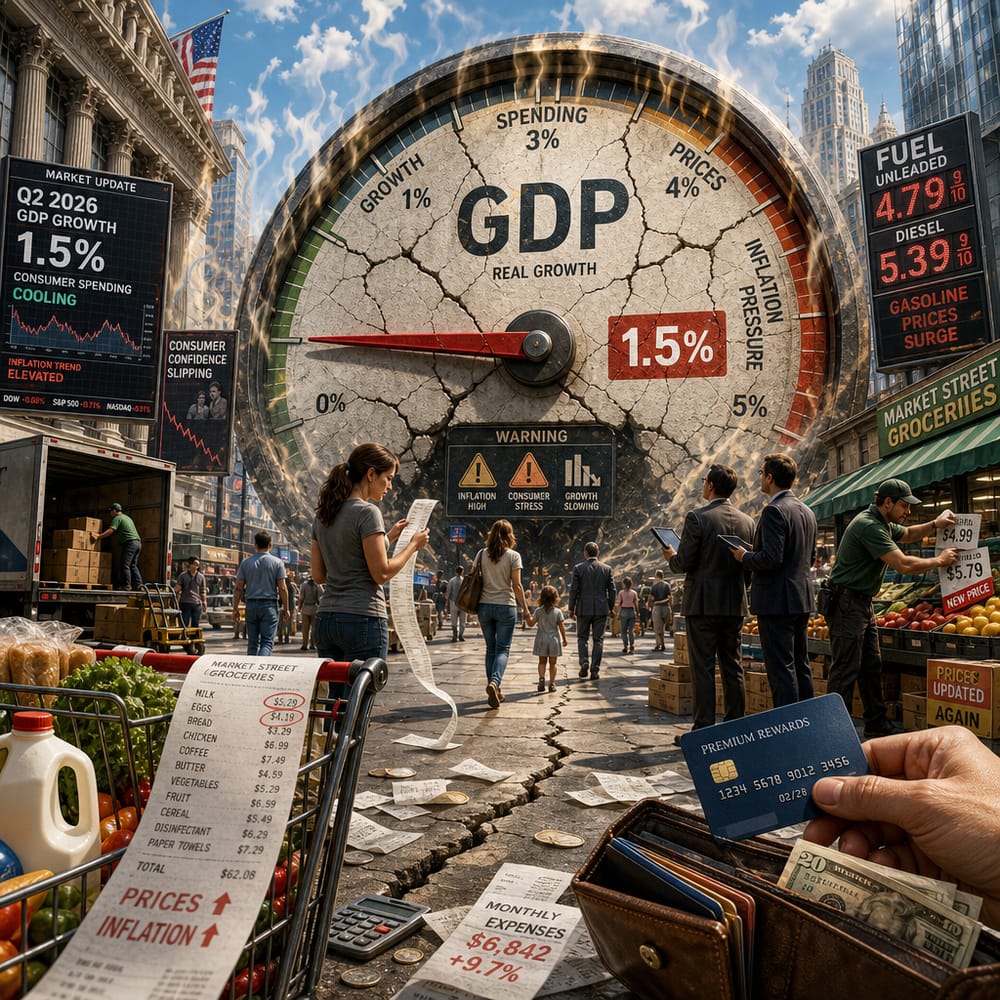
It’s the economic equivalent of hitting a yellow light you just couldn’t beat: U.S. GDP growth has decelerated to a sluggish 1.5% in the second quarter of 2026. While it’s not a full stop, it’s a noticeable slowdown from the earlier pace. The cause? Our old nemesis, inflation, is back in the game, making things trickier for everyone involved—especially the Federal Reserve.
Now, before you hit snooze, hang tight. This isn’t just another financial statistic to scroll past while waiting for your latte. The growth of the country’s GDP, or Gross Domestic Product (fancy talk for the total value of all goods and services made in the U.S.), is crucial. Think of GDP like a report card for how well the economy is doing, and right now, that report card has more red ink than a horror movie.
You’re probably wondering, why the slowdown in GDP? The short answer is inflation—a sneaky thief that’s been subtly robbing your wallet while you weren't watching. Rising prices mean consumers are spending more on essentials like groceries and gas, leaving less room for other purchases. It’s like buying an extra-large pizza and finding out it only comes with one slice.
This spending crunch means consumers aren’t opening their wallets like they used to. And when consumer spending shrinks, it drags GDP down with it. Couples that with businesses tightening their belts due to higher costs, and you get an economy growing at the pace of a snail on its way to a marathon.
So, how does this affect the Federal Reserve's next move? The Fed, always keeping an eye on the economic chessboard, finds itself in a quandary. Normally, a slowdown in GDP might prompt the Fed to lower interest rates, giving the economy a jolt to get things moving faster. But with inflation still a problem child, cutting rates could add fuel to the already raging fire of rising prices. It’s a delicate dance, and the Fed has to pick its steps carefully.
This situation is compounded by an economic environment that’s as predictable as a cat on catnip. Fed Chair Kevin Warsh, known for his quiet approach, has labeled the inflation situation as "concerning." Yet, in a break from tradition, he’s keeping mum on what moves the Fed might make. It’s like waiting for a text back that never comes, leaving traders to read between the lines and play the guessing game with their portfolios.
Financial markets, always hungry for signs, are left puzzling over what the Fed’s silence means. Will it tighten the money supply to curb inflation, or will it look the other way and let it ride a little longer hoping the economy finds its stride again?
In terms of what’s driving this GDP slowdown, you can point fingers at more than just consumer spending. Business investments have also taken a breather, likely because of the sky-high costs driven by inflation. When inflation is as common as small talk about the weather, companies put expansion plans on ice. Then there are the external headaches like geopolitical tensions and the ongoing scramble to regulate AI, which only add more gray hairs to the economic outlook.
For retail investors—yes, you, scrolling by—this environment could be as turbulent as a roller coaster with a few too many loops. The stock market might jitter as traders adjust their strategies based on the Fed’s next move, which, at this point, remains one of the best-kept secrets since the plot of a Marvel movie.
So, what’s an everyday investor to do? Keep your eyes peeled for any signs from the Fed, diversify your portfolio like you’re prepping for a potluck, and maybe keep a bit of cash in reserves for when the market decides to take an unexpected dip.
As we wait to see whether the Fed decides to play knight or bishop in this economic chess game, remember that the landscape can shift in the blink of an eye. Inflation might be the villain of the story right now, but with the right moves, the economy can still find its groove. Until then, buckle up and hold on; the next chapter of this economic drama is just beginning to unfold.
This article is for informational purposes only and is not investment advice. Always do your own research or consult a licensed financial professional before making investment decisions.
© Copyright 2024. All Rights Reserved.
© Copyright 2024. All Rights Reserved.