

Q2 GDP Growth Is Sluggish at 1.5%, Setting Up a Tepid Economic Outlook
Saturday, August 22, 2026
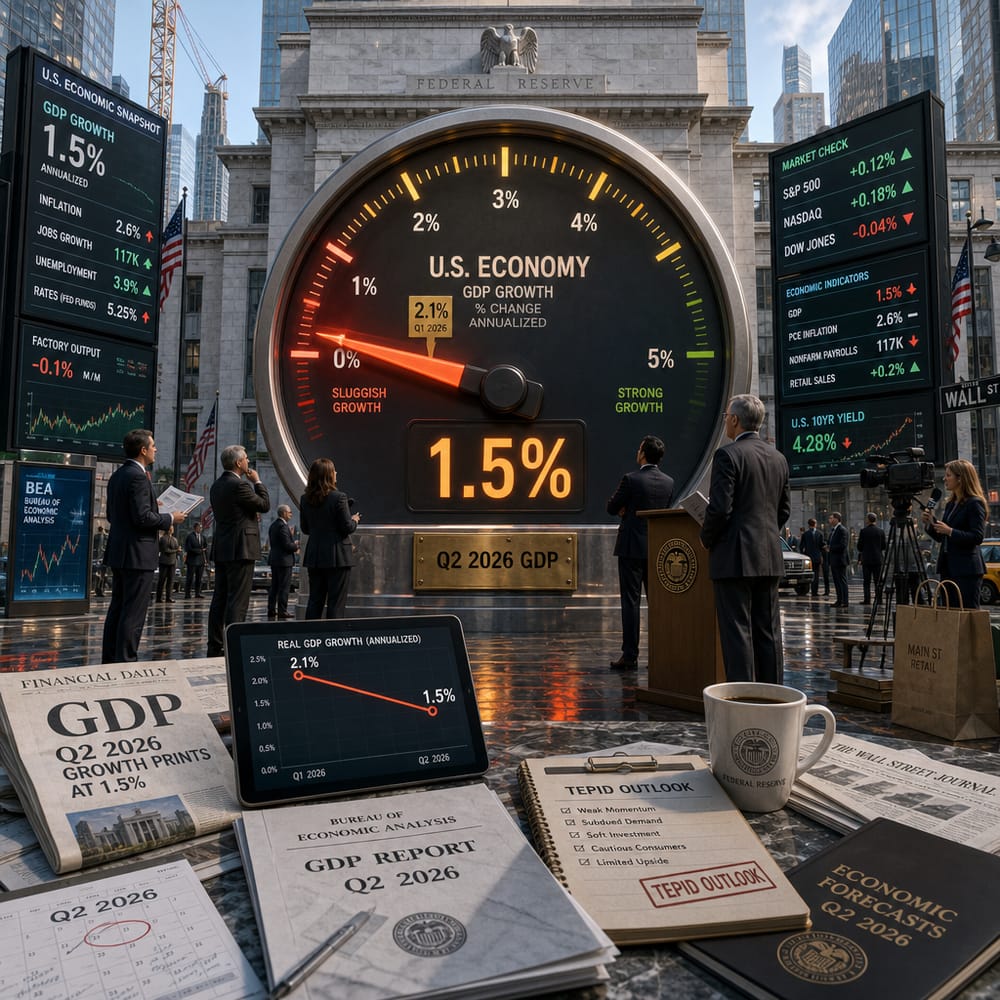
When the U.S. economy coughs, investors tend to check if they’ve caught a cold. And as of the latest data from the Bureau of Economic Analysis, it's looking like a touch of the sniffles. The GDP growth rate for Q2 2026 has slumped to an anemic 1.5%, down from the previous quarter’s slightly more respectable 2.1%. Is this just a minor setback, or are we bracing for some financial bed rest?
WHAT CAUSED THE SLOWDOWN?
Let’s dig into the numbers. The main culprit behind this slowdown is a subtle yet widespread tightening of the economic belt. Consumer spending, the life force that makes up roughly 70% of the economy, has shown signs of tapering. Americans, spooked by rising prices at the pump and groceries, are tightening their wallets, opting for more Netflix nights in than splurging on the latest blockbusters or lavish dinners out.
And it’s not just the consumer front that’s feeling the squeeze. Business investment, which had been a beacon of hope, is hitting a plateau. Companies are cautious, with many waiting to see where the wind blows before committing to big-ticket expenditures. The ongoing U.S.-Canada tariff tiff certainly isn’t helping matters, with businesses skittish about soaring costs on imported goods. On the other hand, government spending, which had been a small buffer, saw a decline, adding another hurdle to growth.
HOW WILL THIS AFFECT INFLATION?
Time to talk inflation, the boogeyman in every investor's closet. With a slowdown in growth, inflationary pressures might ease off a bit. Fewer dollars chasing goods can cool prices, at least in theory. But let's not pop the champagne yet; while the slowdown might press the brakes on inflation, it’s not slamming them down.
Higher costs, notably in energy and essentials, are still at large, pressuring households across the nation. Walmart, a retail bellwether, has already flagged higher gas prices as a party pooper for their sales growth. So, inflation might simmer down a notch, but it’s not leaving the kitchen just yet.
FEDERAL RESERVE: WHAT'S THE MOVE?
Now, all eyes turn to the Federal Reserve, our economic referee. With the current economic slowdown, the Fed might find itself in a balancing act. Previous hawkish stances to curb inflation might soften as growth deceleration becomes the bigger fish to fry.
The Fed’s usual playbook involves tweaking interest rates to either stimulate or cool down the economy. If growth continues to underwhelm and inflation shows signs of retreating, the Fed might hold back on further rate hikes, possibly even considering a cut to keep the economic engine from stalling. However, that’s a decision that’ll require careful consideration, not made lightly over a cup of morning coffee.
WHAT DOES THIS MEAN FOR INVESTORS?
So, where does this leave your portfolio? As growth slows, sectors relying on brisk economic activity might face headwinds. Consumer discretionary stocks—think luxury goods and big-ticket items—could face pressure if spending continues to tighten. On the flip side, defensive sectors like utilities and healthcare might shine as they tend to weather economic slowdowns with more resilience.
For those with a taste for global flavors, the international scene presents a mixed bag. The U.S.-Canada trade spat might spice things up, potentially affecting companies with cross-border interests. And let’s not forget the oil narrative unfolding across the Middle East, an ever-relevant factor that could sway energy stocks.
WHAT SHOULD YOU DO?
Stay informed, stay flexible. The economic landscape is a jigsaw puzzle, and sometimes the pieces shuffle overnight. Keep an eye on economic indicators, Federal Reserve announcements, and sector-specific news. Diversify your holdings to spread risk and consider sector rotations if necessary.
While the GDP dip isn’t cause for panic, it’s a reminder of the intricate ballet that is modern economics. The future may be a touch hazy, but with a little foresight and nimble strategy, your portfolio can navigate these uncertain waters. So, keep your cool, and let the data be your guide—after all, in the stock market game, knowledge is your best bet for staying ahead.
This article is for informational purposes only and is not investment advice. Always do your own research or consult a licensed financial professional before making investment decisions.
© Copyright 2024. All Rights Reserved.
© Copyright 2024. All Rights Reserved.