

Q2 GDP Growth Inches Down; Inflation Still Elevated
Wednesday, August 19, 2026
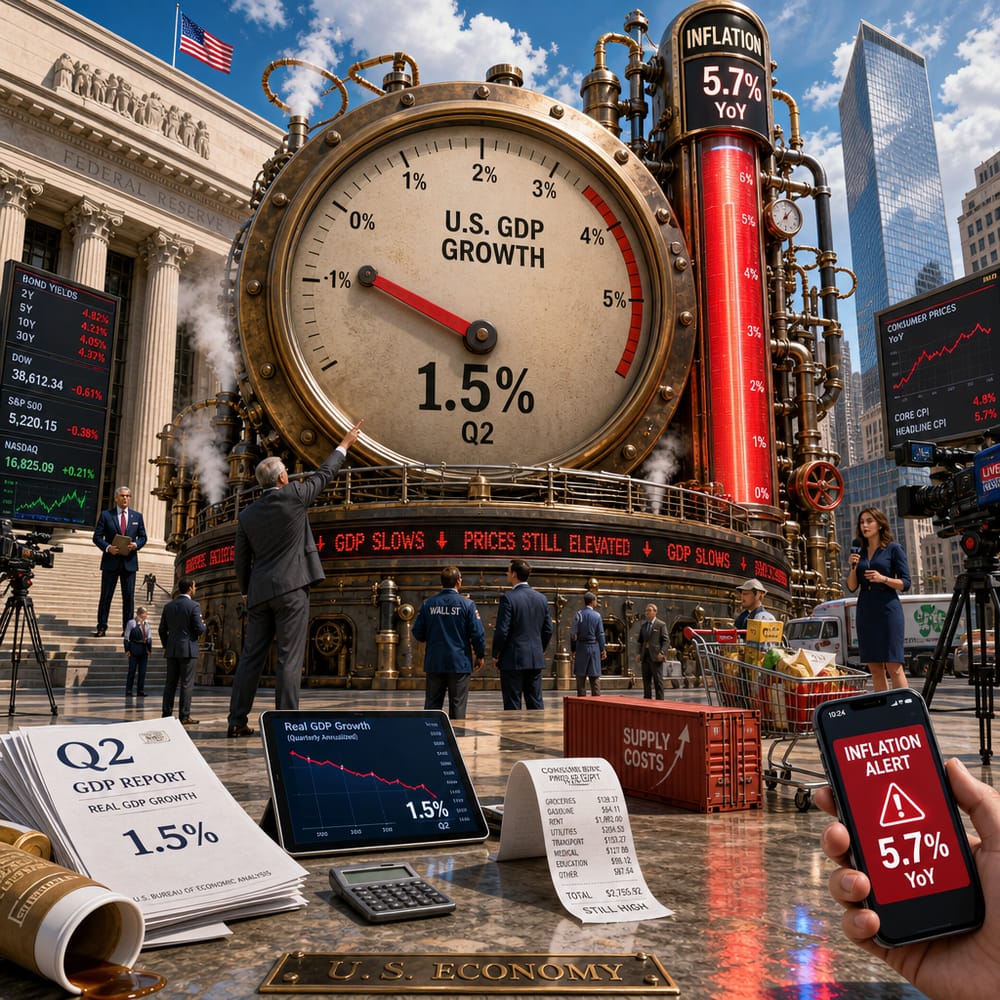
U.S. GDP Growth Loses Steam; Inflation Plays Stubborn Tag
Just when you thought the economy was gearing up for a speedy sprint, it's hit the brakes and decided to meander along at a leisurely pace. The U.S. GDP grew at a mere 1.5% in the second quarter, which, for context, is like trading Usain Bolt for your favorite Sunday stroller. But before you pop the champagne to celebrate slower growth taming inflation, think again. Inflation is still playing tag, and it’s just not getting caught. Let’s unpack what’s going on and what it means for your wallet and the Fed’s next move.
GDP: SLOW AND STEADY OR JUST SLOW?
The big question is, why did GDP growth decide to settle into the slow lane? Multiple factors are at play here. Consumer spending, usually the star quarterback of GDP growth, isn’t sprinting down the field as it did before. As the cost of living continues its stubborn rise, folks are tightening their belts. Home improvement projects are seeing a bit of ‘pressure’—just ask Lowe's and their tempered guidance. Essentially, when people aren’t buying as much or splurging at stores, growth takes a hit.
Then there's the export-import tango. A strong dollar makes American goods pricier abroad, shrinking our export numbers. Mix in global uncertainty and a pinch of geopolitical tensions, and you’ve got a recipe for stagnation. Businesses are cautious too, holding back investments and expansion plans until the economic waters are clearer.
THE INFLATION CONUNDRUM
Now, about inflation—imagine it as that friend who overstays their welcome. Despite the Fed’s best attempts to show it the door, inflation seems perfectly content on your couch. The gross domestic purchases price index, a fancy way of tracking inflation, reported a 5.7% increase year-over-year. Yikes!
Persistent inflation is a thorny problem. It erodes purchasing power, meaning your paycheck isn’t stretching as far as it used to. The Fed has been doing a complex dance, trying to balance tamping down inflation without spurring a recession. It’s a bit like trying to put out a fire without getting soaked.
WHAT WILL THE FED DO?
The Fed's job is like walking a tightrope over the Grand Canyon while balancing a stack of plates. With slower GDP growth joined at the hip with unyielding inflation, their policy decisions become trickier than ever. They’ve got a toolkit that includes adjusting interest rates, but choosing the right tool and knowing when to use it is crucial.
Interest rates are already relatively high, which is supposed to cool down inflation by making borrowing more expensive, thus slowing spending. However, with GDP growth taking a nap, jacking up rates further could risk pushing the economy into a recession. Nobody wants that—least of all the Fed.
THE INTEREST RATE CRYSTAL BALL
The Fed might take a ‘wait and see’ approach. They've already taken some heat for raising rates quickly over the past year. If they slam the brakes now, it could stabilize things, but it risks letting inflation stick around even longer. It’s a delicate balance.
The Treasury yields offer a window into market expectations. Recent ups and downs in yields indicate uncertainty and a bit of market nervousness over the Fed’s next steps. If they signal a rate pause, it might calm some nerves but could also hint at a longer inflationary period.
WHAT DOES THIS MEAN FOR EVERYDAY INVESTORS?
For retail investors skimming their portfolios over morning coffee, the message is clear: buckle up. The economic ride might be bumpy for a while. Keep an eye on sectors sensitive to interest rates, like real estate and tech, and be wary of overextending in highly leveraged investments. Value stocks or short-term bonds might look more appealing during these uncertain times.
Slower growth with persistent inflation is an economic cocktail that leaves a bitter aftertaste, but remember—it’s not the size of your portfolio's swings that matter most, but your ability to stay the course and adapt to the changing landscape.
So, as the Fed deliberates its next move from its economic chessboard, keep your wits about you. The economic marathon isn’t about speed but endurance—and knowing when to make a strategic move. Stay sharp, stay informed, and here’s to a smoother ride ahead.
This article is for informational purposes only and is not investment advice. Always do your own research or consult a licensed financial professional before making investment decisions.
© Copyright 2024. All Rights Reserved.
© Copyright 2024. All Rights Reserved.