

Q2 GDP Growth Disappoints But Consumer Spending Surges
Sunday, August 16, 2026
Q2 GDP Growth Disappoints But Consumer Spending Surges
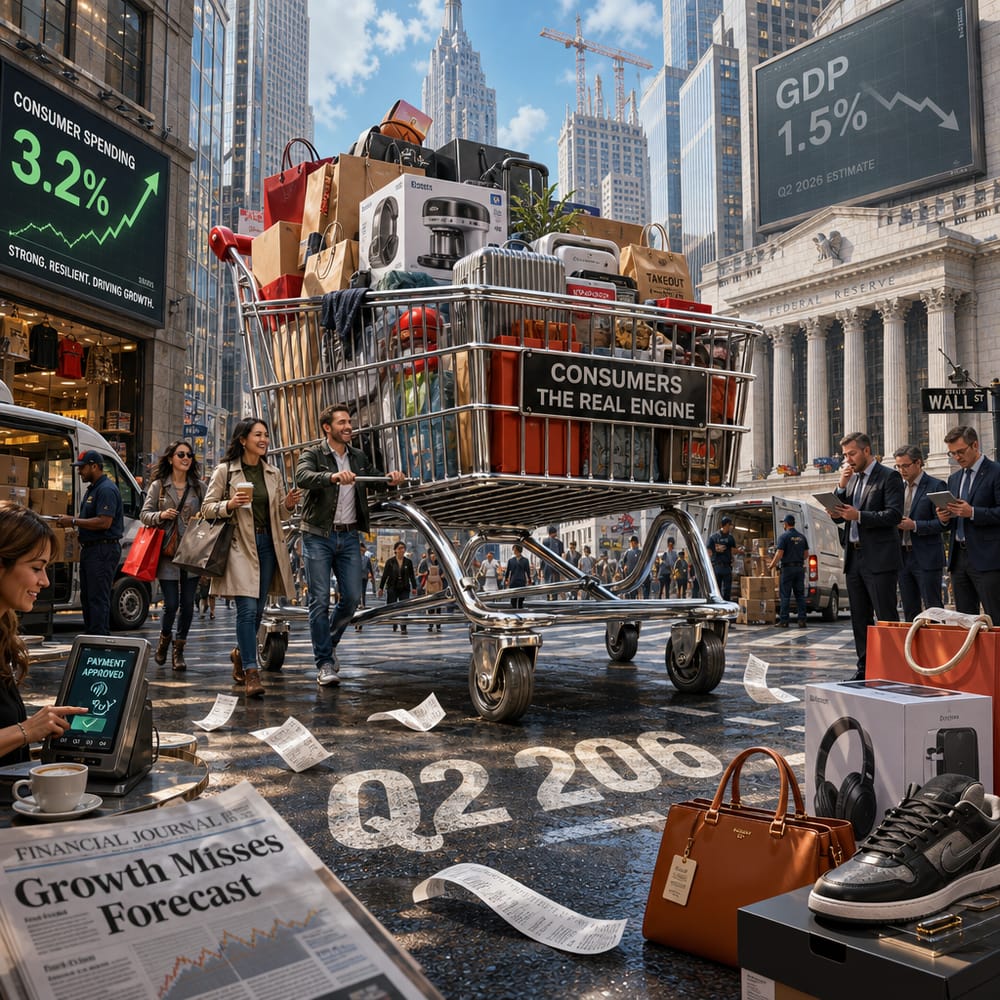
Call it the economic paradox of 2026: the U.S. economy is jogging at a leisurely pace of 1.5% growth in the second quarter, just as consumer spending is sprinting at an impressive 3.2% annual rate. It’s like the nation collectively decided to indulge in retail therapy while the broader economic engine puttered along like a golf cart on a freeway. So, what's fueling this consumer spending frenzy, and is it sustainable? Let’s dive into this curious case of economic bifurcation.
THE SHOPAHOLIC SPREE
Let's start with the obvious question: why are American consumers spending like there's no tomorrow? A few factors have woven together to create this tapestry of consumer exuberance. First, the job market remains relatively robust. Unemployment has hovered at historically low levels, which means more people have cash burning holes in their pockets.
Second, credit is easy to come by. With interest rates still relatively low, consumers are swiping their credit cards with the same enthusiasm as a kid at Disneyland. And let’s not forget the pandemic hangover — after years of lockdowns and restrictions, people are eager to spend on experiences and goods, from vacations to new wardrobe essentials.
The cherry on top? A dollop of optimism. Despite some media doomsayers, people feel good about the future. The expectation of stable income and the lack of imminent economic disaster whispers to consumers, "Go ahead, buy that new smart fridge; you deserve it."
SO, CAN THE SPENDING PARTY LAST?
Ah, the golden question: is this spending spree a house built on sand? The short answer: maybe. It's like trying to predict if a roller coaster has one more loop or if it’s heading back to the station.
One hurdle in the path of everlasting consumer joy is inflation. While it’s not the boogeyman it once was, rising prices can pinch the pockets over time. If wages don’t keep pace, consumers might tighten their belts instead of buying a third espresso machine.
Another concern is debt. The debt clock is ticking louder as consumers borrow more. If folks max out their credit lines or if interest rates creep up, the spending spree might fizzle out faster than a soda left in the sun.
And let's not forget the unpredictable hand of global events. Whether it’s geopolitical tensions or natural disasters, external forces can send ripples that quash consumer confidence quicker than you can say "trade war."
IMPLICATIONS FOR MARKETS AND INVESTORS
If you’re an investor with a keen eye on the consumer sector, these trends are like a high-stakes game of poker. A resilient consumer sector bolsters companies in retail and consumer discretionary sectors — think brands like Nike, Amazon, and your local retail darlings. A strong demand means they can ramp up production, roll out new products, and maybe even nudge prices upward without risking customer rebellion.
Yet, here’s the rub: if consumer spending takes a nosedive, these stocks could become as unpredictable as a cat on a hot tin roof. Investors might need to dial down expectations or hedge their bets with more defensive stocks in sectors like healthcare or utilities that are less dependent on consumer whims.
THE BOTTOM LINE
The economic narrative of Q2 2026 is a tale of two cities: slow GDP growth juxtaposed with robust consumer spending. While the consumer spirit is alive and kicking, the sustainability of this trend is as uncertain as predicting the weather in London. For now, the party is on, and as long as folks are buying, the economy has a shot at keeping its head above water. But always remember, in the world of finance, nothing is as certain as the fine print on a credit card offer.
This article is for informational purposes only and is not investment advice. Always do your own research or consult a licensed financial professional before making investment decisions.
© Copyright 2024. All Rights Reserved.
© Copyright 2024. All Rights Reserved.