

Q2 GDP Growth Confirmed at 1.5% Amid Inflation Challenges
Tuesday, August 18, 2026
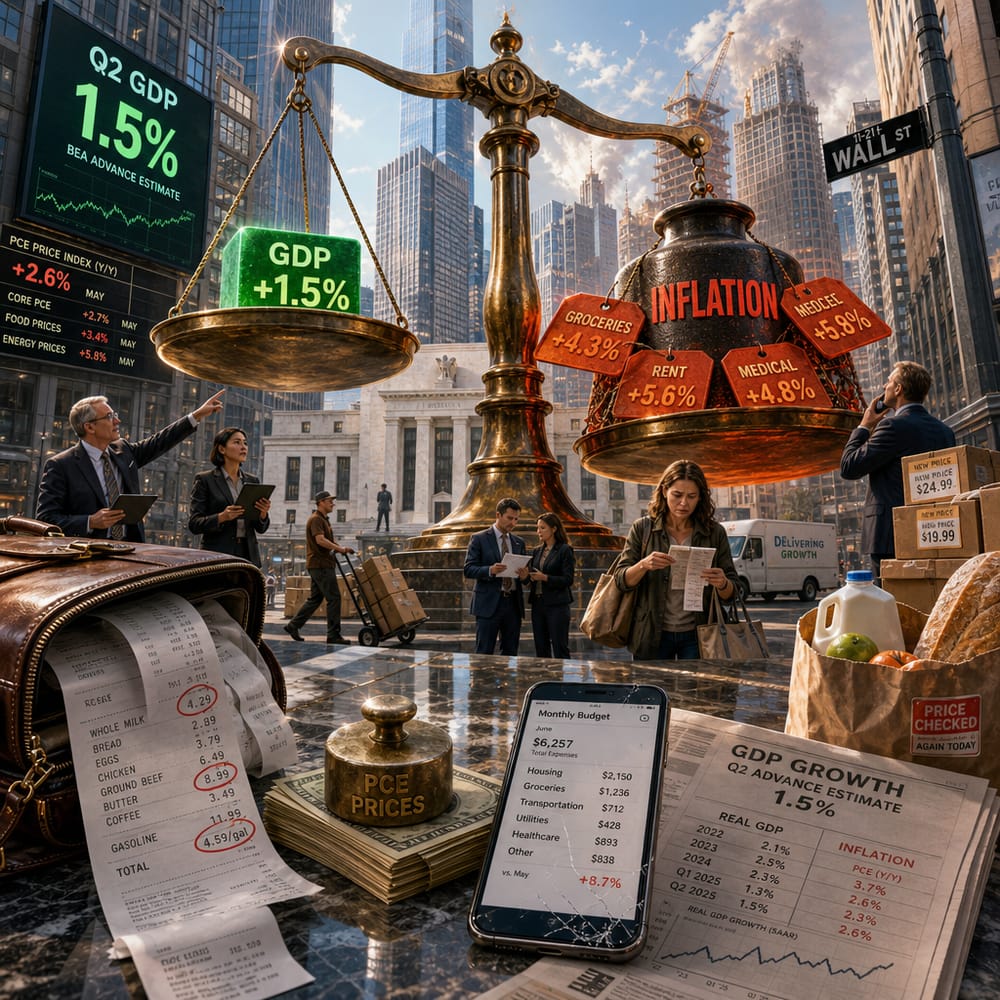
THE U.S. ECONOMY IS 1.5% RICHER, BUT INFLATION HASN'T LEFT THE PARTY
In the grand ballroom of economic indicators, the U.S. GDP just sauntered in with a 1.5% growth rate for the second quarter, donning its finest annualized tuxedo. But before we pop the economic champagne, there’s an uninvited guest in the corner: inflation, still stubbornly sipping on its overpriced cocktail.
So, what's keeping this GDP growth afloat? Well, let’s take a little tour through the economic amusement park. Leading the ride is consumer spending, the main rollercoaster engine, as Americans continue to loosen their purse strings. The personal consumption expenditures (PCE) price index, a fancy term for how much we’re all paying for goods and services, galloped at a not-so-leisurely pace. This kept the inflation flag fluttering, even as some sectors did their best to cool things off.
The real magic trick here is trying to grow an economy while inflationary pressures still play the part of the unwanted magician in the room, pulling price hikes out of seemingly nowhere. Higher costs for essentials like food and housing mean consumers are feeling the heat even as the economy tries to shake off the shackles of pandemic slowdowns.
HOW INFLATION IS IMPACTING ECONOMIC RECOVERY
Inflation is doing its best impression of a sticky guest, clinging to the walls of economic recovery like it has all the time in the world. With the Federal Reserve walking the tightrope of interest rates, trying to prevent this sticky situation from turning into a full-blown inflationary circus, the stakes are high. It's a balancing act worthy of Cirque du Soleil, with every slight move being scrutinized by investors and economists alike.
But not to worry, you savvy economy-watchers—the Fed is armed with its trusty rate hike strategy, though it's akin to using a spork in a steakhouse. The economics wizards at the Federal Reserve have been nudging rates upward, in what feels like an endless game of whack-a-mole, aiming to curb inflation without putting a damper on growth.
The challenge? Higher interest rates make borrowing more expensive, which can slow down the economy. Think of it as an economic brake; it’ll stop you from crashing but will slow your speed, making reaching your destination a calculated endeavor.
WHAT COULD BE DONE?
So, what’s next? The policy potluck has a few dishes cooking. One option is more fiscal stimulus, which translates to Uncle Sam opening his wallet a bit wider—more spending could help inject some life into industries that need a boost. But hey, that’s a double-edged sword. More government spending can also add fuel to the inflation fire, so it’s a bit like juggling flaming torches.
Another recipe involves addressing supply chain logjams. Remember that time you ordered something online months ago and it’s still not here? Yep, that problem. Fix it, and we could see inflation ease as supply meets demand in a more harmonious symphony.
On the lighter side, sectors like tech are still showing robust potential. Even as bond yields reach for the skies, the innovation train keeps chugging along. The latest rumblings from Wall Street suggest that tech companies are holding onto strong earnings, with exciting advancements in artificial intelligence promising new heights.
CONCLUSION
In the end, the GDP growth might be the headline act, but inflation is the subplot that refuses to leave the stage. As policy-makers sketch out their next move, eyes will remain fixated on these two controlling forces. Meanwhile, retail investors, like you and me, wait to see if the economic dance leads to a crescendo or an encore of inflation-induced acrobatics.
In the meantime, keep those notifications on, because the economic story is far from over. As always, we’ll keep you in the loop, deciphering the markets with a touch of wit and a splash of insight.
This article is for informational purposes only and is not investment advice. Always do your own research or consult a licensed financial professional before making investment decisions.
© Copyright 2024. All Rights Reserved.
© Copyright 2024. All Rights Reserved.