

Q2 GDP Confirmation: Moderate 1.5% Growth with Upward Revisions to Spending
Saturday, August 29, 2026
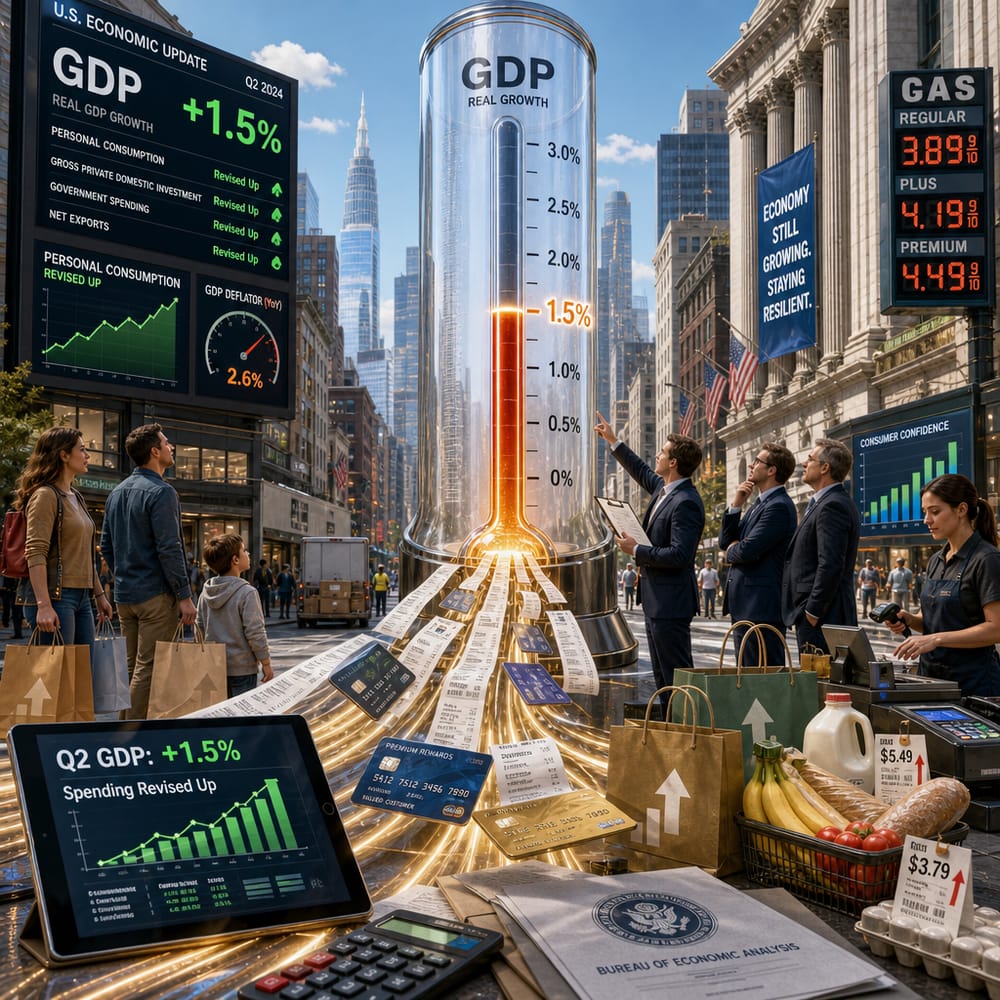
MODERATE GDP GROWTH: A SNEAKY INFLATION ALERT
If you think the universe is expanding fast, wait till you hear what’s happening with consumer spending. Hidden in the latest GDP numbers is a story as riveting as any thriller: the economy grew by a moderate 1.5%, while consumer spending, the economic powerlifting champ, lifted even heavier than expected. But before you pop the champagne, there's a twist in the tale. The GDP deflator is sounding the inflation alarm, and it’s not just a whisper. So, what does this all mean for your wallet, your investments, and the Federal Reserve's next move?
So, here's the scoop. The recent GDP report confirmed that the economy chugged along at a 1.5% annualized growth rate in the second quarter. Not too hot, not too cold, but just Goldilocks enough to keep the wheels turning. But the real headline grabber is the upward revision in personal spending. Yep, people are spending more, and not just on their weekend brunch. But hold onto your lattes; the pesky GDP deflator is casting a shadow over this consumer confidence with its inflation spotlight.
The GDP deflator, for those not buried in economic textbooks, is a fancy term for measuring the level of prices of all new, domestically produced, final goods and services in an economy. Think of it as a wide-angle lens view of inflation. While the economy grows, if the deflator's rising fast, it could mean inflation is lurking behind that growth, waiting to pounce on your purchasing power like a cat on a laser pointer.
Now, what exactly does this mean for inflation? Simply put, if the GDP deflator is climbing briskly, it indicates that inflationary pressures are bubbling up beneath the surface of the economic growth. It’s like the universe expanding faster than the speed of light, but in this case, it’s prices, and they’re reaching for the stars.
All eyes are now on the Federal Reserve, the economic Avengers, tasked with the mighty mission of balancing growth and inflation. The Fed uses interest rates as its main tool, hiking them to cool an overheated economy or slashing them to encourage spending. When inflation revs up, the Fed might lean towards raising interest rates. In other words, borrowing costs might go up, making credit card balances and car loans a bit more expensive to manage.
Yes, the Fed's decisions on interest rates are crucial because they shape the economic landscape like a sculptor molds clay. A rate hike too soon could slow down growth, while waiting too long might let inflation run wild. It’s a high-stakes game of economic Jenga where pulling the wrong block might topple the whole tower.
The markets and investors are keeping a close watch. Sectors sensitive to interest rates, like housing, could see a slowdown if borrowing becomes pricier. Conversely, financial stocks might get a boost because banks earn more from higher rates. But overall, a rise in rates tends to put a damper on stock market euphoria, as higher rates make bonds more appealing compared to riskier stocks.
In a world where every central bank move is analyzed under a microscope, this GDP report adds a new layer of drama. Are we headed for a rate hike showdown at the next Federal Reserve meeting? Will inflation prove to be the villain of this economic story, or can the Fed strike the right balance to keep growth on track without letting prices run amok?
For now, stay tuned and keep your ear to the ground. As this economic saga unfolds, remember that staying informed is your best ally in navigating the dynamic world of markets. So, hold on. The economic rollercoaster isn’t slowing down anytime soon, and the next twist might just be around the corner.
This article is for informational purposes only and is not investment advice. Always do your own research or consult a licensed financial professional before making investment decisions.
© Copyright 2024. All Rights Reserved.
© Copyright 2024. All Rights Reserved.