

Producer Prices Ease as Supply Pressure Subsides — PPI Slows in July
Sunday, August 16, 2026
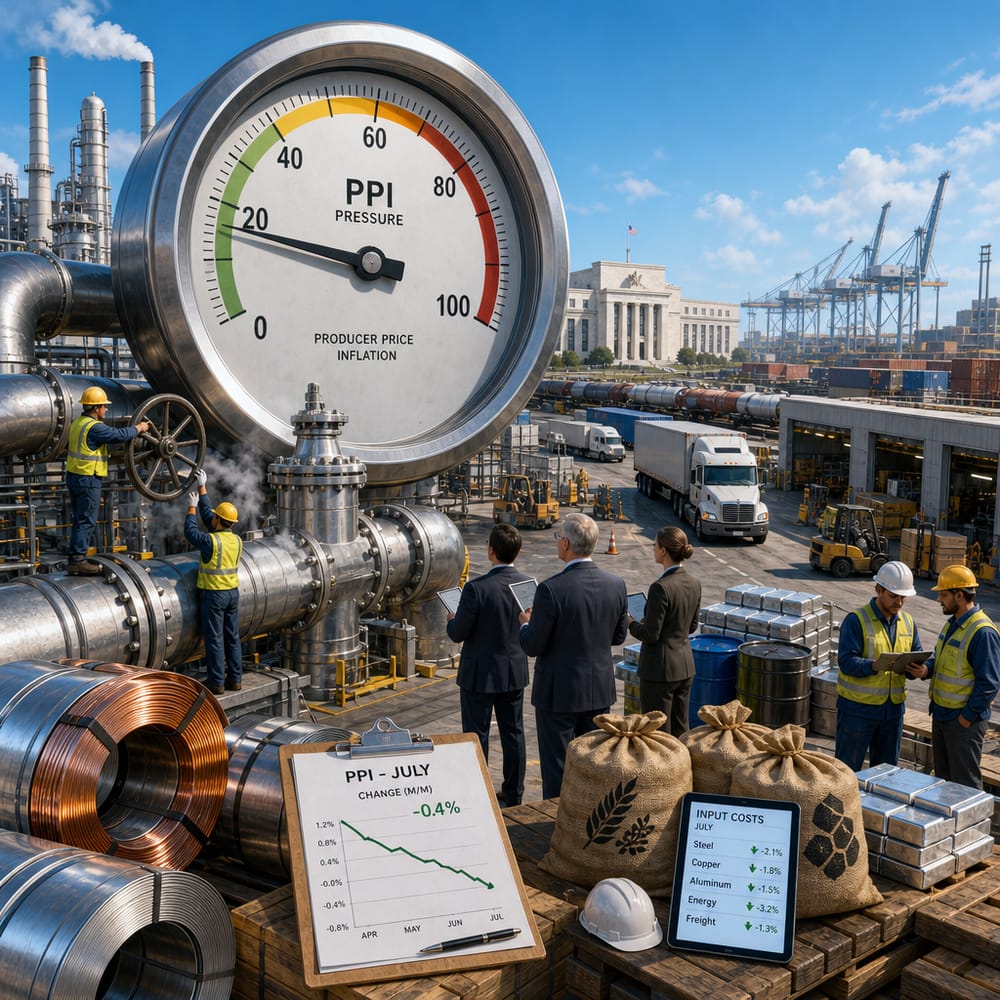
PRODUCER PRICES EASE AS SUPPLY PRESSURE SUBSIDES — PPI SLOWS IN JULY
Ever had one of those mornings where your coffee tastes just right, the traffic light stays green, and suddenly, nothing feels impossible? Well, that’s precisely what's happening with the Producer Price Index (PPI)—the little number that could—and it’s giving America's industrial sector a reason to smile. The PPI’s year-over-year increase slowed to an oh-so-sweet 4.7% in July, down from June’s 5.5%. It’s like finding out your rent’s not going up and Netflix is keeping your favorite show. Win-win.
So, why the sudden slowdown? Picture a relaxed supply chain, a leisurely river instead of a frantic, bubbling cauldron. The chaos of pandemic-era bottlenecks and shipping crises is easing up. Factories are cranking out goods like it’s the Roaring Twenties, and the backlog of ships waiting to unload at ports has finally dwindled to something resembling normalcy. And just like that, the pressure cooker that’s been boiling over with price hikes is finally cooling down.
Now, why does this cooling PPI matter, you ask? Well, it could be a magician’s trick for taming the wild beast that is inflation. With production costs taking a chill pill, there’s hope that the prices you and I see at the checkout might stop climbing—maybe even roll back a tad. This easing of pressures could stabilize core inflation, that pesky underlying increase that strips out food and energy costs and keeps economists up at night.
And it’s not just about cheaper widgets and gadgets. This shift has real implications for the industrial sector, the powerhouse of production. With supply chain hiccups smoothing out, factories might start running with greater efficiency and lower costs. It’s like giving the industrial sector a high-performance engine after driving on fumes for too long. Lower costs can mean higher profits, and potentially, more investment in growth. Happy factories, happy investors, right?
But before we pop the champagne, let’s look under the hood. Several factors contributed to this rosy PPI report, starting with improved logistics and reduced volatility in commodity prices. Energy, a notorious wild card, has been less erratic, helping manufacturers budget and plan without fear of a sudden oil price roller coaster. Additionally, technological advancements in supply chain management are playing a crucial role. Think of it as the tech industry's love letter to manufacturing—making everything from inventory tracking to demand forecasting smoother and smarter.
Looking ahead, if this trend continues, we could see a ripple effect on future inflation trends. A less volatile PPI could be a signal to the Federal Reserve that it’s time to hit the brakes on aggressive interest rate hikes. Remember, the Fed has been the hall monitor, keeping inflation in check by making borrowing more expensive. With the price of goods stabilizing, they might ease up on those rate hikes, giving businesses and consumers a bit more room to breathe.
So, what could this mean for industrial production costs? Lower input prices could encourage companies to ramp up production without fear of eroding their margins. This could spur a cycle of increased output, potentially boosting employment and driving economic growth. Investors might see this as a green light to pour resources into industrial stocks, betting on a sector ready to roar back to life.
Of course, it’s not all sunshine and rainbows. The global economy is a fickle beast—trade tensions, geopolitical issues, or a sudden spike in demand could quickly rock the boat. The industrial sector will need to stay nimble, ready to pivot as external factors shift.
In summary, the July slowdown in the PPI is a bit of a breather, a moment to look around and see that maybe, just maybe, the storm is passing. For investors eyeing the industrial sector, it could be time to reassess, looking at the potential for growth with a dash of optimism. The economy, much like your morning coffee, is all about balance. And for now, it seems we've got the perfect blend. Who knew a number could bring such hope?
This article is for informational purposes only and is not investment advice. Always do your own research or consult a licensed financial professional before making investment decisions.
© Copyright 2024. All Rights Reserved.
© Copyright 2024. All Rights Reserved.