

Producer Price Index Stalls, Indicating Easing Wholesale Inflation
Saturday, August 15, 2026
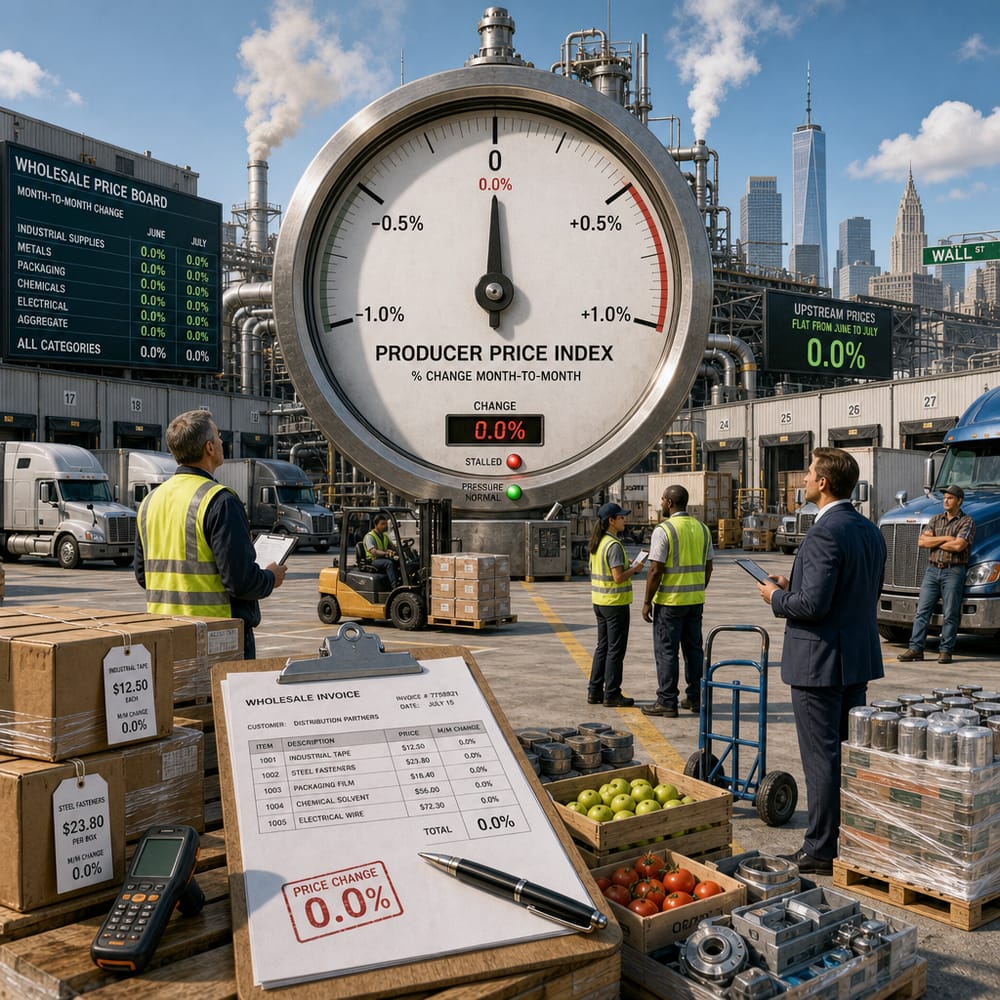
WHOLESALE INFLATION TAPERS OFF: WHAT IT MEANS FOR YOUR WALLET
Hold onto your wallets, folks! It seems like the whirlwind of skyrocketing prices might be taking a breather. The latest numbers from the Producer Price Index (PPI), the unsung hero of economic indicators, have hit the pause button, showing no change from June to July. What does this mean for you, the everyday consumer? Let’s break it down.
THE LOWDOWN ON THE PPI
First things first, let's talk about this thing called the Producer Price Index. Think of it as the backstage pass to the economy, giving us a glimpse into what businesses are paying for goods. If these prices slow down or stop rising, it's a good bet we’ll feel it at the checkout line soon after. In July, the PPI decided to take a chill pill, suggesting that wholesale inflation pressures are cooling off. Cue collective sigh of relief.
WHY SHOULD YOU CARE ABOUT WHOLESALE INFLATION?
Here's the deal: when wholesale inflation slows, it often leads to lower prices for you, the consumer. Imagine a world where your grocery bill doesn’t make you break out in a cold sweat—that’s the dream scenario we’re inching towards. Lower prices mean your dollars stretch further, giving you the freedom to spend or save more. And who doesn’t want a little extra cash in their pocket?
SECTOR SHAKEDOWN: WHO'S FEELING THE HEAT?
So, which sectors are getting jittery with this shift in wholesale prices? The usual suspects are at the forefront—food, energy, and manufacturing. Picture this: if the cost of producing your favorite box of cereal doesn’t spike, chances are it won’t feel like a luxury item on your next grocery run. But it’s not just about breakfast—energy costs are also crucial. With lower prices for oil and gas trickling down, it might just cost you less to fill up your gas tank or keep your home toasty in the winter.
THE RIPPLE EFFECT: HOW CONSUMERS MIGHT REACT
Now, let’s dive into your mindset. When prices stabilize or drop, people tend to loosen their purse strings. If things stay on this path, you might be more inclined to splurge a little—whether it’s on that fancy coffee you’ve been eyeing or upgrading your tech gadgets. With more spending comes boosted economic growth, a win-win for everyone. Plus, companies might stop passing costs onto you, the consumer, meaning you could get more bang for your buck.
THE BIGGER PICTURE: ECONOMIC GROWTH
Lower inflation isn’t just about individual spending—it’s a broader economic signal. When costs stay controlled, it encourages businesses to invest, expand, and hire more workers. This cycle can lead to job growth and a healthier economy overall. It's like a positive domino effect, where everyone gets to play a part in the economic upswing.
SO, WHAT'S NEXT?
While the PPI's flatlining is a promising sign, it's not time to pop the champagne just yet. The economy is a complex beast, and many factors can still stir the pot. Geopolitical tensions, natural disasters, or unexpected demand spikes could throw a wrench in the works. But for now, let's relish the reprieve from relentless price hikes and keep an eye on how these trends develop in the coming months.
In the meantime, remember to keep your eyes peeled for sales, stay savvy with your spending, and enjoy the little victories in your personal economy. After all, every dollar saved is a dollar earned. And who knows, maybe your next grocery trip won’t require a second mortgage!
This article is for informational purposes only and is not investment advice. Always do your own research or consult a licensed financial professional before making investment decisions.
© Copyright 2024. All Rights Reserved.
© Copyright 2024. All Rights Reserved.