

Producer Price Index Stagnates, Easing Inflation Concerns
Friday, August 14, 2026
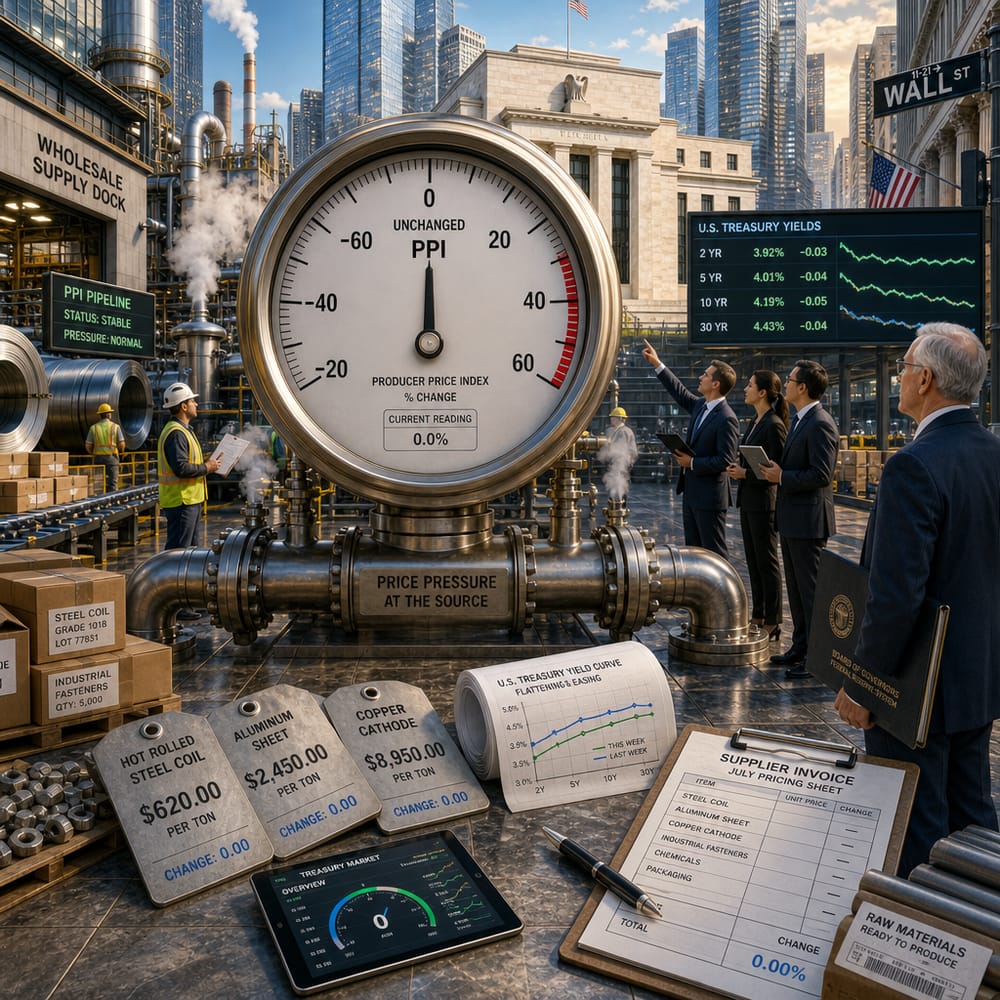
THE PRODUCER PRICE INDEX STANDS STILL: WHAT THAT MEANS FOR YOUR WALLET
In a world where prices are soaring like your favorite roller coaster, the Producer Price Index (PPI) is playing the part of the ride that slows to a halt—completely unchanged in July. That's right, folks. For the first time in a while, the PPI isn't moving, signaling that inflation might finally be tapping the brakes. Let's unpack this, shall we?
For those uninitiated into the world of economic jargon, the Producer Price Index measures the average change over time in the selling prices received by domestic producers for their output. In layman's terms, it's what businesses pay to make the stuff we eventually buy. And when that cost stagnates, like it did in July, it could mean that your chicken nuggets and new sneakers won't cost you an arm and a leg more than last month. Fingers crossed.
Now, why did the PPI decide to chill out this summer? Picture this: energy and food prices have been all over the shop lately. The war over in Iran previously sent oil prices soaring, but those have since cooled. And let's face it, the food sector has been a basket of chaos thanks to everything from climate unpredictability to labor strikes. As these costs stabilize, so does the PPI. It's a classic case of too much drama leading to an eventual snooze.
So, what does this mean for the price tag on your next grocery haul? While the PPI isn't a crystal ball, it is a pretty reliable hint. If businesses aren't facing escalating costs, they have less need to pass those hikes onto consumers. See, the PPI is like the dress rehearsal for the Consumer Price Index (CPI)—the one we all really care about because it's a more direct reflection of what we pay day to day.
With wholesale inflation slowing, the odds are that retailers might not jolt us with steep price hikes in the coming months. But, before you get too excited, remember that businesses don’t always pass on savings. Sometimes they keep the difference—hey, it’s a tough economy out there.
Now, let’s chat about the Federal Reserve, the puppet master of interest rates. With inflation pressures easing, the Fed might not feel the urgency to jack up interest rates again. And that's something to celebrate because higher interest rates make borrowing more expensive, whether you're buying a house or financing a fridge.
This brings us to Treasury yields—those foot soldiers of the bond market. When inflation fears cool, investors tend to accept lower yields, leading to a dip in long-term interest rates. And that could mean cheaper loans and mortgages for you. Score!
Of course, we're not out of the woods yet. The Fed is still walking a tightrope, balancing inflation concerns against growth needs, and their next move is anyone’s guess. But for now, we retail warriors can breathe a little easier knowing the PPI has thrown us a bone.
In the end, while the PPI’s July standstill isn't a fireworks celebration, it's a gentle nod indicating that inflation might be calming its jets. Keep an eye on those CPI readings and Fed announcements—they’ll be the real show. For now, maybe it's time to reconsider that splurge on avocado toast. After all, who knows what the next economic plot twist will be?
This article is for informational purposes only and is not investment advice. Always do your own research or consult a licensed financial professional before making investment decisions.
© Copyright 2024. All Rights Reserved.
© Copyright 2024. All Rights Reserved.