

Producer Price Index Eases, Offering Inflation Relief
Tuesday, August 18, 2026
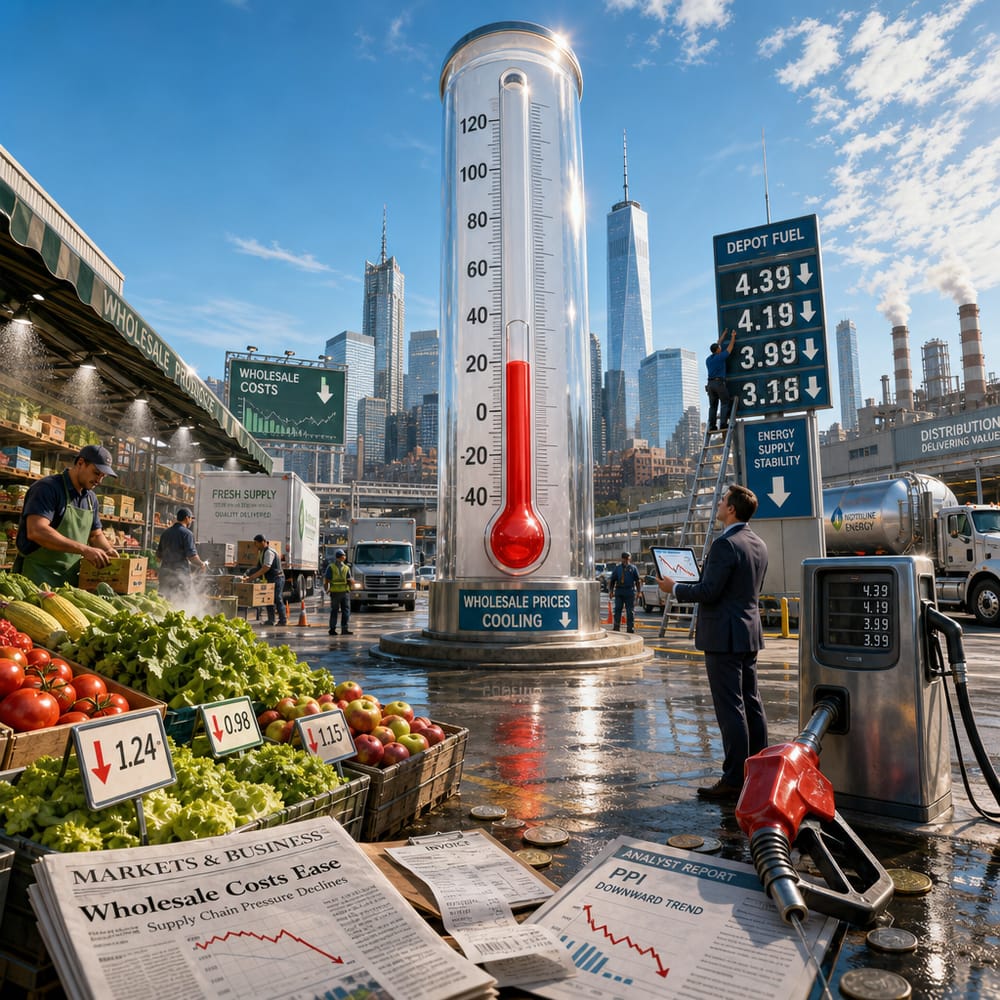
Timing is everything, they say, and in the grand concert of economic signals, the Producer Price Index just hit a softer note. That’s music to the ears of anyone tired of living in a world where inflation has been the obnoxious tune that just won't stop playing. So, what's the latest movement in this symphony? The PPI, the backstage pass to understanding the cost of producing goods, slowed to a 4.7% annual gain in July from its previous rate of 5.5% in June. With gas and food prices taking a dip, could we finally be seeing a cooldown in inflationary pressures?
WHAT'S BEHIND THE SLOWDOWN?
The stars of this economic performance, or perhaps the understudies now stepping into the spotlight, are lower gas and food prices. Gas prices, the usual culprit in driving up living costs, seem to have taken a back seat. Less pressure at the pumps means transportation is a little less costly, which can ripple outwards, helping businesses breathe a sigh of relief. Similarly, food prices—those fickle beasts—have also eased, contributing to the overall deceleration. Now, why should you care? Because if the trend continues, you might actually have some spare change left after your grocery run.
Why the retreat, you ask? It's a mix of global and domestic factors. Global oil supply has seen some stabilization and, domestically, more favorable weather conditions have helped boost crop yields, easing food supplies. It's like Mother Nature and OPEC decided to throw us a bone.
AN EYE ON THE FUTURE
Let's break it down—how does a slowing PPI impact the future Consumer Price Index (CPI), the metric that directly hits your wallet? Well, PPI is the predictor, the economic crystal ball if you will. When the cost for producers to create goods decreases, it's often only a matter of time before consumers see those savings on store shelves. So, if PPI is losing steam, CPI might just follow suit, hinting at the potential for less dramatic price hikes ahead.
Cue the Federal Reserve, the maestros of interest rates, watching these numbers like hawks. If inflationary pressures are genuinely easing, it might just give them the confidence to hold off on further interest rate hikes. Lower interest rates mean borrowing costs won't climb as fast, which could keep the economy buzzing without the caffeine crash of spiraling inflation.
THE BIGGER PICTURE
It’s not just about the numbers—it’s about what they represent. The slowdown in the PPI is akin to the economy taking a deep breath, maybe stepping back from the edge of runaway inflation. But will this be a sustained trend? Ah, there’s the rub. Economists will be closely monitoring incoming data, checking if the stars continue to align.
Moreover, while we’re looking at food and gas, don’t forget about the wild cards: geopolitical tensions, supply chain disruptions, and the ever-present specter of climate change. They could all knock this lovely trajectory off course faster than you can say "interest rate hike."
THE RIPPLE EFFECT
Sectors like food and gas, now experiencing some relief, have broader implications. Lower producer costs could lead to better margins for businesses, potentially resulting in stable or decreased prices for consumers. That’s good news for your wallet and for sectors dependent on these essentials, like transportation and logistics.
And yet, in the trading waters, where every investor is a navigator seeking fair winds, these easing pressures might mean a less volatile market environment. Stocks have been jittery, with bond yields on a rollercoaster and tech stocks taking a recent hit. Easing inflation could stabilize these markets, offering a smoother ride for investors.
In the end, while the PPI’s easing may seem like a small note in the grand economic symphony, it could be the prelude to more harmonious market conditions. So, keep your ear to the financial ground and your eye on the CPI—it just might be the soothing lullaby the economy needs right now.
This article is for informational purposes only and is not investment advice. Always do your own research or consult a licensed financial professional before making investment decisions.
© Copyright 2024. All Rights Reserved.
© Copyright 2024. All Rights Reserved.