

Premium on Wholesale Prices Slides: A Glimmer of Cooling Cost Pressure
Tuesday, August 18, 2026
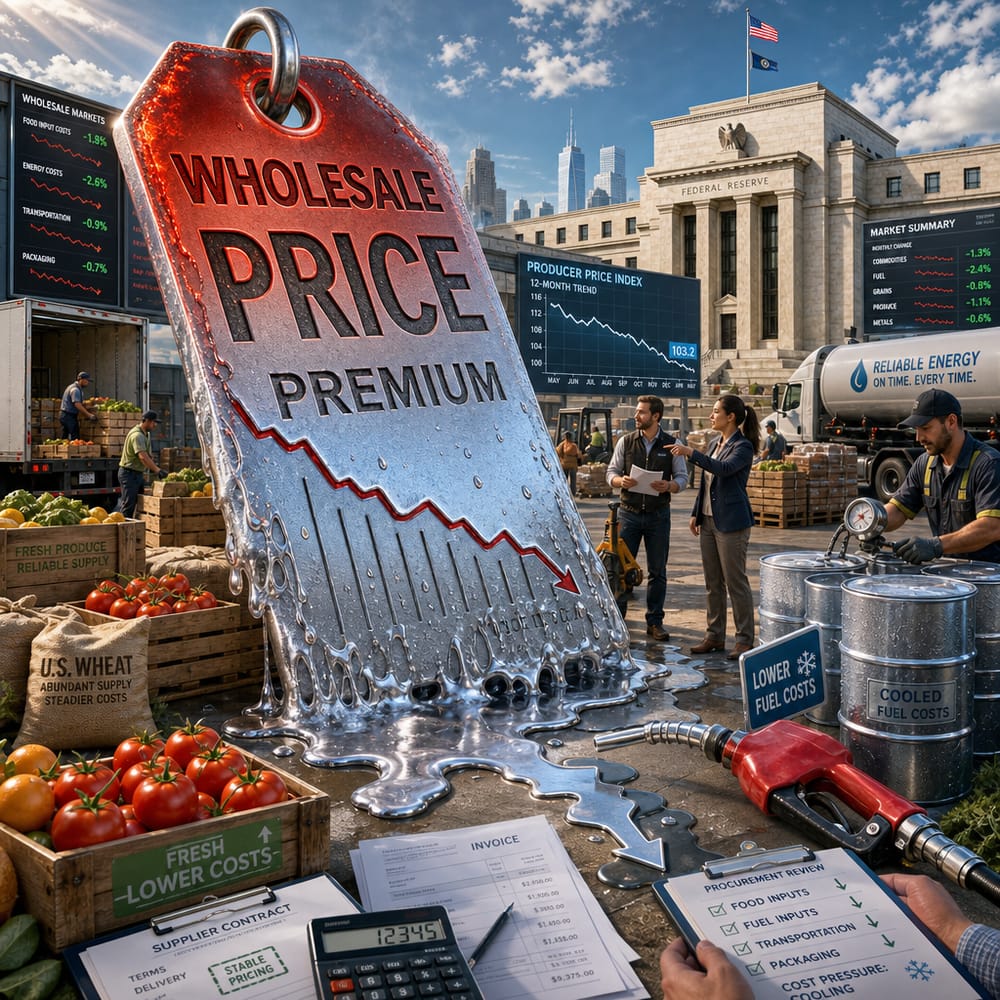
WHOLESALE PRICES DROP: WHAT DOES IT MEAN FOR YOU?
Hold onto your wallets, folks, because there's a fresh breeze blowing through the land of wholesale prices. For the first time in what feels like forever, July brought a much-needed cooldown in the costs of essentials like food and gas. This is no small potatoes, as it might just ease the financial sweat for businesses that have been scrambling to keep their profit margins from shriveling up like last week’s leftovers.
So, what's the big deal? Let's dive in. Lower wholesale prices mean companies can breathe a little easier when it comes to costs. It's like getting a break on your grocery bill right when you thought you'd have to start rationing avocados. For businesses, this could translate into wider profit margins—meaning more cash left over after paying all the bills. It’s the difference between swimming in a lap pool versus an ocean of expenses.
This cooling of wholesale prices comes at a time when everyone from the mom-and-pop shops to the corporate juggernauts is feeling the squeeze, thanks to the rising costs of doing business. But with this recent price dip, companies might just have the wiggle room to either reinvest in growth or, dare we say it, pass some savings along to consumers. Of course, whether those penny-pinching retailers will actually lower prices for us regular folks is another saga entirely.
Now, if you're thinking this is just good news for businesses, think again. This pricing trend might have the Federal Reserve wiping its brow with relief. The Fed's been sweatier than a politician on election night, trying to juggle interest rates to keep inflation in check without stifling economic growth. With wholesale prices easing, the Fed might just hit the pause button on those dreaded interest rate hikes. It’s a bit like the Fed playing Goldilocks, trying to get the economy just right—not too hot, not too cold.
So, how might this play out in the boardrooms of the Federal Reserve? If prices stay cool and inflation doesn’t rear its ugly head, the Fed might opt for a more dovish approach—keeping interest rates steady and giving businesses some breathing room to plan their financial futures. On the flip side, if things heat up again, we could be staring down the barrel of more rate increases. Either way, it’s a delicate dance, and the Fed’s got its eyes on the Producer Price Index like a hawk on a field mouse.
But here's the kicker: while we’re seeing this brief respite in wholesale prices, treasury yields are spiking faster than a cat up a tree. The 30-year treasury yield recently hit a 19-year high, making borrowing money more expensive. This could mean businesses and consumers face higher costs for financing everything from expansion projects to credit card debt. It's like getting a discount on your meal, only to pay more for parking.
For investors, this means keeping a keen eye on how businesses manage their newfound cost savings and how the Fed navigates these choppy economic waters. Will businesses let their profits trickle down to consumers? Will the Fed's next move leave us cheering or jeering? And most importantly, how will these shifts influence your investment strategy?
In the financial world, sometimes the big action is all in the anticipation. As investors, it’s crucial to watch how these wholesale price changes affect companies’ bottom lines and the broader economic climate. Are companies reinvesting their margin gains into innovation and expansion, or are they hoarding it like a squirrel with a nut stash? And will the Fed’s next decision be a boon or a bane for your portfolio?
So, keep your eyes peeled and your investment strategies flexible, because the economic landscape is as unpredictable as ever. As for the rest of us not playing the stock market, let’s keep our fingers crossed for some trickle-down savings on our next grocery bill—because who wouldn’t want a break on the price of those avocados?
This article is for informational purposes only and is not investment advice. Always do your own research or consult a licensed financial professional before making investment decisions.
© Copyright 2024. All Rights Reserved.
© Copyright 2024. All Rights Reserved.