

Pre-Market Rebound and Futures Slump
Saturday, August 22, 2026
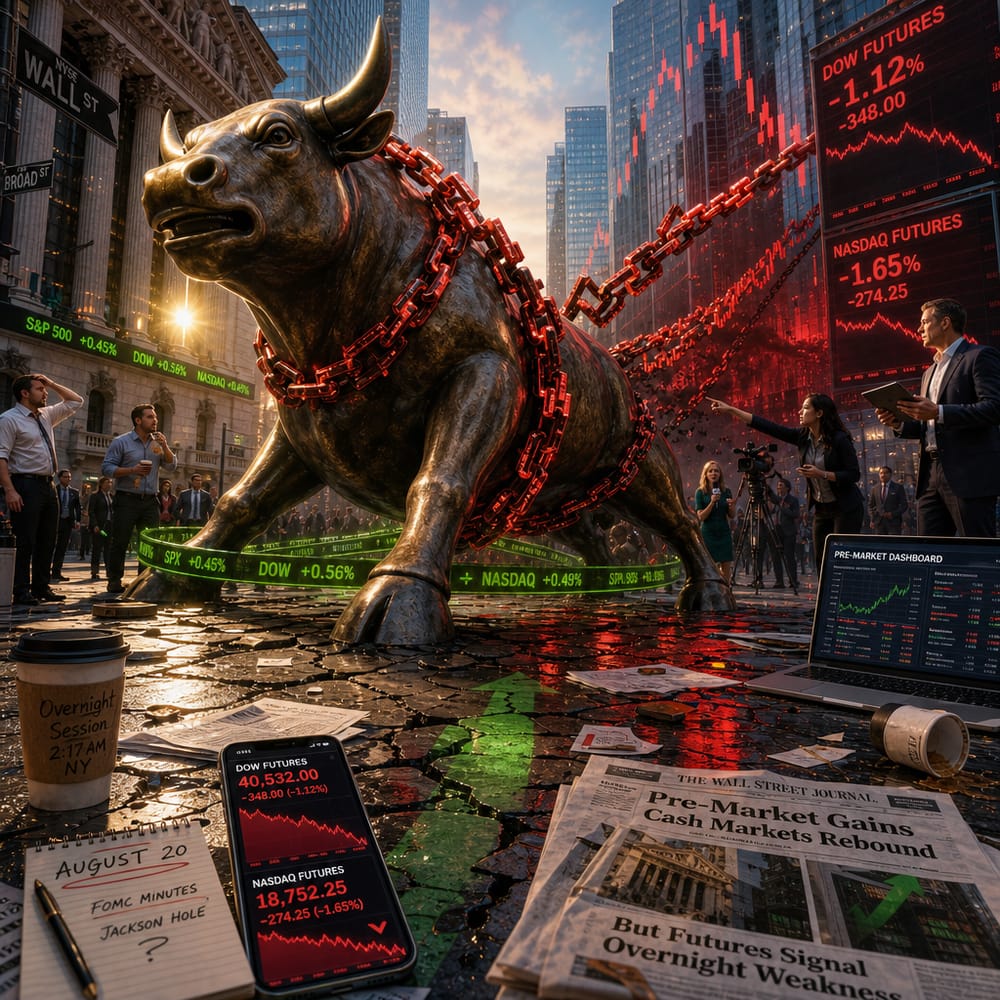
CASH MARKETS PUMP WHILE FUTURES FACE THE FUNKY MUSIC
Welcome to the financial circus, where the U.S. cash markets are strutting around like they're on a victory lap, while the overnight futures are slumping harder than a teenager out of bed on a Monday morning. On August 20, U.S. cash markets saw modest gains, the kind that make you nod approvingly and think, "Alright, not bad." But hold your applause because the overnight futures were busy hitting the snooze button. Yes, they slumped, and boy, do they highlight some underlying stress in the market that might just make us all a little uneasy.
So, what's causing this delightful divergence? Let's dive in.
THE PLOT TWIST IN THE MARKET PLAYBOOK
On the surface, it sounds like a bad sitcom plot: the cash markets are dancing to a happy tune, while the futures are lying on the floor with a damp cloth on their forehead. Stories like these aren't just market quirks. They're alerts. Whispers of caution. The kind that tell you to maybe not spend all your cash on that overpriced cold brew because things could get bumpy.
First, let's talk about cash markets. They're the immediate action heroes, reacting to the here and now. On that August day, market players were likely feeling a little optimistic, maybe buoyed by positive earnings reports or some reassuring economic data. It’s like the market equivalent of finding a twenty-dollar bill in your old jeans—an unexpected but welcome boost.
However, futures—the contracts that speculate on where markets are heading—tell a different story. They slumped overnight. Imagine a bunch of investors giving a collective side-eye to tomorrow. Futures are like the market’s Magic 8-Ball, offering a peek into the future. And right now, they seem to be saying, “Outlook not so good.”
THE WHY BEHIND THE WHIPLASH
Let’s get to the meat of the matter: Why are futures so gloomy? Picture a pot of stew—it's a mix of domestic interest rate anxiety, global economic uncertainties, and geopolitical tensions melding into a less-than-appetizing concoction.
Interest rates in the U.S. have been a hot topic, sizzling with anticipation of what the Federal Reserve might do next. Investors are on edge, wondering if more rate hikes are coming. Just the thought of pricier borrowing could make anyone clutch their pearls.
Globally, the economic scene isn't exactly a walk in the park either. From trade wars taking a second lap to the unpredictable tango of oil prices, it's a global market jungle out there. Add in some geopolitical tensions—cue the U.S.-Canada trade spat—and what you've got is a recipe for market jitters.
INVESTOR STRATEGIES: TO DIVE OR NOT TO DIVE?
So, what’s an investor to do in this topsy-turvy market? Strategy, my friends. It’s time to decide whether to play it safe or go all in. Given the current market scene, some might prefer to buckle up and stay the course, sticking to the tried-and-tested strategy of diversification. Think of it as the market's version of not putting all your eggs in one basket.
Others could see this as a golden ticket to leverage volatility. If you’ve got the stomach for it, volatility can be a playground for trading strategies designed to thrive on market swings. But remember, with great risk comes great potential for both reward and regret.
Some savvy investors might also look to the dividend-paying stocks in defensive sectors like healthcare and consumer staples. They’ve got that sweet allure of stability and income, acting like a sturdy hammock amid the market’s roller-coaster vibes.
KEEPING YOUR COOL
In the end, whether you’re a thrill-seeker or a security-loving investor, staying informed is your best bet. Markets will always have their mood swings, but staying clued in can help you navigate the craziness.
To sum it all up, the divergence between cash market strength and futures weakness is a flashing neon sign of potential volatility and investor caution. Keep your wits about you, stay diversified, and as always, keep a close eye on the Fed’s next move. And maybe hold off on that yacht purchase—at least for now.
This article is for informational purposes only and is not investment advice. Always do your own research or consult a licensed financial professional before making investment decisions.
© Copyright 2024. All Rights Reserved.
© Copyright 2024. All Rights Reserved.