

Pre-Earnings Patterns: Nvidia's Historical Price Moves
Monday, August 17, 2026
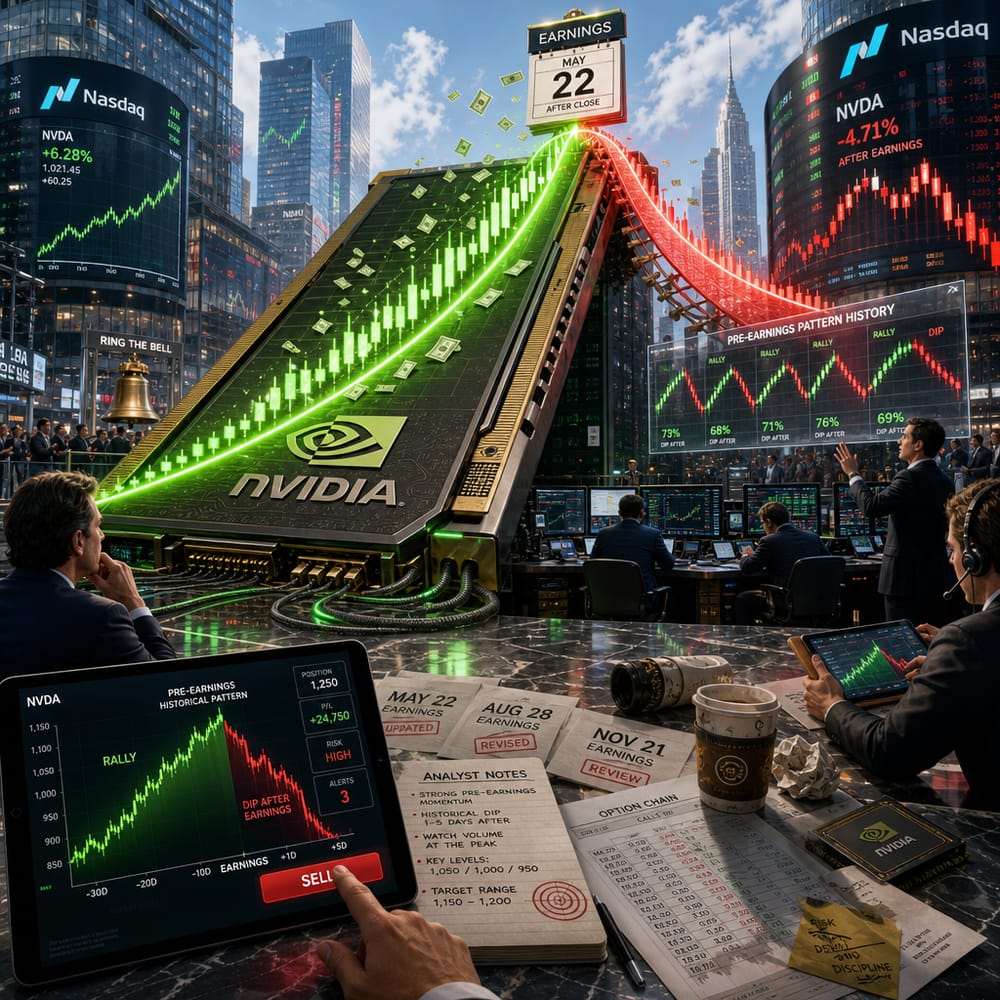
LET'S TALK NVIDIA: A CASE OF EARNINGS FOMO
Nvidia. The name alone probably conjures up images of electric green logos and graphics cards powerful enough to render galaxies melting into a swirl of pixels. But here's the thing: Nvidia isn't just the darling of gamers and AI aficionados. It's also the stock that gets investors' hearts racing faster than a GeForce-powered gaming rig.
What's the secret sauce behind Nvidia's stock price tango around earnings? Spoiler alert: it's a mix of hype, hope, and a sprinkle of fear. Let's dive into Nvidia's pre-earnings dance and see what it means for your portfolio.
THE PRE-EARNINGS RALLY: HOPE SPRINGS ETERNAL
Every few months, like clockwork, Nvidia gears up to announce its quarterly earnings, and something magical happens. Investors clutching their smartphones start eyeballing the stock like it's the last slice of pizza at the party. Historically, Nvidia has seen its stock price surge in the lead-up to earnings announcements. It's like the stock market's version of a Hollywood movie premiere, with all the anticipation but (hopefully) fewer bad reviews.
This pre-earnings rally is driven by good old-fashioned optimism. Investors speculate that the company's earnings will smash expectations, buoyed by its ventures into AI, gaming, and data centers. The fear of missing out (FOMO) kicks in, and everybody wants a piece of the action before the curtain rises on the earnings report.
THE POST-EARNINGS DIVE: FROM EUPHORIA TO REALITY
But then, just as quickly as it rises, Nvidia's stock price often takes a nosedive after the earnings are out. This isn't because the earnings are bad—on the contrary, Nvidia's numbers have often been stellar. It's just that reality sometimes can't compete with the fevered dreams of investors.
Call it a reality check, if you will. Some investors, fueled by the adrenaline rush of the rally, might have bought shares on the assumption that Nvidia would announce something akin to discovering the fountain of youth. When the earnings call doesn't deliver the next big miracle, they cash out, leading to a short-term dip.
LEVERAGING THE PATTERN: DANCE WITH THE DEVIL (SMARTLY)
So, what can our retail investors take away from this? Understanding this pattern is key. If you're the type to cringe at rollercoasters, perhaps hold your nerve during the pre-earnings frenzy. The historical pattern suggests the stock often dips post-earnings, perhaps presenting a buying opportunity for those with a bit of patience.
But keep in mind, this isn’t a surefire strategy. Stocks don’t always adhere to historical trends, and Nvidia's metrics and market dynamics can change in a heartbeat. So, while you might feel tempted to ride the wave, ensure you’re buckled in with a well-thought-out strategy.
THE CAVEATS: DON'T BET THE FARM
Of course, gambling on short-term movements is a risky business. The stock market has a knack for throwing curveballs, and Nvidia is no exception. External factors like macroeconomic trends, tech sector shifts, or even a surprise announcement from a competitor can throw things off course.
And let’s not forget, past performance doesn't guarantee future results. The market is unpredictable, always ready to jolt you awake just when you start getting comfortable.
THE BOTTOM LINE: PLAN YOUR MOVES
In the glitzy world of Nvidia's stock, it pays to be both bold and cautious. Understanding the pre- and post-earnings movements can give you an edge, but don't let the siren call of quick gains drown out sound investing principles. Do your homework, stay informed, and when in doubt, diversify to spread out your risk.
So whether you're an Nvidia fanboy or just someone trying to make sense of the stock market's wild ride, here's the takeaway: Keep your eyes open, your mind sharp, and your investments diversified. Because the only thing more electrifying than Nvidia's chips should be the gains in your portfolio.
This article is for informational purposes only and is not investment advice. Always do your own research or consult a licensed financial professional before making investment decisions.
© Copyright 2024. All Rights Reserved.
© Copyright 2024. All Rights Reserved.