

PPI Surge as Fed Considers Hikes
Monday, November 16, 2026
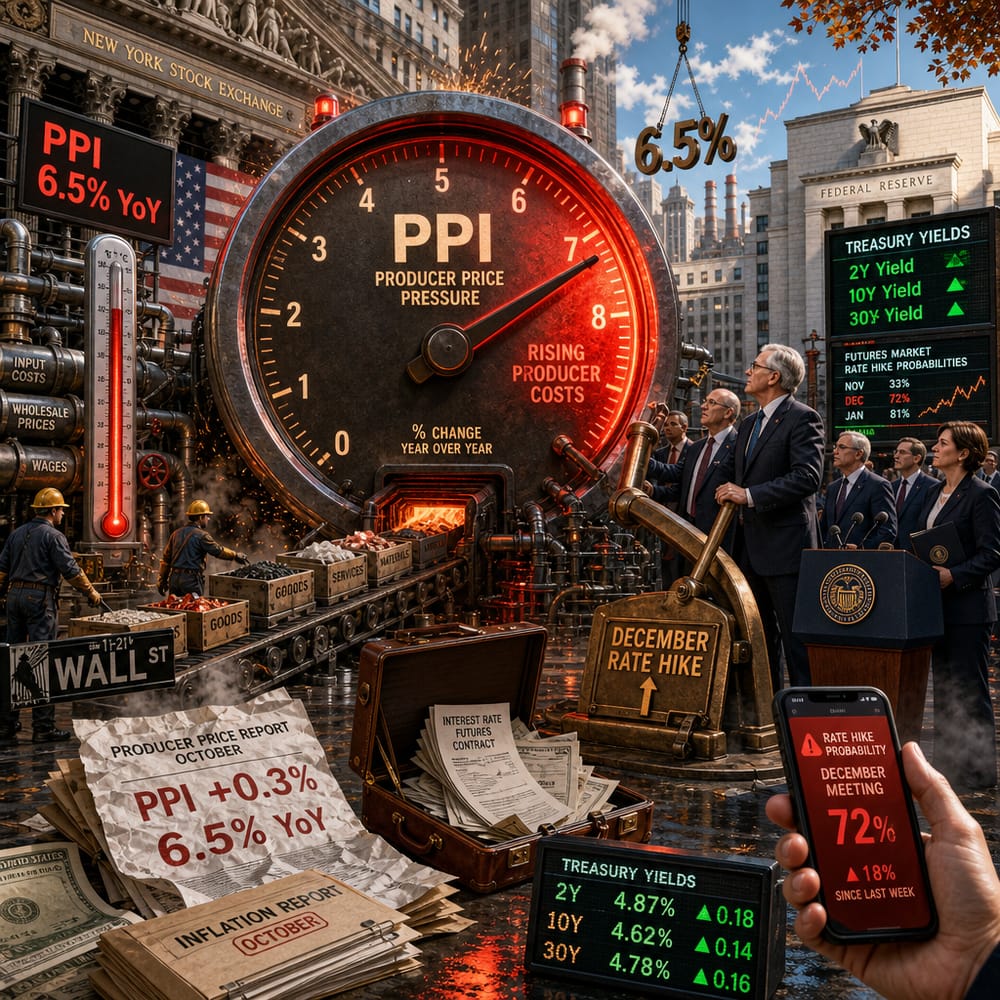
PPI Surge as Fed Considers Hikes: What’s Next for Your Money?
If you thought October was all about pumpkin spice and ghost stories, think again. The latest data drop from the Bureau of Labor Statistics has just served up a scarier tale: the Producer Price Index (PPI) jumped by 0.3% for the month. Even more spine-tingling? Over the past year, it’s up 6.5%, the highest since last November. Now, before you dismiss this as just another snooze-worthy stat, let’s talk about what this really means for your wallet, your investments, and the Fed’s next move.
PPI might not be the buzziest term on Wall Street, but it’s a major player in the inflation game. Simply put, PPI measures the average change over time in the selling prices received by domestic producers for their output. Think of it as the price tag for the raw materials that get turned into the stuff you buy. If producers are paying more, you can bet your bottom dollar those costs eventually get passed along to consumers. So, this increase suggests that inflationary pressures are not done making waves.
WHY THE OCTOBER PPI SPIKE MATTERS
This October spike means there’s pressure on the Fed to do what they do best—tinker with interest rates. The Federal Reserve’s playbook for tackling inflation is relatively straightforward: raise rates to cool economic jets. Why? Higher interest rates typically mean higher borrowing costs, which can slow down spending and investment. But with higher rates, your mortgage or car loan could also get pricier. So, your checkbook might feel a little lighter as a result.
Speculation is now swirling faster than an autumn leaf in a windstorm about whether the Fed will pull the rate hike trigger at their December meeting. The pressure's on, especially since the PPI data suggests that inflation isn't planning to pack up and leave anytime soon. And while the Fed doesn’t directly control prices, they do have a say in the broader economic conditions.
FED’S NEXT MOVE: TO HIKE OR NOT TO HIKE?
So what are we really looking at here? Fed Chair Jerome Powell and his band of money maestros have a tricky decision to make. Do they hammer down on rates to curb inflation, knowing full well it could dampen economic growth and potentially nudge the economy closer to a recession? Or do they play it cool and hope inflation behaves itself without aggressive rate hikes?
Historically, the Fed’s been pretty hawkish—or eagle-eyed, if you prefer—about inflation. So, if history is anything to go by, December might see another rate hike aimed squarely at keeping inflation on a leash. But with an economy still reeling from past rate increases, this hike could be a gamble. It’s a financial tightrope act that would make any Wall Street trader break a sweat.
WHAT THIS ALL MEANS FOR U.S. TREASURY YIELDS
Here’s where things get even more interesting. U.S. Treasury yields—basically what the government pays investors who lend it money—are like the canary in the coal mine for interest rate expectations. They’ve been on a bit of a rollercoaster themselves lately, dipping and diving as investors try to second-guess the Fed’s next steps. If the Fed goes ahead with another rate hike, expect those yields to climb as investors demand more return for the increased risk of holding debt.
However, there's a twist. If the market believes a hike could slow economic growth too much, yields might actually fall as investors flock to the relative safety of government bonds. It’s a classic case of damned if you do, damned if you don’t—where the market’s reaction can zig when you expect it to zag.
THE BOTTOM LINE
For investors and everyday folks alike, these numbers and decisions aren’t just abstract figures. They ripple through your everyday finances—from the interest rate on your credit card to how much you pay for groceries. It’s also a reminder that the interconnected web of the global economy can turn even the most arcane-sounding statistic into front-page news.
As December looms, all eyes will be on the Fed to see if they raise rates once more. It’s a decision that could set the course for everything from holiday shopping seasons to next year’s economic health. So keep your eyes peeled and your financial seatbelt fastened—economic turbulence could be just around the corner.
This article is for informational purposes only and is not investment advice. Always do your own research or consult a licensed financial professional before making investment decisions.
© Copyright 2024. All Rights Reserved.
© Copyright 2024. All Rights Reserved.