

PPI Report Looms as Critical Follow-Up to CPI
Thursday, August 13, 2026
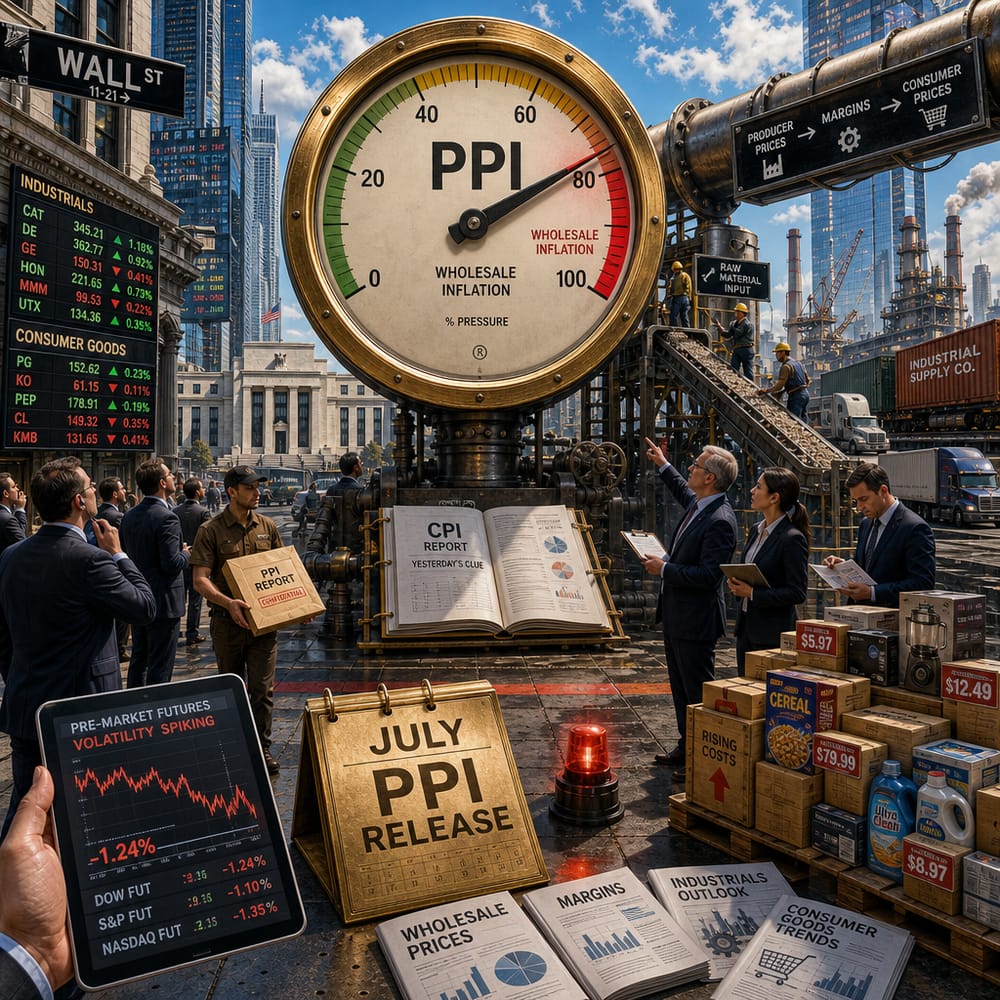
WHAT THE PPI? WHY THIS INFLATION REPORT COULD RATTLE MARKETS
Brace yourselves, folks, because Wall Street's latest obsession is about to unfold. No, it's not about the latest cryptocurrency or that stock your uncle swears by. It's the July Producer Price Index (PPI) report, ready to drop like a surprise Taylor Swift album. This unassuming report is more than a stack of numbers; it’s a glimpse into the inflationary forces bubbling beneath the surface of our economy.
Think of the PPI as the crystal ball of wholesale inflation. It measures how much wholesalers are shelling out for raw materials and goods. Why should you care? Because those costs eventually trickle down to you, me, and everyone else buying stuff. If wholesalers start paying more, you can bet your bottom dollar that price hikes will hit store shelves soon after.
So, what's the word on the street for the upcoming PPI? Economists are putting their chips on a 0.2% increase from last month. This follows a consumer price index (CPI) report that was about as exhilarating as watching paint dry, clocking in at a modest 0.1% increase month over month.
Now, you might wonder, why does a minuscule percentage matter? Well, the market’s mood swings faster than a cat on catnip when it comes to inflation data. A slight uptick in PPI could fuel fears of persistent inflation. If producers are paying more, they might decide to pass those costs on to consumers, setting off a chain reaction that could jolt the market.
For retail investors, the PPI is less about the numbers and more about the ripple effects it could cause. Industrial sector stocks, consumer goods, and businesses reliant on raw materials will be paying close attention. If the report shows larger-than-expected increases, these sectors might feel the heat as profit margins tighten. On the flip side, if the PPI comes in lower than expected, it could be the green light for industry sectors to breathe a bit easier, at least for now.
But let's not put all our eggs in the PPI basket. Even if the report is as juicy as a soggy cereal, remember that it's just one part of the broader inflation puzzle. With ongoing global events like the U.S.-Iran war and Ukrainian drone strikes affecting everything from oil prices to trucking costs, inflationary pressures are coming from all directions. And with oil prices bouncing around like a pinball, the energy sector isn't about to let us settle into a calm, inflation-free summer.
So, how might the PPI data influence our beloved Wall Street? In an ideal world, a tame PPI would keep investors cool as cucumbers, easing fears of an inflation hike. But if the report hints at rising inflation, we could see a sell-off, pushing the market into a frenzied state. Investors would likely scurry toward safe havens like bonds or even precious metals, rather than risk the volatility.
For those with a keen eye on the industrial sector, any unexpected jump in PPI could spell trouble. Companies that heavily rely on raw materials might see their stock prices react negatively as investors anticipate slimmer profit margins. Consumer goods could also take a hit if producers decide to pass increased costs down the supply chain, affecting retail pricing strategies.
In any case, the PPI report is like a movie trailer for the main show, which is the broader economic outlook. It's that sneak peek that either leaves you on the edge of your seat or reaching for the popcorn, knowing that the real drama is yet to come.
So, as you sip your morning coffee and scroll through your phone, keep an eye on that PPI report. It might just be the bellwether for where inflation – and your investment portfolio – could be headed next. As always, stay sharp, stay informed, and let the numbers tell their story.
This article is for informational purposes only and is not investment advice. Always do your own research or consult a licensed financial professional before making investment decisions.
© Copyright 2024. All Rights Reserved.
© Copyright 2024. All Rights Reserved.