

PPI Preview: Producer Price Index Could Reinforce Tame Inflation Narrative
Wednesday, August 12, 2026
PPI Preview: Producer Price Index Could Reinforce Tame Inflation Narrative
Brace yourself: another crucial economic indicator is about to drop, and this time it's the Producer Price Index (PPI) for July. If you're wondering why anyone this side of Wall Street is sweating the small stuff like PPI, remember this: it's not just about producers. It's about you, me, and the wallet we clutch a little tighter every time the price of milk edges up. And while the PPI might not be the sexiest of indicators, its implications are downright titillating for the economy and your investments.
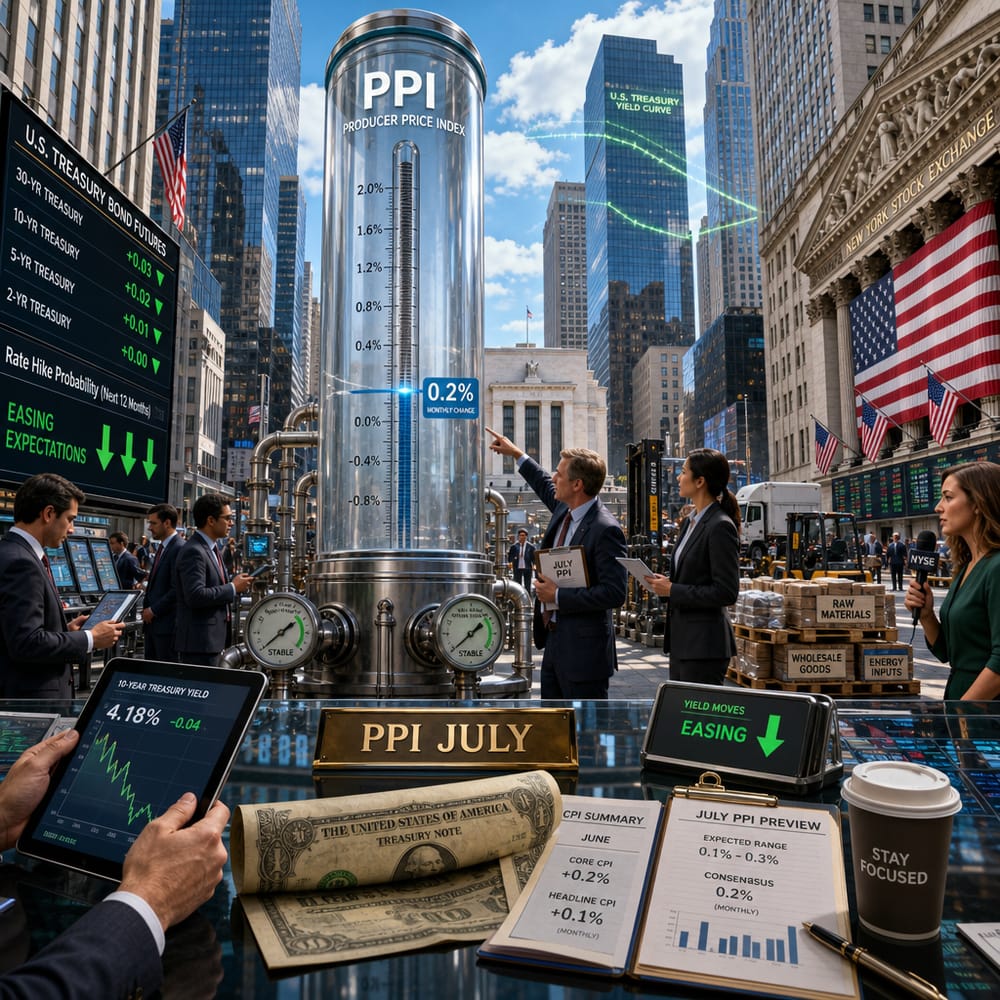
So, what's the skinny on PPI? Picture this: it's the cost of goods before they hit the shelves. Think of it like peeking backstage before the big retail show. Economists are betting on a 0.2% rise for July. That might sound like a snooze, but in the financial world, it's akin to a cool breeze on a sweltering day. Why? Because modest increases in PPI suggest that inflation is doing the cha-cha instead of the tango — slow and steady, just how the Federal Reserve likes it.
If the PPI delivers the expected lukewarm report, it could bolster the narrative that inflation is mellowing out. This follows hot on the heels of the Consumer Price Index (CPI) report showing a similar mild 0.1% monthly uptick. For everyday investors, here’s the bottom line: taming inflation means fewer rate hikes, which is music to the ears of anyone with a mortgage, loan, or a 401(k) riding the stock market wave.
Let's talk about the Federal Reserve, our puppet master pulling the economic strings. With interest rates already elevated, the Fed's been playing it cool, watching inflation trends like a hawk. A tame PPI could be the final nudge they need to ease off the rate hike pedal, at least for September. It's like telling your loud neighbor you'll let that last late-night party slide if they promise to keep it down next time — a tentative peace offering that could keep markets from spiraling into chaos.
Now, let’s dig into what this means for the markets, specifically Treasury yields and bond futures. These are the canaries in the coal mine for investors. When the PPI report is released, watch for how these markets react. If the PPI lands as expected, we might see Treasury yields easing and bond futures breathing a sigh of relief. Lower inflation expectations mean bond prices could tick higher, nudging yields — which move inversely to prices — down a notch.
The real twist here is how this plays into the broader market narrative. With many investors having already adjusted their expectations for a mellow Fed in the face of a tame inflation backdrop, a calmer PPI is like the final puzzle piece. It reinforces the idea that the economy might achieve that elusive "soft landing" — avoiding a recession while taming inflation.
Here's the kicker: markets are a finicky bunch. Even with a PPI report that lines up with predictions, you can never predict the twists and turns they'll take in response. But on the whole, a stable PPI report is likely to inject a dose of confidence, potentially lifting stock futures and calming jittery investors who’ve been on edge over rising rate fears.
So, why should you care? Because these numbers don’t just exist in spreadsheets and economists’ heads. They trickle down into your savings, investments, and even the cost of your next cup of coffee. A steady PPI helps cement the narrative that inflation is within the Fed’s grasp, keeping those interest rates in check and your financial future a little less fraught with uncertainty.
In the end, while the Producer Price Index doesn’t have the swagger of an earnings report or the drama of a quarterly GDP announcement, its understated influence quietly shapes the economic landscape. Whether you’re an investor watching your portfolio or just trying to stretch your paycheck, keep an eye on that PPI report. It’s more than just numbers; it’s a glimpse into whether the economy's on a path of gentle correction or gearing up for another round of financial gymnastics.
This article is for informational purposes only and is not investment advice. Always do your own research or consult a licensed financial professional before making investment decisions.
© Copyright 2024. All Rights Reserved.
© Copyright 2024. All Rights Reserved.