

PPI Preview: Can Wholesale Prices Signal the Next Moves for Inflation, Yields, and the Fed?
Wednesday, August 12, 2026
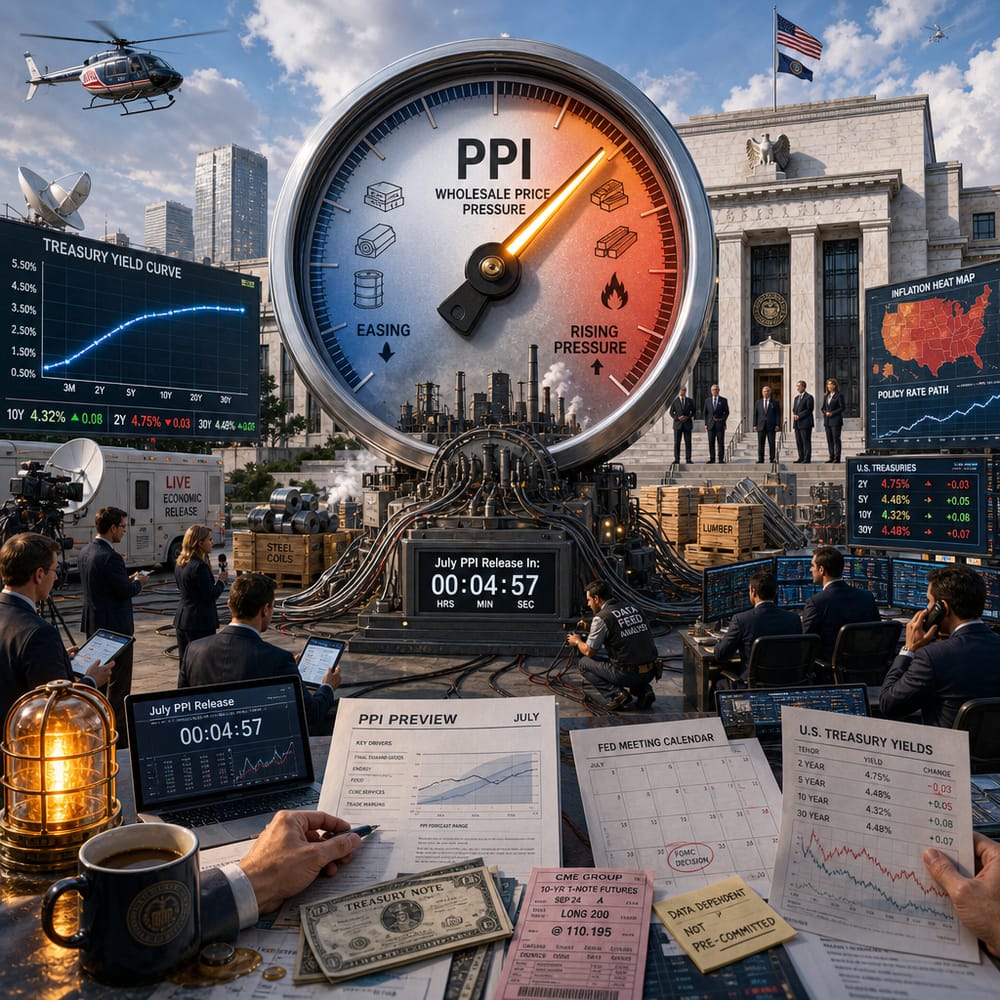
PPI Preview: Can Wholesale Prices Signal the Next Moves for Inflation, Yields, and the Fed?
It's summer, the season of barbecues, vacations, and, of course, economic data releases that might just make or break financial markets. Among them, the Producer Price Index (PPI) for July is about to make its grand entrance, and it's got the market buzzing like a caffeine-fueled squirrel. Why? Because this isn't just any boring list of numbers; the PPI is like an economic fortune teller, giving us a sneak peek at inflation trends that could have Jerome Powell and his Fed crew reevaluating their game plan.
First things first: What the heck is PPI, and why should you care? The PPI measures the average change in selling prices received by domestic producers for their output over time. In layman's terms, it's the cost of stuff before it hits the shelves. If PPI starts shooting up, it's usually a good bet that consumer prices, reflected in the Consumer Price Index (CPI), won't be far behind. And let's face it, we all care about CPI because it directly impacts our wallets—think rent, groceries, and that occasional splurge on avocado toast.
Now, with the CPI for July showing a modest 3.4% year-over-year rise, down from June’s 3.5%, there’s a glimmer of hope that inflation's winter chill might be thawing ever so slightly. But here's the kicker: Energy prices are still playing the villain, up a whopping 14.7% from last year, thanks to geopolitical tensions that make for a lousy bedtime story.
So, what’s PPI got to do with the Fed’s decision-making process? Quite a bit, actually. If the PPI data comes in hotter than a midsummer scorcher, it could suggest that inflationary pressures are still simmering, potentially prompting the Fed to keep a tight grip on interest rates. Conversely, if PPI cools down, it might signal that inflation is taking a backseat, providing the Fed with some breathing room—something investors would welcome with open arms.
But let’s not forget the bond market, which has been jittery like a cat in a room full of rocking chairs. Treasury yields have been on a see-saw, reacting to every twist and turn in inflation data and Fed policy expectations. A high PPI reading could lead to rising yields, as investors brace themselves for tighter monetary policy. Lower yields, on the other hand, could be in the cards if PPI indicates that the inflation dragon is finally losing steam.
And what about the stock market, that unpredictable rollercoaster we both love and fear? If PPI surprises on the downside, it could fuel a rally, especially in sectors sensitive to interest rate changes, like tech and real estate. On the flip side, a hotter-than-expected PPI might send stocks into a tailspin as rate hike fears resurface faster than you can say "inflation."
The stakes are high, and the potential market reactions are as diverse as the toppings on a pizza. So, as you scroll through your phone, waiting for the PPI numbers to drop, remember this: The data might be just a stepping stone in the Fed’s decision-making process, but for investors, it’s a key piece of the puzzle in a game where strategies can shift faster than the winds of economic change.
In the end, whether you’re a market maven or a curious onlooker, keep your eyes peeled and your ears open. The PPI might not be the star of the economic show, but it sure knows how to set the stage for the drama that is inflation, interest rates, and fiscal policy. Stay tuned, because the economic saga is just getting started.
This article is for informational purposes only and is not investment advice. Always do your own research or consult a licensed financial professional before making investment decisions.
© Copyright 2024. All Rights Reserved.
© Copyright 2024. All Rights Reserved.