

Post-Midterm Market Volatility: A Rollercoaster Week
Saturday, November 07, 2026
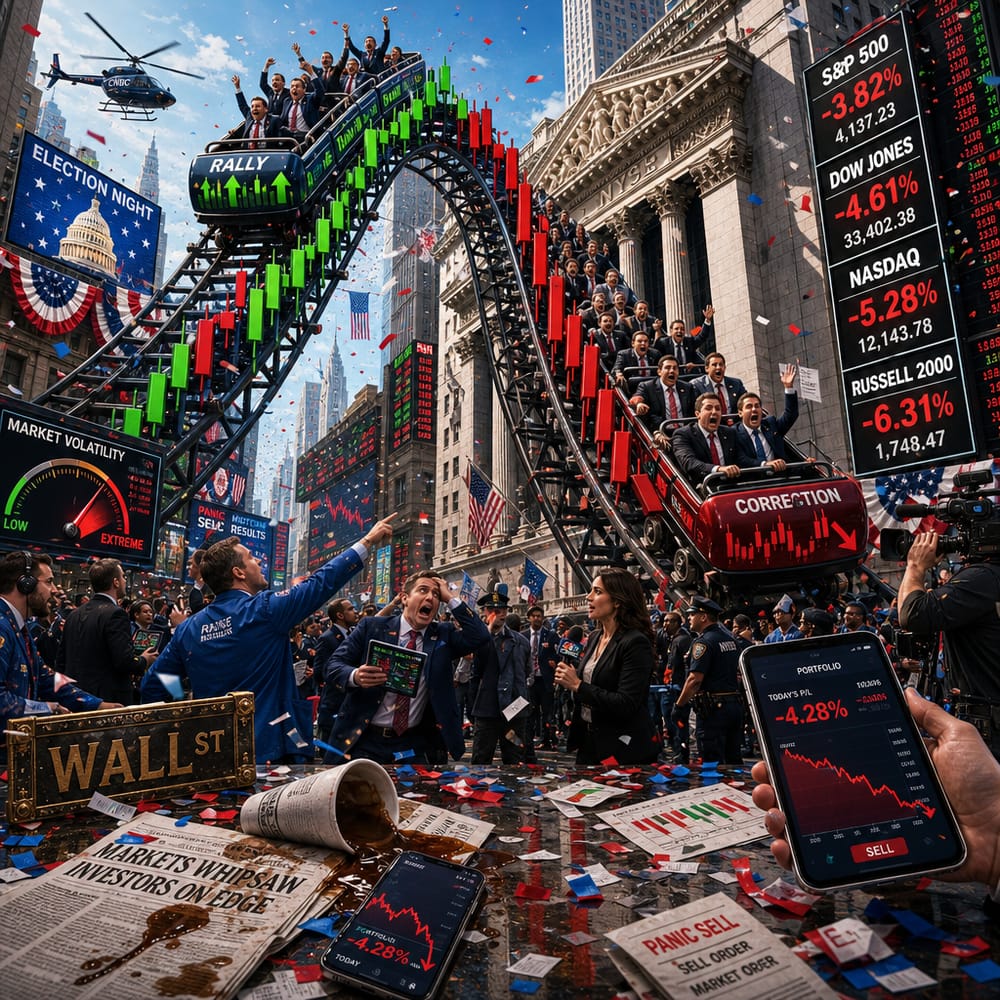
THE ELECTION RALLY HANGOVER: MIDTERM MARKET VOLATILITY GETS WILD
In the world of investing, the one constant is surprise. And if you've been anywhere near a stock ticker since last Tuesday, you know exactly what we're talking about. The midterm elections have once again turned Wall Street into a drama queen, swinging from euphoria to despair faster than you can say "ballot box." So, what has got the market in such a tizzy, and where is this rollercoaster headed next?
Let's rewind to last Wednesday. The stock market was all smiles following a Democratic sweep in the midterm elections. The Dow Jones took off like it was shot out of a cannon, leaping 1,569 points — its best post-midterm performance in 44 years. Investors, it seemed, were embracing the certainties of a Democrat-controlled Congress. There was a collective sigh of relief as the specter of contentious policy gridlock seemed to fade.
But as any seasoned investor will tell you, what goes up must come down. By Thursday, the market's champagne bubbles had burst, and a harsh correction set in, leaving analysts scrambling for explanations. The Dow, S&P 500, and Nasdaq each suffered their worst single-day losses in nearly two years. It was carnage, and the question on everyone's mind was: Why?
BLAME IT ON AI
A big piece of the puzzle is the tech sector, especially AI stocks, which have been riding a wave of optimism until now. The Democrat sweep stirred fears among investors that new public policy hurdles could throttle the AI industry's explosive growth. Consequently, the Nasdaq took a gut punch, shedding a staggering $2.5 trillion in value — an eye-watering figure for even the most hardened Wall Streeters.
The message was clear: putting too many eggs in one tech-heavy basket isn't the smartest move. Diversification — the age-old mantra — rang truer than ever as portfolios that had grown too cozy with AI stocks felt the sting.
LISTENING FOR POLICY ECHOES
So, what's next on the docket for investors trying to read these tea leaves? With the Democrats in control, changes in economic policy are a given. Potential shifts regarding regulation, especially in sectors like energy and technology, could rattle or reassure market participants. While some industries may face increased scrutiny, others could benefit from new government incentives or infrastructure spending.
Investors should keep a watchful eye on policy developments, as these changes will undoubtedly influence market trends. The energy sector, for instance, is likely to be on a rollercoaster ride of its own, as policies potentially swing toward renewable resources. Likewise, the healthcare sector might brace itself for reforms that could reshape its landscape.
SECTOR SWINGS AND CRYSTAL BALLS
Besides tech, where are the other hotspots of volatility? Small-cap stocks, which are more sensitive to domestic policy shifts, took a beating in the recent turmoil. The Russell 2000 — a key barometer for small caps — mirrored the broader sell-off, suggesting investors are jittery about how domestic policy changes might impact these companies.
Moreover, geopolitical factors are looming larger over market sentiment. The evolving US stance on Russia and its economic policies could have broader implications, potentially touching the energy markets and beyond as international trade dynamics shift.
As retail investors are left wondering which way this market pendulum will swing next, the prudent course of action remains the same: stay informed, stay diversified, and resist the urge to make knee-jerk reactions.
In the end, market volatility is as much a part of investing as late-night infomercials are to unsleepy nights. It's about navigating through the noise and staying tuned to the signals that matter most. So, buckle up and brace yourself for what's next. And remember, if investing were predictable, it wouldn't be fun.
This article is for informational purposes only and is not investment advice. Always do your own research or consult a licensed financial professional before making investment decisions.
© Copyright 2024. All Rights Reserved.
© Copyright 2024. All Rights Reserved.