

Political/Ethics Fallout from Nvidia–Megaspeed–Export Licensing Scrutiny
Thursday, November 26, 2026
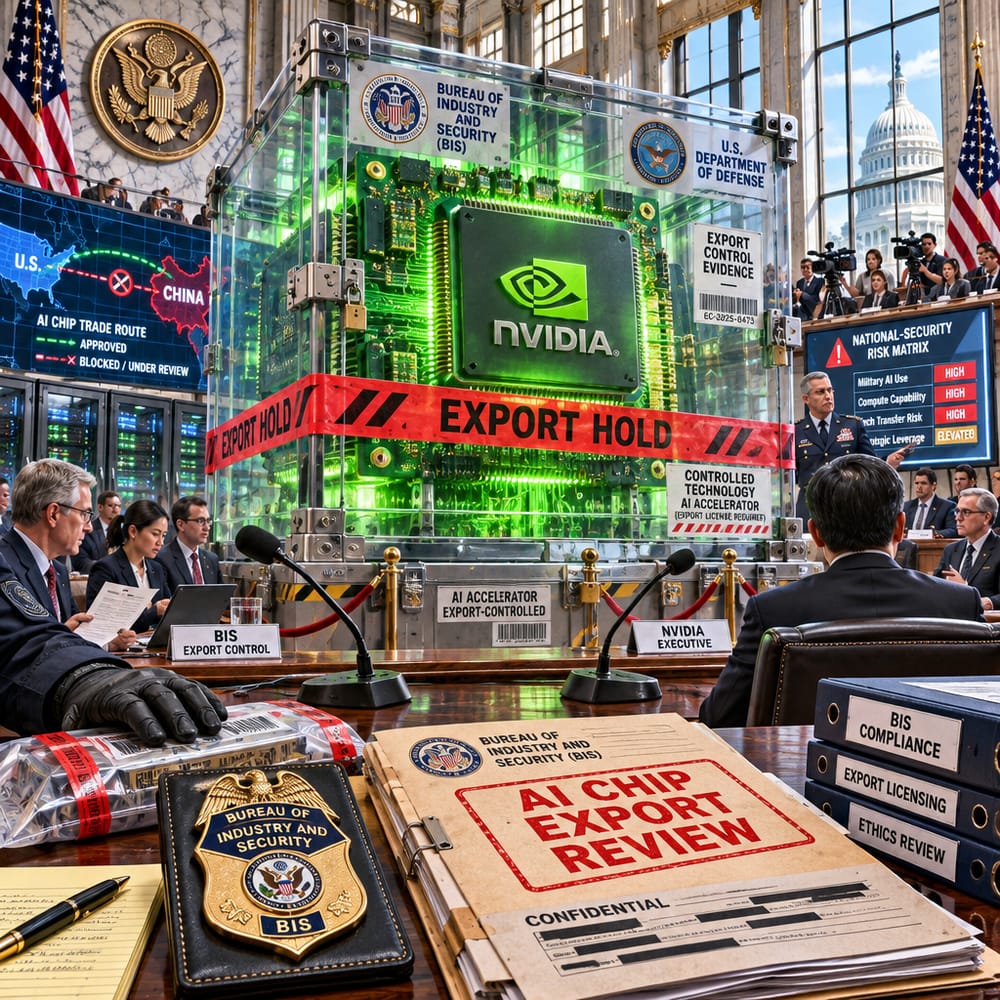
NVIDIA'S EXPORT LICENSING SCRUTINY: THE AI CHIP DRAMA UNFOLDS
When your graphics card can do more than just render an epic game of Fortnite, you know it's time for a reality check. Nvidia, the Silicon Valley giant we all associate with top-of-the-line GPUs, finds itself in the crosshairs of political and regulatory scrutiny. This time, it’s not about the latest gaming benchmark, but something far spicier: export licenses for AI chips to China. Yes, folks, AI chips—the little silicon wizards powering everything from your smart toaster to the next-gen surveillance systems.
Why all the hullabaloo? It turns out the Bureau of Industry and Security (BIS), which might sound like a somber government body (because it is), is putting Nvidia under the microscope. They’re scrutinizing how these AI chips are finding their way to China, raising eyebrows over national security and regulatory issues. You know things are serious when Uncle Sam starts worrying about what’s packed in that cargo bound for Beijing.
Let's get into why this matters, not just for Nvidia but the broader tech industry and, surprise, the geopolitical stage. First, if the U.S. decides to clamp down on Nvidia’s export licenses, we could see ripple effects across the tech sector. Other companies might get caught in the regulatory net, causing headaches for businesses that rely on international markets.
But it's not just about potential regulations. This clash sits at the heart of U.S.-China tech relations—a no-love-lost rivalry that’s been simmering for years. Both countries have been flexing their digital muscles, and AI technology is a big part of that power play. By tightening the screws on Nvidia, the U.S. is sending a message, loud and clear, that it's not going to let its tech crown jewels casually cross the Pacific.
For Nvidia, this could mean grappling with tighter controls and possibly rethinking its China strategy. And let’s face it, it’s not just Nvidia. Any company looking over at the Chinese market (hint: many are) will be watching this drama unfold with bated breath and perhaps a tinge of anxiety.
Amidst this regulatory maelstrom, there are ethical questions lurking, too. At the heart of it is the debate: Is there a moral obligation for tech companies to consider the downstream uses of their products? If an AI chip can be used for less savory purposes, like surveillance or military applications, should companies like Nvidia be held accountable? Some might argue that tech companies are just there to push the boundaries of innovation—not to play morality police. Others fervently believe that when your chips power the future, you better keep an eye on where they land.
So, what’s next for Nvidia and the rest of the tech industry? If you’re thinking popcorn and a good seat, you’re on the right track. But beyond the spectacle, the real stakes are how this shapes the future landscape for tech exports and international relations. More immediate consequences could be a re-tiled chessboard of tech alliances and supply chain recalibrations.
For U.S.-China relations, this could be another log on the fire, adding to the already complex picture of tariffs, trade wars, and tech rivalries. It’s not just about who has the best gadgets, but who controls the tech that will dictate economic and military might in the years to come.
In essence, Nvidia’s export license situation is more than a corporate hiccup; it’s a snapshot of a broader global tussle, where tech is both the prize and the battleground. As the world watches, the question remains: How will this shiny chip drama conclude? Will Nvidia navigate through this storm unscathed, or will it be a cautionary tale for the ages? Keep your eyes peeled, because this is one showdown that could redefine the rules of the game.
This article is for informational purposes only and is not investment advice. Always do your own research or consult a licensed financial professional before making investment decisions.
© Copyright 2024. All Rights Reserved.
© Copyright 2024. All Rights Reserved.