

Policy Convergence Trade: EUR Holds Its Own Despite Energy Pressure
Friday, August 21, 2026
POLICY CONVERGENCE TRADE: EUR HOLDS ITS OWN DESPITE ENERGY PRESSURE
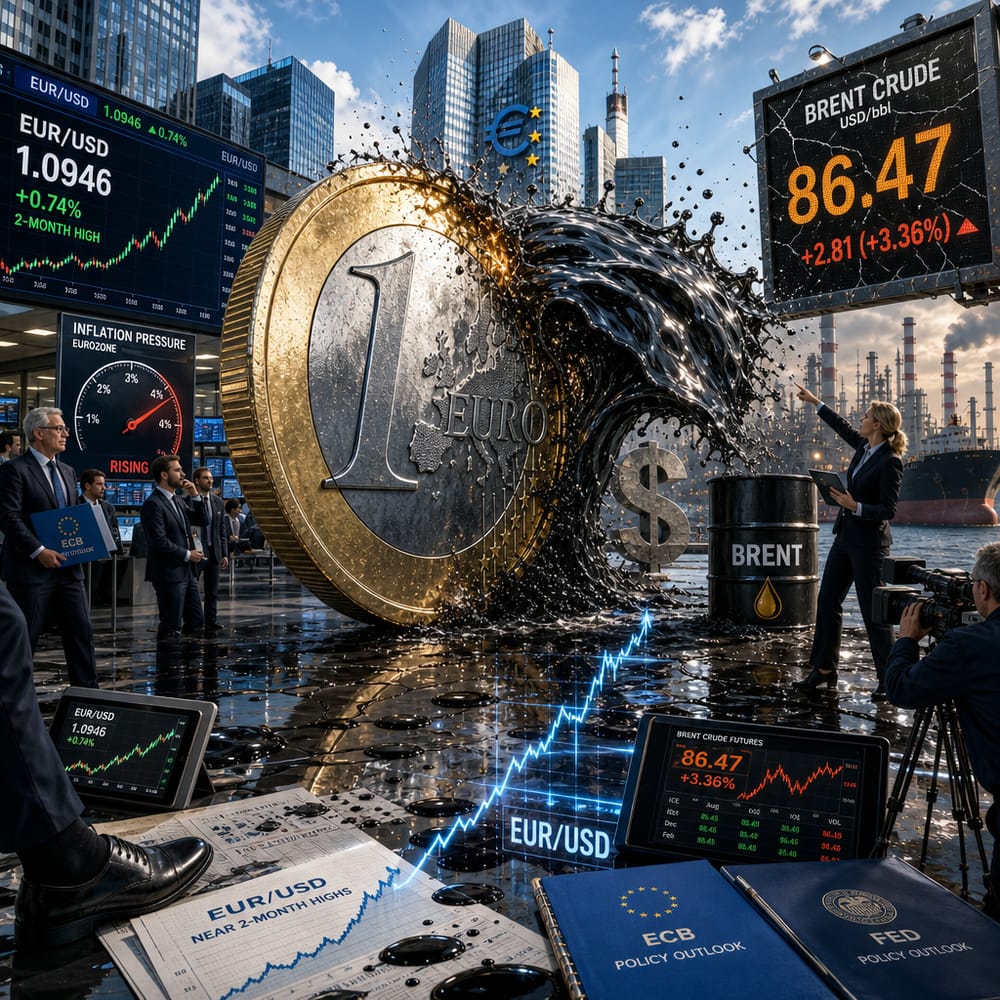
Ever noticed how a cat always lands on its feet? Well, the euro's been pulling off a similar trick lately — defying gravity even as energy prices threaten to knock it off balance. While Brent crude prices are skyrocketing like a SpaceX rocket launch, the euro is chillin’ near its two-month highs against the dollar. And if you’re wondering how on earth that’s possible, you’re not alone.
Let's dig into why this feline-like resilience matters. It's all about the ECB and Fed playing the policy tango as markets focus less on immediate hiccups like inflation and more on the long-term dance moves of central banks. So, is the euro holding a Jedi mind trick over the market, or is something subtler at play here?
THE MYSTERY OF THE UNYIELDING EURO
First off, the elephant in the room: Brent crude oil prices are doing their best impression of a high school science experiment gone wrong, bubbling up and threatening to spill over into eurozone inflation. Normally, you’d expect this to send the euro dodging for cover. After all, expensive energy can crank up costs across the board, making life difficult for both consumers and businesses alike.
But somehow, the euro’s staying cool. Why? The European Central Bank (ECB) seems to be leading the charge in the euro's resilience. While inflationary pressures are as unwelcome as Monday morning meetings, the ECB isn’t exactly hitting the panic button. They’ve been playing a strategic game, aligning their moves with the Federal Reserve like two poker players facing off in a high-stakes tournament.
ECB VS. FED: THE POLICY FACE-OFF
Now, here’s where it gets juicy: the talk of the town is 'policy convergence.' It’s a fancy way of saying that the ECB and the Federal Reserve are moving in sync, which is keeping the euro afloat. See, when central banks are on similar pages with interest rates and inflation targets, it eases those pesky market jitters.
The Fed’s been hinting that they might finally take a backseat on rate hikes, letting everyone know that the era of hyper-aggressive tightening might be nearing its end. Meanwhile, the ECB is signaling they’re not in a rush to pivot towards more dovish policies. They’re sticking to their guns, keeping rates higher for a bit longer to ensure inflation doesn’t make a comeback tour.
This shared understanding is like a safety net under the euro, keeping it from sliding down a slippery slope even as energy prices try to throw it off the cliff.
WHY SHOULD YOU CARE?
Alright, so what does all this policy talk mean for you, dear retail investor? It means you should keep an eye on the EUR/USD pair like a hawk. If you’re the type who likes to dabble in forex or international equities, a stable euro can make your investment journey a less bumpy ride.
Moreover, this stability despite energy pressures suggests that the market's current obsession with policy decisions over immediate inflationary threats might be a trend worth watching. The ECB and the Fed, by doing their synchronized waltz, are reassuring markets that there’s a plan, and that's a big deal in these uncertain times.
This isn’t just a tale of the euro showing off its balancing act. It’s about broader market dynamics and how central bank chess games can impact your portfolio. So, next time you sip your morning coffee and scroll through euro-dollar rates, remember there's a backstory of policy maneuvers playing out behind those numbers.
FINAL THOUGHTS
In a world rife with energy drama and inflation fears, the euro's ability to keep its cool is both surprising and telling. The ECB and Fed’s policy alignment is the unsung hero here — a reminder that sometimes, the background music matters just as much as the lead act.
So, whether you’re a forex fanatic or just trying to make sense of your investment strategy, keep a close watch on these central bank signals. They might just be the guiding stars you need in this whirlwind financial galaxy. Stay sharp, and happy investing!
This article is for informational purposes only and is not investment advice. Always do your own research or consult a licensed financial professional before making investment decisions.
© Copyright 2024. All Rights Reserved.
© Copyright 2024. All Rights Reserved.