

Pinterest Insider Selling: What It Means for Investors
Saturday, August 22, 2026
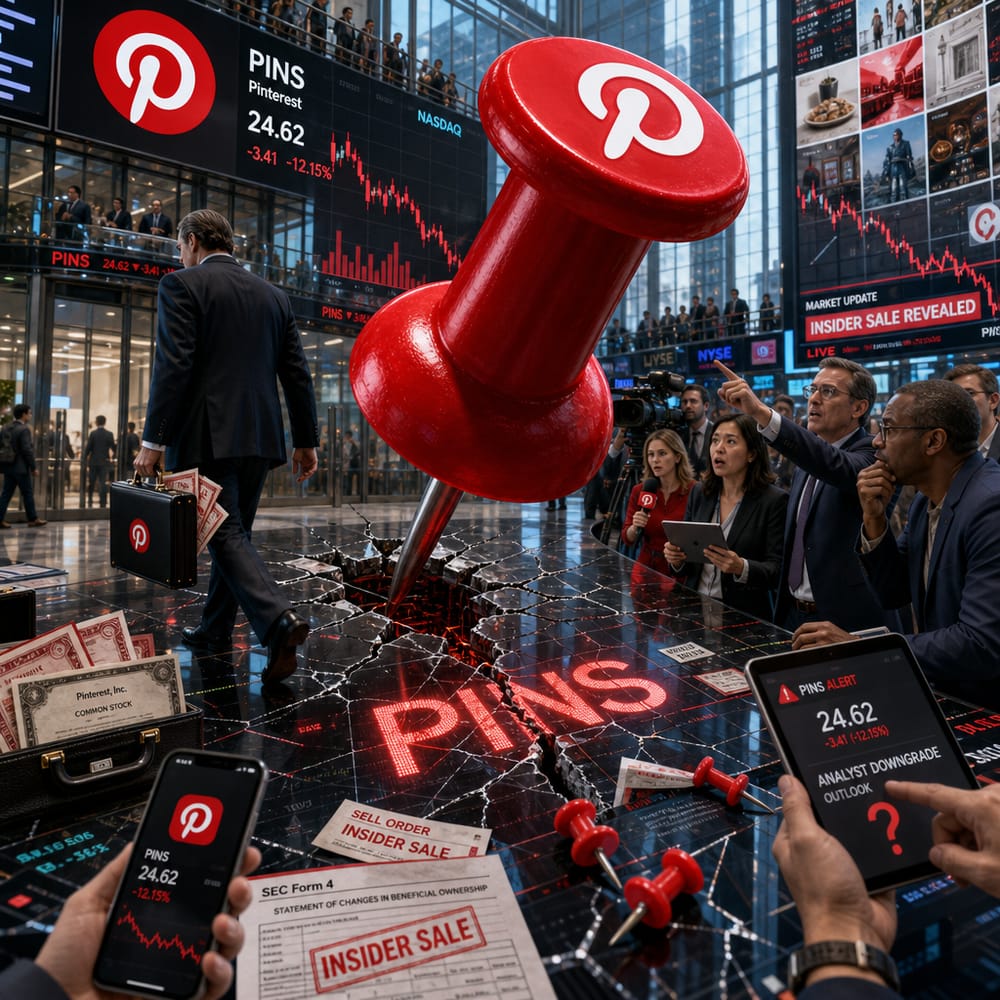
PINTEREST INSIDER SELLING: WHAT IT MEANS FOR INVESTORS
Ever feel like you're the last to know? Well, Pinterest investors just got a heads-up they might wish they'd missed. Last week, Pinterest Director Benjamin Silbermann, the guy who co-founded the platform and helped turn pinning into a pastime, decided to cash in nearly 94,000 shares, raking in a cool $2.2 million. That's like selling your vintage comic book collection after the superhero movie flopped. But it raises the question: what does Benjamin know that we don't?
Insider selling isn't just a casual affair; it's a move that often feels like someone yelling "FIRE!" in a crowded theater. It can be a signal—one that suggests insiders might think the company’s stock is heading south, like a bird fleeing winter. So why exactly did Silbermann decide to offload such a hefty chunk of his stake, and what could this mean for you, the everyday investor who's just trying to make sense of it all?
THE REASON BEHIND THE SALE
Let’s break it down. Silbermann’s sale was conducted under a pre-set trading plan—fancy financial lingo known as Rule 10b5-1. This means he didn’t just wake up one day, spill his coffee, and decide to sell his shares. Instead, this was scheduled way back in February 2026, when things might have seemed rosier. These plans are typically put in place to avoid any accusations of insider trading, allowing insiders to sell stock at regular intervals without raising eyebrows. Think of it as the business version of a planned dinner date, except with potentially millions of dollars on the line.
However, the timing is questionable if you peek at Pinterest’s recent performance. The stock has nosedived by 33% over the past year, echoing the sound of a balloon losing its air. To add to the drama, North American user growth has hit a wall, and advertisers are tightening their belts due to economic uncertainty. All of this culminates in a perfect storm of "should we be worried?" questions among Pinterest's loyal investor base.
THE RIPPLE EFFECT ON STOCK PRICE
Investor sentiment is a fickle thing, easily swayed by insider moves. While insiders often sell for reasons unrelated to the company’s performance—like buying a yacht or a new island—such sales can make investors jittery. Imagine you’re at a party and the host suddenly leaves; it doesn’t do wonders for the vibe. Historically, large insider sales can put downward pressure on a stock’s price, as it throws a little shade on the company’s prospects.
For those holding Pinterest stock, this sale might initially feel like a gut punch, especially if you’ve been banking on a rebound. The move might lead to short-term volatility, with investors trying to make sense of what lies ahead for a company that’s struggling to regain its mojo amid a broader market downturn.
WHAT SHOULD INVESTORS CONSIDER?
Now, before you hit the panic button and start selling shares like they’re hot potatoes, take a breath. Insider sales aren’t always the crystal ball they're made out to be. The key is to look at them in context. Consider the company's overall trajectory, its leadership changes, or strategic pivots—like its focus on video content and e-commerce integration—as well as broader market trends before making any decisions.
It’s also worth scrutinizing whether other insiders are jumping ship or if it’s just one person cashing out. If it’s a one-off, it might not spell doom and gloom. But if there’s a parade of insider sales, then maybe it’s time to start asking some hard questions.
Finally, stay informed and keep an eye on company developments, quarterly earnings, and any strategic announcements. Sometimes the stock market is like one big poker game, and having the right information at the right time can help you decide whether to hold, fold, or bluff your way to a winning hand.
In the end, Benjamin Silbermann’s sale is a significant move that shouldn't be ignored. But whether it's a harbinger of things to come or just a routine financial management maneuver, only time will tell. Keep your wits about you, and remember—investing is a marathon, not a sprint.
This article is for informational purposes only and is not investment advice. Always do your own research or consult a licensed financial professional before making investment decisions.
© Copyright 2024. All Rights Reserved.
© Copyright 2024. All Rights Reserved.