

Philippine Peso Hits Record Low Amid Oil Price Surge
Saturday, August 22, 2026
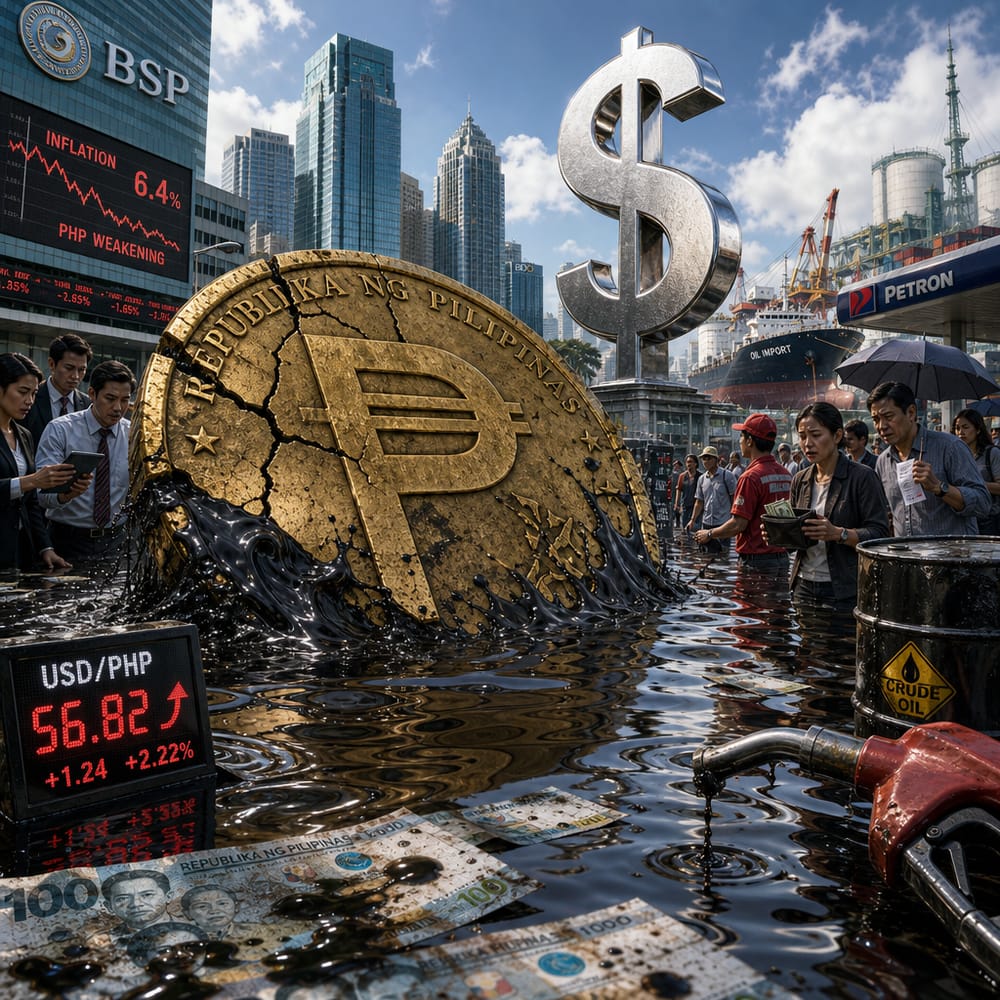
Philippine Peso Hits Record Low Amid Oil Price Surge
Hold onto your wallets, folks! The Philippine peso is making headlines for all the wrong reasons, sliding to a record low against the almighty U.S. dollar. If you're scratching your head wondering why your vacation plans to Manila just got pricier, it's all thanks to the rollercoaster ride of global oil prices and inflationary pressures that are making emerging market currencies sweat bullets.
Here's the scoop: The Philippine peso, that colorful currency with heroes and historic landmarks, isn't having its day in the sun. Instead, it's feeling the heat from surging oil prices that have leapt faster than a kangaroo on a trampoline. For an oil-importing country like the Philippines, this isn’t just a headache — it’s a full-blown migraine. Every tick upward in oil prices spells trouble for the peso, as it means shelling out more dollars for the same barrel of oil. And let's be real, the peso can't exactly flex its muscles against the dollar, which remains the heavyweight champ in the currency ring.
But why should you care if the peso is taking a nosedive? Well, it's a cautionary tale about what can happen when an economy is heavily reliant on oil imports. It also shines a spotlight on the potential domino effect on other emerging market currencies. If the peso is slipping on the oil slick, could others follow?
Now, with currencies playing a nerve-wracking game of dominoes, all eyes are on the Bangko Sentral ng Pilipinas (BSP) — the country's central bank. You could say the BSP is like the currency world's version of Batman, summoned whenever the peso blinks the bat signal of distress. The question on everyone's lips is: Will they swoop in to stabilize the currency, or will they let the peso fight its own battle?
Historically, central banks aren't shy about stepping in when things get too shaky. Sometimes it takes a bit of intervention — think of it as the financial version of a pep talk — to give the currency a much-needed boost. And in this instance, the BSP could intervene by selling off some of their dollar reserves to prop up the peso. But here's the rub: doing so could deplete the reserves they need for other rainy days.
While the BSP is mulling over its potential superhero cameo, they're also keeping a wary eye on the broader landscape. Rising oil prices don't just have the peso in a chokehold; they're also putting the squeeze on other emerging market currencies. Countries like Indonesia, India, and Thailand, which also rely heavily on imported oil, are feeling the burn.
As for the global market, it's a classic case of "when one door closes, another opens." The peso's plummet is bad news for Filipino consumers facing higher prices for just about everything, from groceries to gadgets. But for savvy investors, it presents a golden opportunity to snag some pesos on the cheap before a potential rebound.
So, where does this leave us? The peso's current predicament serves as a stark reminder of the vulnerabilities that come with economic dependency on oil imports. It also underscores the delicate balancing act that central banks must perform — between intervention and letting market forces run their course. Whether or not the BSP decides to intervene, one thing's for sure: the currency market is anything but dull.
In the meantime, keep a close watch on your currency apps and forex charts. Whether you're planning a trip to the Philippines or just like seeing how far your dollar can go, these developments are worth keeping an eye on. After all, the world of finance is nothing if not a wild ride, full of twists, turns, and, yes, the occasional nosedive.
This article is for informational purposes only and is not investment advice. Always do your own research or consult a licensed financial professional before making investment decisions.
© Copyright 2024. All Rights Reserved.
© Copyright 2024. All Rights Reserved.