

PG&E Shares Jump Over 20% After Fire Liability Relief Stalls California Proposal
Saturday, September 26, 2026
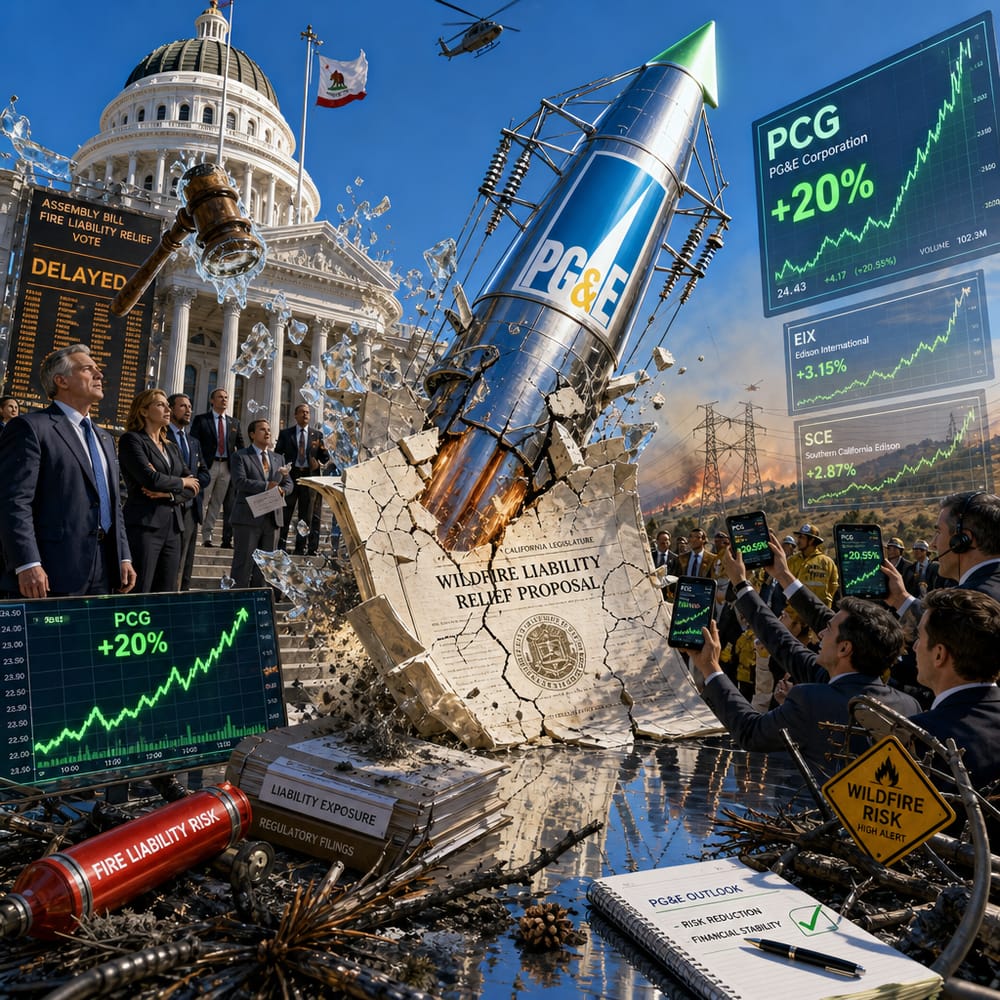
PG&E STOCK SURGES AS CALIFORNIA'S WILDFIRE RELIEF PLAN GOES UP IN SMOKE
Imagine a world where a massive lawsuit hanging over your head—like the Sword of Damocles—is suddenly swept away by a gentle breeze. That's kind of what happened to Pacific Gas & Electric (PG&E) recently. The proposal that could have shackled them to endless wildfire liability costs has stalled, sending their stock rocketing over 20%. Investors, popping champagne corks like it's the Fourth of July, are relieved. But let’s dig deeper, shall we? What does this mean for PG&E and, more importantly, for you, the casual investor trying to make sense of it all?
When the news hit that California's wildfire liability relief proposal was dead in the water, PG&E shareholders could hardly contain their glee. Why, you ask? Well, the thought of reduced financial liability risk is music to any investor's ears. For PG&E, a company whose name is almost synonymous with California wildfires, the proposal’s failure means a less cloudy financial horizon. But don't go rolling around in your cash just yet.
PG&E has been the poster child for catastrophe. Their equipment has sparked a series of mega-fires, singeing not just the Californian landscape but their pocketbooks as well. Liability lawsuits have been piling up like a game of Jenga—one wrong move, and the whole tower could come crashing down. The stalled proposal now means PG&E can breathe a bit easier—for the short term, at least.
This development slices through PG&E's risk profile like a hot knife through butter. Less perceived risk means investor confidence rises, translating into a sweet surge in stock value. And for a company still in the shadow of bankruptcy from previous wildfire liabilities, this breathing room is more than welcome.
But wait, what's the catch? The long-term regulatory risks for PG&E are as complex as trying to untangle your earbuds. California isn't exactly going to turn a blind eye to fire safety and environmental concerns. The state is likely to continue tightening regulations, meaning PG&E must keep on its toes to avoid any more fiery mishaps. Stringent regulations could lead to higher operational costs, which may gnaw away at those shiny stock gains over time.
Compared to other utility companies like Edison International and Southern California Edison, PG&E's rollercoaster ride is a cautionary tale. While these companies also face wildfire risks, they haven't been caught in the same blazing inferno of liability claims. They've taken steps to mitigate risks, which could make them more stable—and perhaps more attractive—to investors.
So, what should you, the savvy retail investor, make of all this? If you're holding PG&E stock, congratulations on the windfall. But remember, markets have the memory of a goldfish. Today's relief could be tomorrow's regret if PG&E doesn't continue to innovate and invest in safer infrastructure. Keep an eye out for how they plan to navigate California’s regulatory labyrinth.
For those eyeing other utility companies, remember that PG&E's case is a unique beast. Diversifying your bets might be wise, considering the risky business of dealing with Mother Nature. After all, nobody wants to be left holding the bag in the next fire season.
In summary, PG&E dodged a bullet this time, and investors are reaping the benefits. However, the company's journey through the legal and regulatory jungle is far from over. The lesson here is simple: while short-term gains are thrilling, long-term strategy and risk management are what separate the winners from the wannabes in the wild world of investing. So, keep your eyes peeled and your investment portfolio diversified—because in this high-stakes game, nothing is ever truly fireproof.
This article is for informational purposes only and is not investment advice. Always do your own research or consult a licensed financial professional before making investment decisions.
© Copyright 2024. All Rights Reserved.
© Copyright 2024. All Rights Reserved.