

Pfizer Falls 14%—Healthcare Sell-off in Focus
Wednesday, July 01, 2026
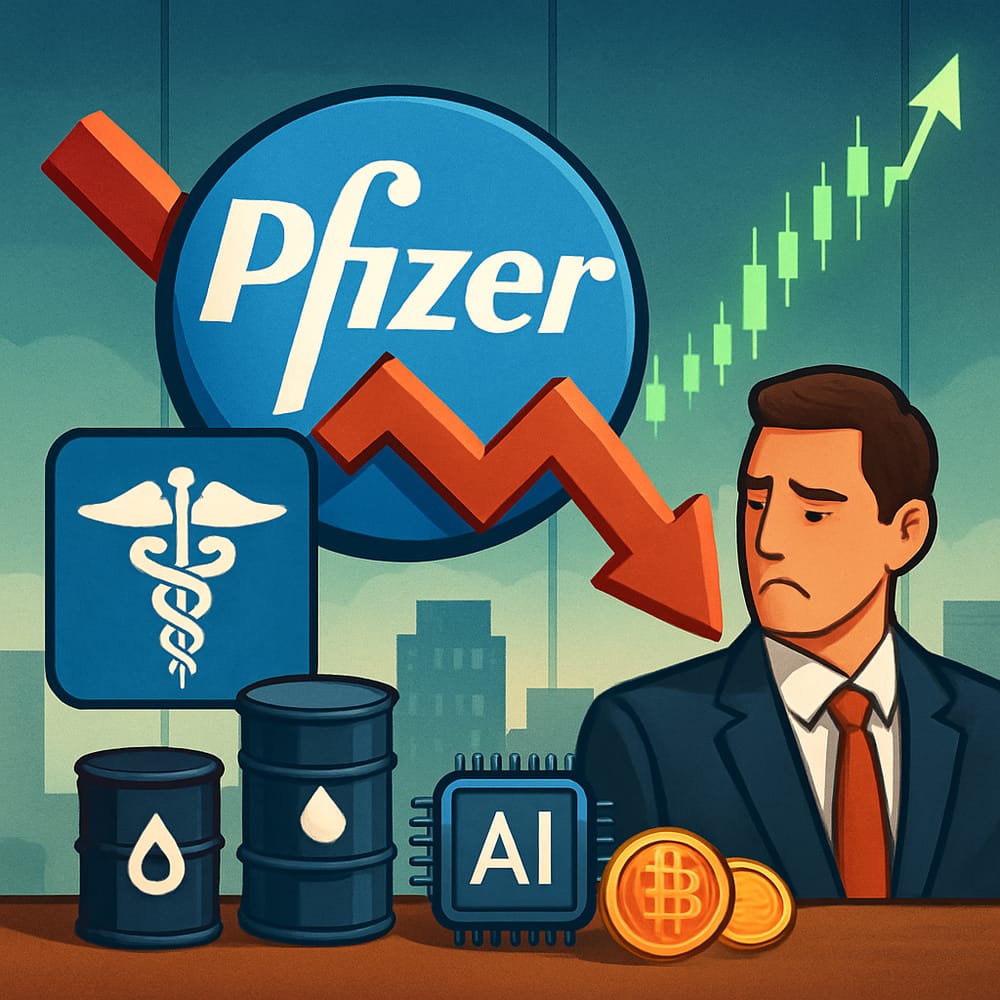
Pfizer Takes a Plunge: What's Shaking Up Healthcare Stocks?
If you were wondering why Pfizer stock took a nosedive like a rollercoaster at theme park closing time, you're not alone. Pfizer shares recently dropped about 14%, leaving investors scratching their heads and portfolios. So what happened? Let's dive into the swirling cocktail of factors rattling the healthcare sector and figure out what it means for you, the savvy retail investor.
First things first, let's address the elephant in the room: Pfizer's recent performance hasn't been a walk in the park. Earnings reports were less than stellar, and the company's guidance for the future? Well, let's just say it wasn't the pep talk Wall Street was hoping for. Lower-than-expected earnings and cautious guidance can send stocks tumbling faster than a meme stock on a bad day.
But Pfizer isn't the only one with a case of the market jitters. The broader healthcare sector is experiencing a bit of turbulence. Some investors are rotating out of healthcare stocks, looking for greener pastures elsewhere. It's the classic case of "last year's darlings become this year's cautionary tales."
PIPELINE WOES AND PATENT CLIFFS
One of the big concerns looming over Pfizer right now is its pipeline — or the lack of new, blockbuster drugs ready to hit the market. Think of it like a movie studio with a bunch of sequels but no fresh Oscar contenders. Investors crave innovation, and a lack of promising new products can be a red flag.
Adding salt to the wound is the dreaded "patent cliff." This happens when patents on lucrative drugs expire, opening the floodgates to generic competitors. It's like a hit band losing its exclusive gig at a popular venue. Without those patent-protected cash cows, revenue can take a hit.
DIVIDEND SAFETY IN QUESTION
For many investors, dividends are like that reliable friend who always shows up — except when they don't. Pfizer has historically been a dividend favorite, but with recent performance hiccups, some are questioning its ability to maintain those cushy payouts. While the company is still committed to rewarding shareholders, a shaky financial footing could put pressure on those dividend checks.
SECTOR ROTATION AND MACRO HEADWINDS
Beyond Pfizer's woes, the healthcare sector as a whole is feeling the heat from broader market shifts. Investors are re-evaluating their portfolios amid rising interest rates and economic uncertainties. The Federal Reserve's focus on tackling inflation is also playing a tune that has everyone dancing cautiously around rate hikes. Higher interest rates can make bonds more attractive compared to stocks, pulling some investors away from equities.
Moreover, there's a sense that the pandemic boom in healthcare stocks is starting to fizzle. Companies that were once market darlings during the COVID-19 crisis might not have the same allure now, as the world shifts its focus to other sectors.
WHAT DOES THIS MEAN FOR YOU?
Now, let's talk strategy. If you're a retail investor with a finger on the healthcare pulse, what should you do in the wake of Pfizer's drop and the broader sector's turbulence?
First, take a deep breath. Volatility is the name of the game in investing. Pfizer's challenges, from pipeline concerns to sector rotation, aren't to be ignored, but they aren't the end of the world either. If you're considering whether to hold, sell, or buy, think long term. Are you confident in Pfizer's ability to navigate patent cliffs and revitalize its pipeline? If so, this could be a buying opportunity at a discount. But if you're skeptical, it might be time to reassess.
Remember, diversification is your friend. If you find yourself too exposed to one sector, consider spreading your investments across different industries. This can protect your portfolio from the ups and downs of any single sector.
In the end, Pfizer's 14% drop serves as a reminder that the stock market is as unpredictable as ever. Stay informed, stay flexible, and most importantly, don't let the market's rollercoaster ride throw you off your investing game.
This article is for informational purposes only and is not investment advice. Always do your own research or consult a licensed financial professional before making investment decisions.
© Copyright 2024. All Rights Reserved.
© Copyright 2024. All Rights Reserved.