

Persistent PCE Inflation Challenges Fed's 2% Target
Friday, August 21, 2026
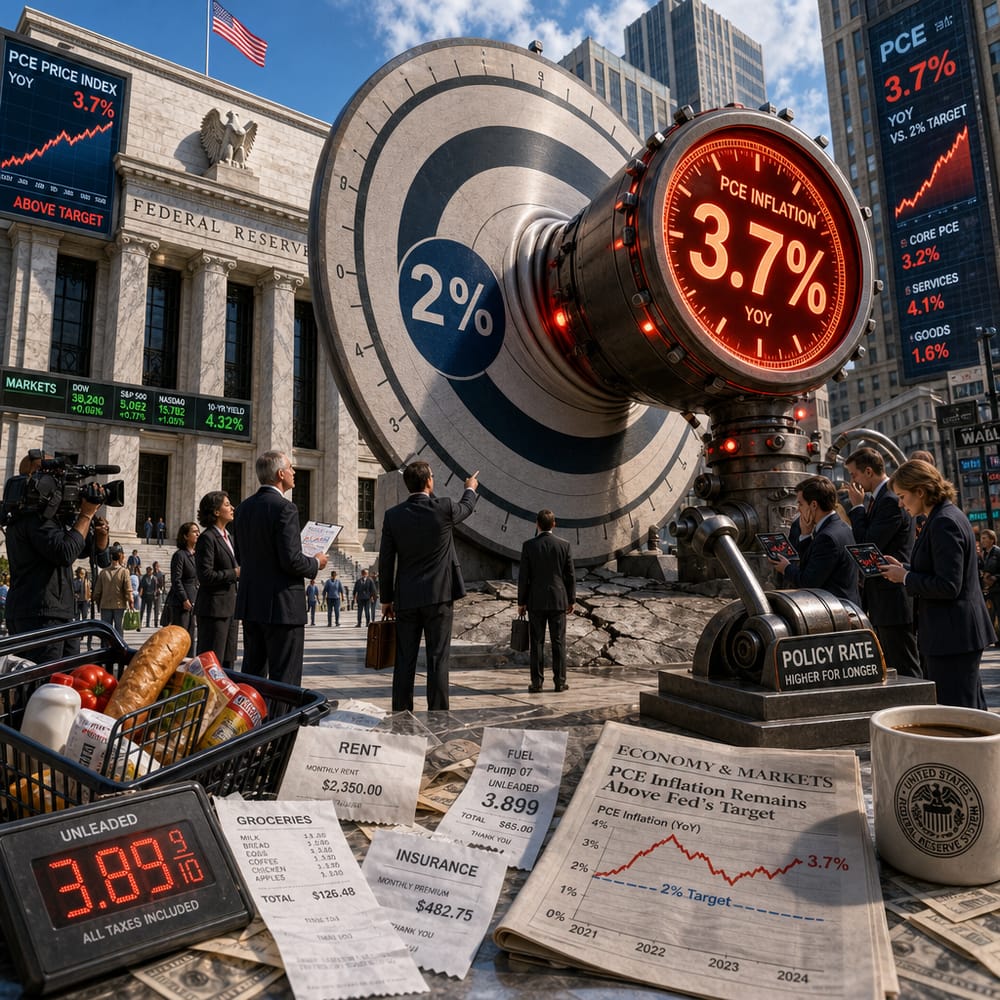
If the economy were a high-stakes poker game, the Federal Reserve just drew a card it wasn’t thrilled to see. The latest Personal Consumption Expenditures (PCE) inflation data shows a year-over-year increase of 3.7%. That’s still a good distance from the Fed’s dream of a 2% inflation target. The pressure is on, and Jerome Powell and Co. are feeling the heat.
So what's behind this pesky inflation that refuses to bow down to the Fed’s 2% commandment? Well, picture this: a heady cocktail of supply chain hiccups, geopolitical drama, and market volatility, with a dash of consumer demand thrown in for good measure. The supply chain issues, still lingering like an unwanted guest from the COVID-19 party, continue to drive up costs. Meanwhile, folks are opening their wallets, albeit cautiously, leading to a tug-of-war between supply and demand.
But wait, there’s another guest at the inflation party: energy prices. They’ve been on a wild ride thanks to ongoing tensions in Eastern Europe. Remember Romania scrambling F-16s to take out a marine drone near a critical gas project? Incidents like these have oil prices doing the cha-cha, which in turn impacts everything from heating bills to transportation costs, further fanning the inflation flames.
Now, let’s talk about what the Fed might do next. They’re like the seasoned chess player, eyeing the board, contemplating their next big move. Conventional wisdom suggests they could jack up interest rates, the standard go-to move to cool inflationary jets. But here’s the catch: hiking rates could also tap the brakes on economic growth. It’s a delicate balance, like walking a tightrope while juggling flaming torches.
The Fed also has the bond market to contend with. Rising Treasury yields have spooked Wall Street recently, sending stock futures on a downward spiral. Bond vigilantes, those market players who monitor inflation and interest rates like hawks, are eyeing every Fed move. They’re skeptical about the Fed’s ability to tame inflation without triggering a market tantrum. If the Fed's actions are perceived as too lenient, they risk losing credibility. Too aggressive, and they might derail economic growth. It’s a classic rock-and-a-hard-place scenario.
One option for the Fed is to use more creative tactics—perhaps revisiting their asset purchasing programs or tinkering with their balance sheet. But any such move would need to be carefully orchestrated to avoid further spooking the already jittery markets.
And while all this financial drama plays out, companies and investors are bracing themselves. Sectors like tech, real estate, and energy are all feeling the ripple effects. The tech sector is particularly interesting; despite New York overtaking San Francisco as the top market for tech talent, inflation and interest rate hikes could dampen the sector's growth prospects. On the flip side, energy companies might continue to see volatile times as geopolitical tensions play out.
So, what’s a retail investor to do amid all this? Keep a close eye on the Fed’s statements and actions. They’re the tea leaves of the economic world, giving insight into the future of interest rates and inflation. Being nimble and adaptable could be the key to navigating these choppy waters.
It’s clear that the Fed has its work cut out for it. Tackling inflation while keeping the economy afloat is no easy feat. But if history has taught us anything, it’s that markets have a way of adapting. So, buckle up, because the ride is far from over. For now, all eyes are on the Fed, waiting to see their next move in this high-stakes game of economic chess.
This article is for informational purposes only and is not investment advice. Always do your own research or consult a licensed financial professional before making investment decisions.
© Copyright 2024. All Rights Reserved.
© Copyright 2024. All Rights Reserved.