

Persistent Inflation & Strong Growth
Saturday, November 28, 2026
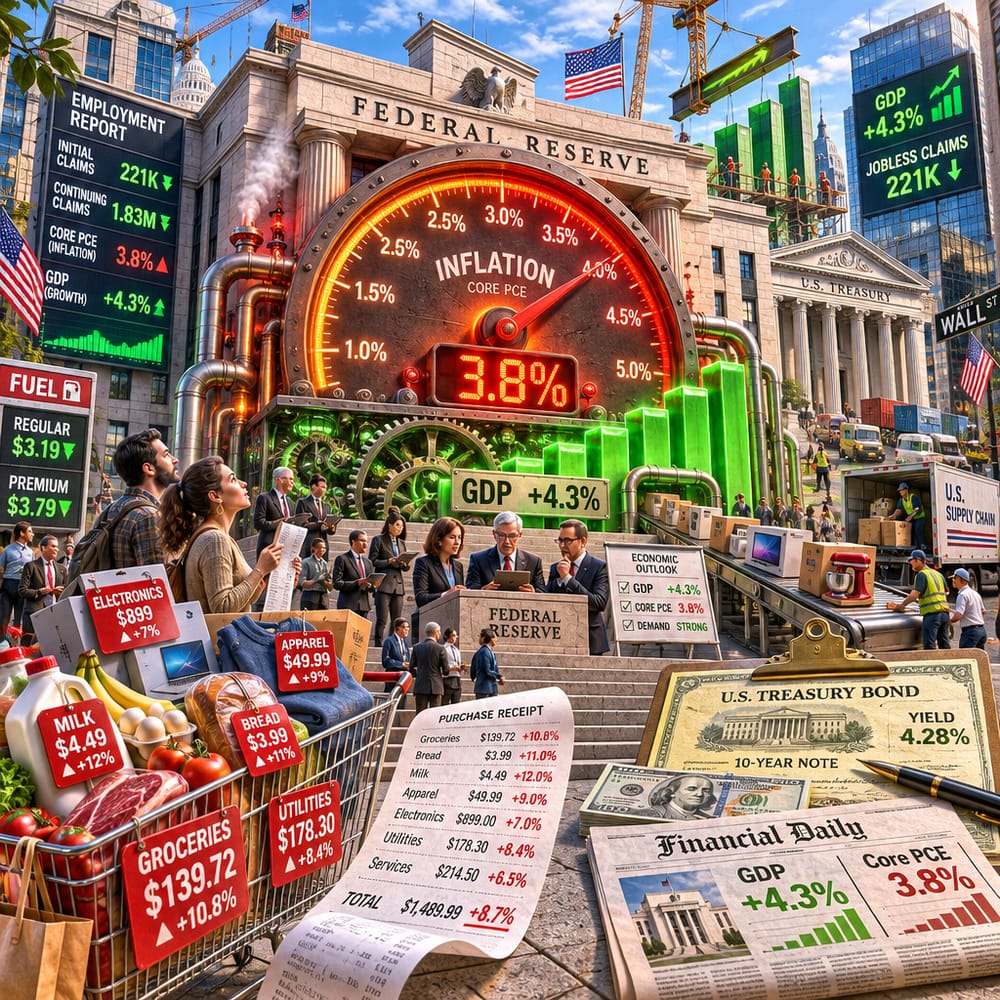
THE FED'S DILEMMA: STRONG GROWTH, STUBBORN INFLATION, AND YOU
The Fed has a problem. Not your grandmother’s knitting circle kind of problem, but a full-fledged, can’t-sleep-at-night economic conundrum. On one hand, the U.S. economy is flexing its biceps with a GDP growth of 4.3%. On the other hand, inflation is as persistent as a telemarketer, with the core PCE price index climbing 3.8% year-over-year in October. And just to spice it up, gas prices are taking a breather. So, what’s a central bank to do? More importantly, how does this impact you, the savvy retail investor?
A TALE OF TWO NUMBERS
Let’s break it down. GDP growth is the economic equivalent of a double espresso shot. It's got everyone buzzing—from your barista to the bigwigs on Wall Street. It signals that businesses are doing well, consumers are spending, and the economy is, quite literally, moving. Meanwhile, the inflation monster shows no sign of napping, even as gas prices drop. It’s inflation’s greatest party trick: sticking around just when you thought it might leave early.
Now, why do these numbers matter so much? Because they form the crux of the Federal Reserve’s decision-making process. These figures are the financial horoscope that guides interest rate hikes, and they’ve got the Fed scratching its head.
THE FED’S OPTIONS: TO HIKE OR NOT TO HIKE
So, how will the Federal Reserve respond to this sticky inflation? Typically, they’d reach for the nearest interest rate lever and yank it upwards—think of it as their version of an economic cold shower. Higher interest rates help cool down spending and borrowing, which in turn, should tame inflation. But here’s the twist: with GDP growth racing ahead like a caffeinated rabbit, too much rate hiking could risk slamming the brakes on our vibrant economy.
Think of it this way: the Fed is like a tightrope walker carrying two heavy weights—growth and inflation. Lean too far in either direction, and it’s a long way down. But before we cue the circus music, remember, this is all part of the Fed’s balancing act.
JOBS, JOBS, EVERYWHERE: THE LABOR MARKET PUZZLE
And let’s not forget the labor market—the third piece in this economic jigsaw. Unemployment claims are as low as your dog’s respect for the neighbor’s lawn, suggesting a robust and confident workforce. While this is great news for anyone hoping for a raise in 2026, it also means workers have more cash to splash, potentially driving prices higher. The Fed is watching job data like a hawk because a strong labor market could keep inflation afloat, regardless of what gas prices are up to.
BUT WHAT DOES IT MEAN FOR YOU?
So, what does this economic soap opera mean for you, the retail investor? For starters, it’s time to keep a close eye on the Fed’s next moves. If they decide to raise interest rates, borrowing costs for homes and cars will inch up. It might be a good idea to lock in those loan rates sooner rather than later.
Consumer goods companies might feel the pinch if inflation stays stubborn, as higher prices could make consumers think twice before splurging. Keep an ear to the ground for any hints of companies passing costs onto consumers—or finding innovative ways to absorb them. This could be a deciding factor in which stocks thrive and which merely survive.
And what about bonds? Well, in a high-interest environment, they might just become your new BFF, offering better returns for those looking to balance their portfolios.
THE FINAL BELL
As the Fed gears up for its December deliberations, the eyes of the financial world are watching. Persistent inflation alongside strong growth presents a challenge wrapped in an enigma. But one thing’s for sure: the Fed’s decisions will ripple through everything from the stock market to your wallet.
Keep your investment strategy as nimble as a cat on a hot tin roof. Stay informed, stay curious, and as always, keep a finger on the pulse of the economy. Because in this financial ecosystem, the smartest investors are the ones who can pivot with the changing tides.
So sit back, buckle up, and get ready for a bumpy—and potentially rewarding—ride.
This article is for informational purposes only and is not investment advice. Always do your own research or consult a licensed financial professional before making investment decisions.
© Copyright 2024. All Rights Reserved.
© Copyright 2024. All Rights Reserved.