

Persistent Inflation: PCE Inflation Steady at 3.7% YoY
Thursday, August 27, 2026
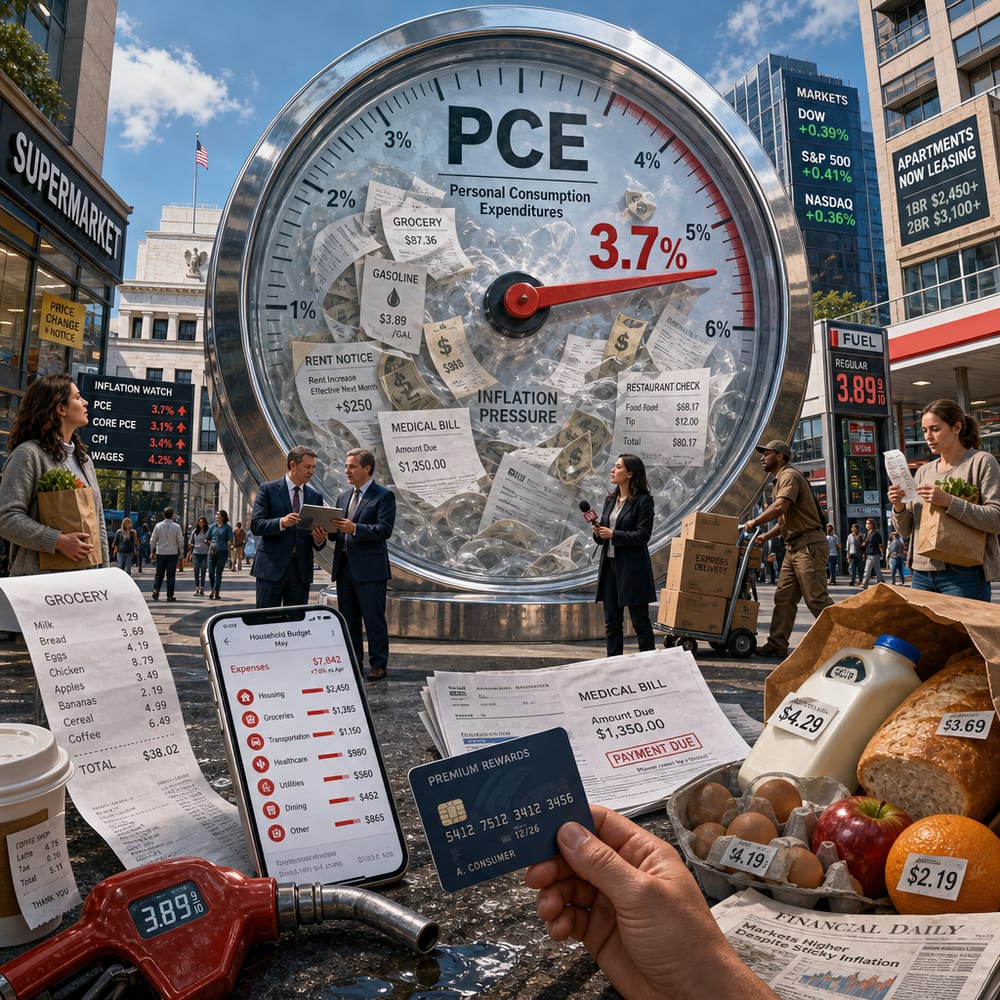
INFLATION STICKING AROUND? THE FED'S FIGHT IS FAR FROM OVER
Inflation just doesn’t know when to quit. Like that clingy acquaintance who can't take a hint, it's still hanging around at 3.7% year-over-year, according to the Core PCE price index – a favorite measure for the Federal Reserve. And while most of us might prefer lower prices and a bit more financial breathing room, here we are, caught in the economic twilight zone called "persistent inflation."
Now, you might be asking, “Why should I care?” Well, persistent inflation has a way of making our wallets feel lighter and our interest rates higher. And if you're wondering what this inflation cocktail is made of, it’s a mix of rising wages, global supply chain grumbles, and consumer demand that’s been chugging along even faster than your morning espresso. These aren't just cocktail ingredients; they're fueling the inflation train that's been chugging far slower than the Fed would like back to its 2% station.
Enter stage left: the Federal Reserve. The Fed, our country's monetary policy ringmaster, thrives on achieving a delicate balance – they're like tightrope walkers trying to avoid economic free-fall. With inflation not budging, chatter from Cleveland Fed President Beth Hammack hints at more rate hikes on the horizon. Hammack's recent “act now” plea at the Jackson Hole symposium wasn't just a nudge; it was a megaphone blast in the ears of every market participant. If you’ve been tuning into the Fed's moves, you’d know that every mention of rate hikes is akin to getting a Twitter notification from a celebrity account—it grabs attention.
So, how might the Fed respond to this relentless inflationary pressure? Picture them wielding their favorite tool: the interest rate sledgehammer. Raising interest rates is their way of trying to cool down an overheated economy. It's like cranking up the AC when the room gets too warm, but with the side effect of potentially slowing economic growth. You see, when borrowing costs rise, spending tends to slow down. This is great if you're trying to tame inflation, but not so much if you're rooting for sizzling economic growth.
What does this mean for the economy, you ask? Well, higher interest rates could put the brakes on the roaring engine of economic growth. Think of it as a speed bump on the road to financial prosperity. Loans get pricier, mortgages eat up more of your paycheck, and businesses may think twice before expanding. All this can lead to a dreaded slowdown in economic growth – a situation no one wants to put on their financial bingo card.
Yet, it's not all doom and gloom. Inflation also has its fingers in the stock market pie, influencing sectors differently. Industries like technology and consumer goods may feel the pinch more than, say, utilities or healthcare. So, if you're an investor, now's the time to dust off that market strategy and ensure it's inflation-ready. Diversification remains your best friend—spread your investments, and don’t put all your eggs (or should I say, stocks?) in one basket.
But let's not forget about consumer sentiment. If inflation sticks around, it might dent consumer confidence like a hailstorm on a brand new car. When people start worrying about rising costs, they might cut back on spending, leading to the dreaded R-word—recession. Not exactly a cheerful thought, but one worth considering as we navigate these inflationary waters.
As we ponder the potential twists and turns of this inflation saga, it’s clear that the Fed is bracing for a continued tussle with rising prices. Whether they decide to keep tightening the monetary screws is the million-dollar question—or, given inflation, perhaps it’s more like the two-million-dollar question now.
So, dear reader, keep your financial seatbelt fastened and your eyes on the Fed's moves. In the ever-shifting sands of the economy, staying informed is your best defense against the inflation rollercoaster. And remember, while inflation may be persistent, so are we.
This article is for informational purposes only and is not investment advice. Always do your own research or consult a licensed financial professional before making investment decisions.
© Copyright 2024. All Rights Reserved.
© Copyright 2024. All Rights Reserved.