

Persistent Inflation in July’s PCE Data Surprises Markets
Wednesday, August 26, 2026
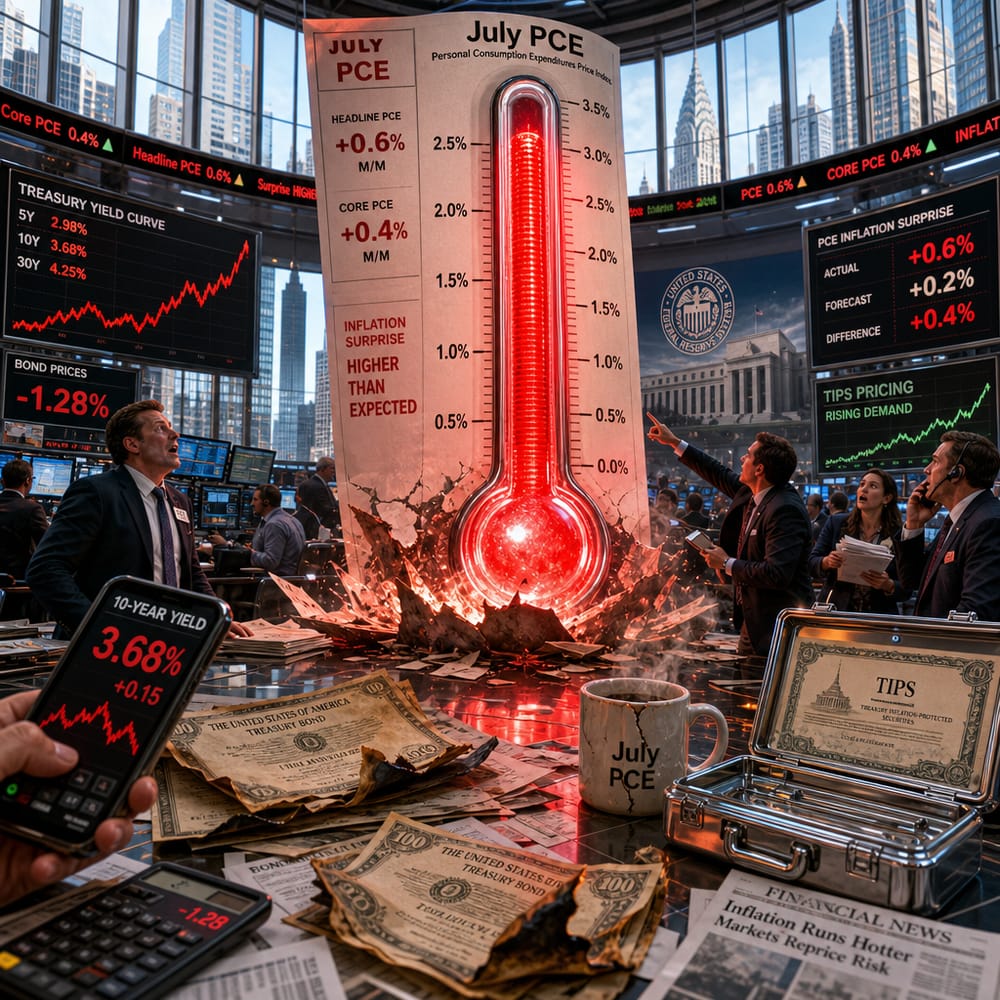
THE INFLATION DRAGON: WHY JULY'S PCE DATA HAS MARKETS ON EDGE
Stop the presses, folks! Inflation, that pesky economic gremlin, has snuck back into the spotlight, much to the chagrin of optimistic investors everywhere. July's Personal Consumption Expenditures Price Index (PCE), the inflation measure that the Federal Reserve swears by like a die-hard Harry Potter fan clutching their wand, revealed inflation is stubbornly sticking around. Market jitters? Oh, they're more like market tremors.
You see, everyone and their grandmother expected inflation to cool its jets. But nope. July's PCE report showed inflation rose 0.2% month-over-month and a steamy 3.7% year-over-year. Economists had hoped for a more lukewarm number, making these figures about as welcome as an impromptu Monday morning meeting.
POTENTIAL FED MOVES: INFLATION'S GHOST OF FUTURE INTEREST RATES
Now, you might be wondering what all this inflation buzz means for the Federal Reserve. Imagine Jerome Powell and his merry band of rate-deciders as tightrope walkers, trying to balance economic growth and inflation. Persistent inflation could push them to lean more towards hiking interest rates again, a move that could ripple through the economy faster than you can say "adjustable rate mortgage."
Higher interest rates typically mean borrowing money gets pricier. Think of it as a sneaky tax on everything from car loans to credit card debt. For investors, this could translate to more cautious spending, potentially putting a damper on economic growth. Not exactly the cocktail of confidence the market was hoping to sip on.
THE BOND MARKET AND INFLATION-LINKED SECURITIES: WHAT'S THE DEAL?
Meanwhile, the bond market is having its own little soap opera moment. U.S. Treasury bond yields, the rock stars of the fixed-income world, are behaving more like divas. When inflation acts up, bond yields often start singing a higher tune, reflecting the increased risk of holding onto government debt when the dollar’s value is being sneakily eroded.
But wait, it gets juicier. Inflation-linked securities, like the saucy Treasury Inflation-Protected Securities (TIPS), tend to become the belle of the ball when inflation fears mount. These nifty bonds adjust with inflation, providing investors with a smidge more peace of mind than their vanilla Treasury counterparts.
CONSUMER SPENDING AND ECONOMIC GROWTH: THE RIPPLE EFFECT
So, how might this inflation hullabaloo affect consumer spending? Well, if interest rates climb and borrowing gets costlier, consumers might tighten their purse strings. Picture shoppers hesitating to swipe their plastic for that shiny new gadget or pondering the necessity of that daily latte—every dollar spent is suddenly weighed a bit more heavily.
This belt-tightening can spell bad news for economic growth. Less consumer spending can slow down the economy's momentum faster than a traffic jam at rush hour. Retailers, service providers, and anyone relying on consumers’ discretionary income could feel the pinch.
WHAT'S NEXT?
With the market’s eyes now firmly glued to the Federal Reserve's next moves, everyone’s asking the same question: will they raise interest rates again? It's a delicate dance between curbing inflation and not stifling growth, a performance that could give even the most seasoned investor a mild case of heartburn.
While your 401(k) might not be throwing a party right now, understanding the dance between inflation, interest rates, and market reactions can help you make informed decisions. Keep your eyes on the economic indicators, and remember, every financial storm eventually passes.
In the meantime, maybe keep that emergency fund topped up—just in case the market decides to surprise us again. Because, as we've learned, predicting inflation is about as easy as nailing jelly to a wall. Stay savvy, invest smartly, and don't forget to enjoy the ride, bumps and all.
This article is for informational purposes only and is not investment advice. Always do your own research or consult a licensed financial professional before making investment decisions.
© Copyright 2024. All Rights Reserved.
© Copyright 2024. All Rights Reserved.