

Persistent Inflation and Its Implications Ahead of December Fed Meeting
Sunday, November 29, 2026
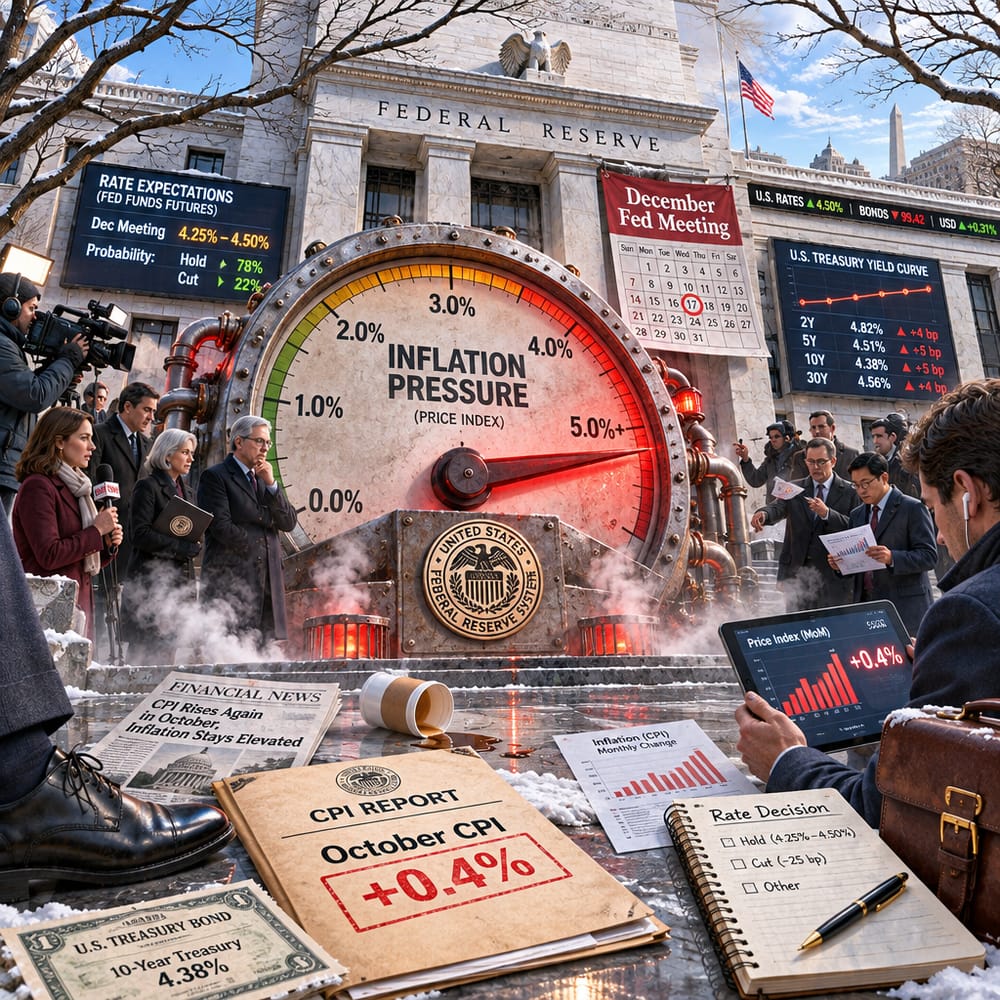
INFLATION'S STICKY SAGA: WHAT OCTOBER'S CPI MEANS FOR THE FED'S DECEMBER MOVES
Brace yourselves, folks. Inflation's still hanging around like that one party guest who just won't leave, and October's numbers aren't exactly rolling out the welcome mat for the Federal Reserve's December meeting. With the Consumer Price Index (CPI) ticking up 0.4% month-over-month, we've got some serious inflationary vibes to unpack. So, what does this mean for the cold, calculating minds of the Fed? Let's dive in.
WHY SHOULD YOU CARE?
If you're wondering why inflation feels like the financial world's favorite broken record, it's because it messes with everything—your morning latte, your rent, and yes, your precious stocks. When prices keep climbing, the Fed starts contemplating interest rate hikes like a caffeine-fueled chess master. And when interest rates rise, borrowing costs for things like mortgages and business loans follow suit. It's a tricky game of economic Jenga where one wrong move could send the blocks toppling.
THE FED'S BIG DILEMMA
So, how will Jerome Powell and his merry band of policymakers respond to this sticky inflation? The Fed's got a classic case of damned if you do, damned if you don't. Hiking rates could cool inflation's jets, but it might also put a dampener on economic growth, kind of like dousing a BBQ with a bucket of ice water. On the other hand, keeping rates steady might let inflation run wild, turning your grocery runs into high-stakes sagas.
The Fed's December meeting will be all about finding that Goldilocks zone—not too hot, not too cold—where inflation is under control without putting the economy to sleep. But with persistent inflation, that perfect porridge is feeling more elusive than ever.
THE ECONOMY'S CRYSTAL BALL
Let's play fortune teller for a moment. If the Fed decides to hike those rates, it could mean higher costs for businesses and consumers alike. Companies might pump the brakes on investing, hiring could slow, and that cushy job market might not look so cushy anymore. But hold your horses before you panic—higher rates could also mean a steadier economy in the long run, keeping that inflation monster at bay.
MARKETS: REACTING OR OVERREACTING?
As for Wall Street, it's like watching a group of cats react to a laser pointer—unpredictable and often chaotic. The recent inflation numbers have got traders twitching, with some fearing rate hikes and others hoping for a softer stance from the Fed. Market reactions have been a mixed bag, with some sectors like tech feeling the pinch, while others are holding their ground.
Investors are keeping a keen eye on stocks that are sensitive to interest rates. Real estate, tech, and high-growth companies could feel the heat if borrowing costs rise, while sectors like consumer staples might chug along like dependable old trains.
WHAT SHOULD YOU DO?
If you're sitting there thinking, "Okay, but what's in it for me?" here's the lowdown. Keep an eye on the Fed's next moves and be ready to adjust your portfolio. Diversification is your trusty shield against the whims of inflation and interest rates. Maybe sprinkle in some good old-fashioned dividend stocks or those value plays that tend to be less volatile.
And remember, this isn't the first inflation rodeo. Markets have weathered storms like this before, and they'll do it again. Stay informed, stay calm, and most importantly, don't let inflation-induced anxiety lead you to rash financial decisions—like selling Tesla because your neighbor's cousin's dog walker said so.
INFLATION'S LONG GAME
As we inch closer to December, keep your eyes peeled on the economic chess board. Inflation might be the big, bad wolf huffing and puffing at the Fed's door, but how they respond will set the tone for 2024 and beyond. Whether they slam the rate hike button or play the patient game, one thing's for sure: inflation's impact will ripple through your finances in ways you might not see coming.
So, grab your popcorn—because this December, the Fed's decision isn't just a page-turner, it's the main event.
This article is for informational purposes only and is not investment advice. Always do your own research or consult a licensed financial professional before making investment decisions.
© Copyright 2024. All Rights Reserved.
© Copyright 2024. All Rights Reserved.