

Persistent High Treasury Yields Reflect Economic Uncertainty
Friday, August 21, 2026
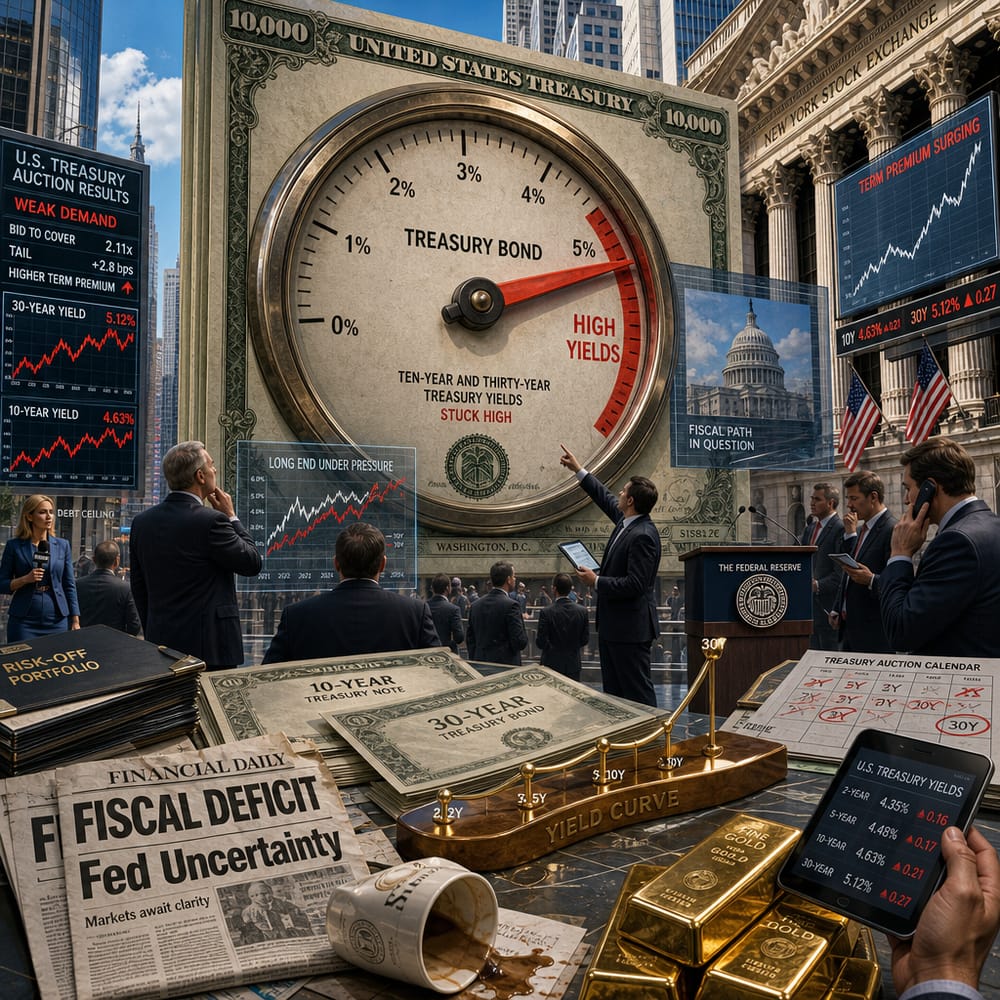
If Wall Street were a soap opera, Treasury yields would be the villain with a mysterious past. Lately, these pesky yields have been causing quite the drama, refusing to drop despite the Federal Reserve's best efforts to calm things down. While the stock market takes its roller coaster ride, the bond market remains center stage, pulling focus with its stubbornly high yields on long-term U.S. government bonds. It's like watching a thrilling drama unfold — except, instead of cliffhangers, we get economic uncertainties.
So, what's behind this yield-raising spectacle? Let's break it down, bond for bond. To start, nervous investors are demanding higher yields to park their cash in U.S. government bonds. It's their way of saying, "Show me the money!" Why so anxious? Well, Uncle Sam's balance sheet isn't looking as hot as it used to, with fiscal concerns looming large. With debt levels climbing and no visible fiscal belt-tightening, investors want a little extra compensation for holding government IOUs.
Then there's the Federal Reserve — not exactly winning any popularity contests lately. Its policy ambiguity is fueling uncertainty like lighter fluid on a bonfire. In recent months, the Fed has been playing coy with its interest rate narrative, leaving investors guessing. Are more hikes on the horizon, or are we nearing the end of the tightening saga? The mixed signals aren't doing much to soothe Wall Street's nerves, further inflating those yield expectations.
But why should you care if you're not moonlighting as a bond trader? Because those pesky high yields ripple through the economy like aftershocks following an earthquake. Let's start with government borrowing. When Uncle Sam borrows money, it uses the yield as a guide for interest rates, kind of like picking which credit card to max out. High yields mean higher borrowing costs for the government, which can lead to spending cuts or increased taxes. Not exactly the ingredients for a recipe called "Economic Growth Delight."
And it doesn't stop at government coffers. Corporate America feels the heat too. When businesses need to borrow money, they often look at those government bond yields as a benchmark. High yields translate to higher borrowing costs for companies, which might curb their enthusiasm for expansion projects or hiring sprees. Imagine a corporate CEO tightening the purse strings because, well, borrowing just got more expensive.
With borrowing costs rising across the board, consumers could also feel the pinch. Need a mortgage? Get ready for sticker shock as interest rates on loans follow those rising yields. For the average Joe trying to buy a house or finance a car, this isn't good news. The ripple effect of high yields can slow down spending, stalling economic growth like a car running on empty.
But here's where it gets interesting. Is this yield uptick a passing cloud or a sign of stormy weather ahead? If these high yields persist, it could mean sustained upward pressure on interest rates, making borrowing more expensive for everyone — government, businesses, and consumers alike. And if that happens, the economy might have to brace for a slowdown, kind of like trying to jog with a backpack full of bricks.
While some might argue that high yields are a temporary blip, driven by a roller-coaster market and transitory factors, others see them as a harbinger of a new normal. Long-term economic impacts aren't just speculation; they're a real possibility that could reshape how we view our economic future.
As we navigate these choppy financial waters, one thing's for sure: Treasury yields are more than just numbers on a spreadsheet. They're a reflection of economic sentiment, fiscal dynamics, and policy intrigue. So buckle up, retail investors, because with these high yields leading the charge, the bond market drama is far from over. While we may not have all the answers, staying informed and agile is the key to weathering whatever Wall Street throws our way. With financial stakes this high, you might just want to keep your eyes glued to this economic soap opera. Pass the popcorn!
This article is for informational purposes only and is not investment advice. Always do your own research or consult a licensed financial professional before making investment decisions.
© Copyright 2024. All Rights Reserved.
© Copyright 2024. All Rights Reserved.