

PepsiCo Faces Dual Downgrades Amid North American Struggles
Thursday, October 01, 2026
PepsiCo Faces Dual Downgrades Amid North American Struggles
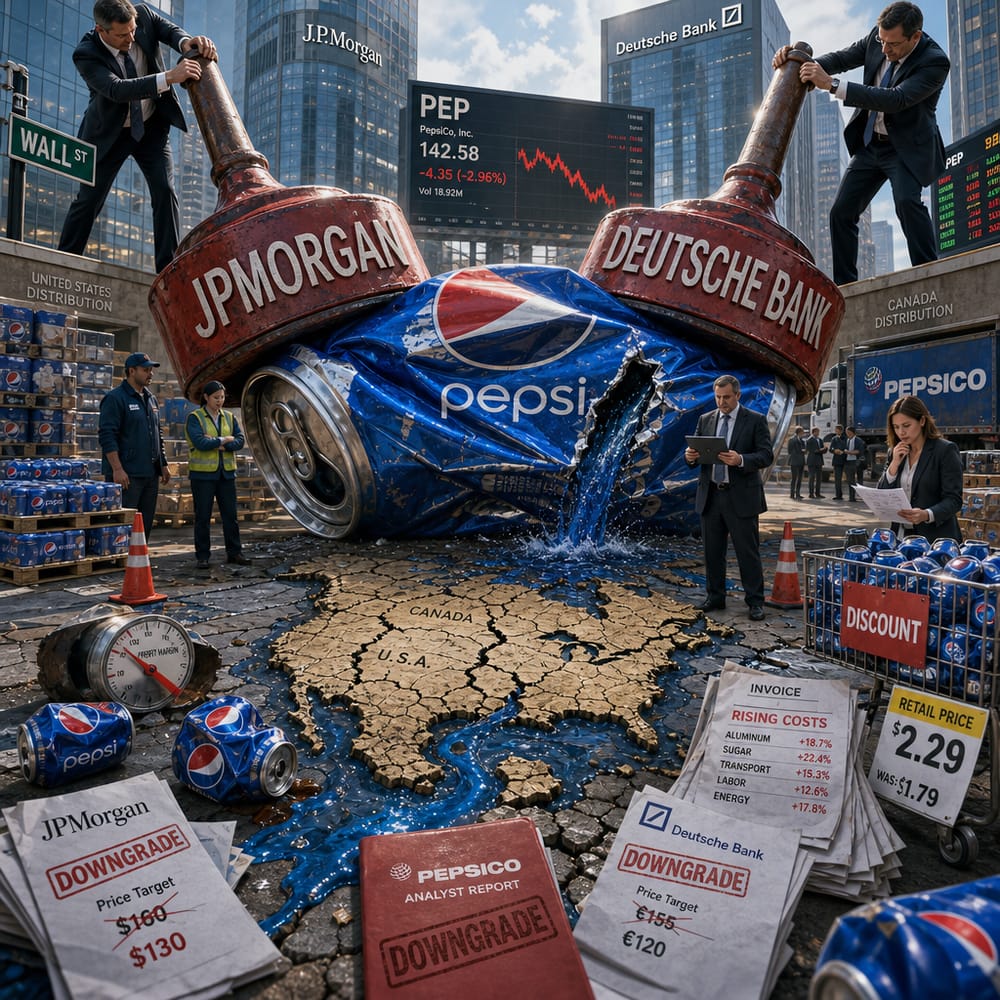
Is PepsiCo losing its fizz, or are analysts just thirsty for attention? In a rare double whammy, both JPMorgan and Deutsche Bank decided to rain on PepsiCo’s parade this week, each serving up a downgrade on the soda and snack giant. For a company that’s been a heavyweight contender in the consumer staples sector, this is akin to receiving a pair of red cards in a championship match. So, what gives? Let's dive into the carbonated chaos and see what's bubbling beneath the surface.
THE FIZZ IS FLAT IN NORTH AMERICA
The main culprit behind the downgrades? A lackluster performance in its North American markets. It seems PepsiCo is having a bit of a midlife crisis. Despite its legacy brands like Pepsi, Mountain Dew, and Doritos holding a special place in our nostalgia-filled hearts, they haven’t been doing their bit at the cash register. Add in the rising costs of doing business—think skyrocketing ingredient prices, supply chain snags, and those pesky labor costs—and you've got yourself a classic recipe for a profit pinch.
Investors are starting to scratch their heads, wondering if they’ve been all too enamored with PepsiCo’s old-school charms while ignoring the mounting challenges. These downgrades are a strong signal that maybe, just maybe, the brand’s sparkle isn't enough to distract from its operational hiccups.
INVESTOR SENTIMENT: A CHECK ON REALITY
When two big banks almost simultaneously decide to downgrade a stalwart like PepsiCo, it's not just a minor hiccup—it's a gut check for investors. With both institutions lowering their ratings and price targets, the market's message is clear: the stock might not be as refreshing as it once was. In the world of stocks, perception is part of the reality. If investors start to view PepsiCo as a less attractive bet, we could see downward pressure on the stock price.
However, it’s not just the stock that's at stake. These downgrades could ripple through the broader consumer staples sector. If PepsiCo, a market leader, is facing such fundamental challenges, it might force investors to reevaluate the stability of other consumer goods companies that could be paddling in murky waters.
A POSSIBLE TURNAROUND STRATEGY
But let’s not count PepsiCo out just yet. Like any good comeback story, PepsiCo could take this moment to pivot and innovate. First, the company could ramp up its efforts in the healthier segment of the market. With consumers increasingly turning away from sugary drinks, PepsiCo's investments in non-soda beverages and better-for-you snacks could start paying off if they push the pedal harder.
Then there's the cost-cutting playbook. PepsiCo might need to get creative to offset those rising costs. Maybe it's time to trim some corporate fat or boost efficiency through technology. A little bit of tightening the belt could go a long way in restoring profitability.
Lastly, PepsiCo could revisit its North American strategy. Their lineup has to resonate more with the modern consumer, who’s all about organic ingredients and sustainable practices. A refresh in branding and product offerings might just give PepsiCo the mojo it needs to recapture its market mojo.
THE BOTTOM LINE
While the double downgrade might seem like a gloomy forecast, remember: markets love a good redemption arc. It's not the first time a titan of industry has faced operational headwinds, and it won’t be the last. The real test for PepsiCo will be how quickly and effectively it can adapt to the shifting market landscape.
In this fizzing world of stocks, sometimes you have to shake things up a bit to get the bubbles going again. As investors watch closely, only time will tell if PepsiCo can pop the lid off its challenges and serve up a fresher, more lucrative future. For now, let’s keep our eyes on the ticker and see if this soda giant can get its sparkle back.
This article is for informational purposes only and is not investment advice. Always do your own research or consult a licensed financial professional before making investment decisions.
© Copyright 2024. All Rights Reserved.
© Copyright 2024. All Rights Reserved.