

PepsiCo Faces Analyst Downgrades Ahead of Q3 Earnings
Thursday, October 08, 2026
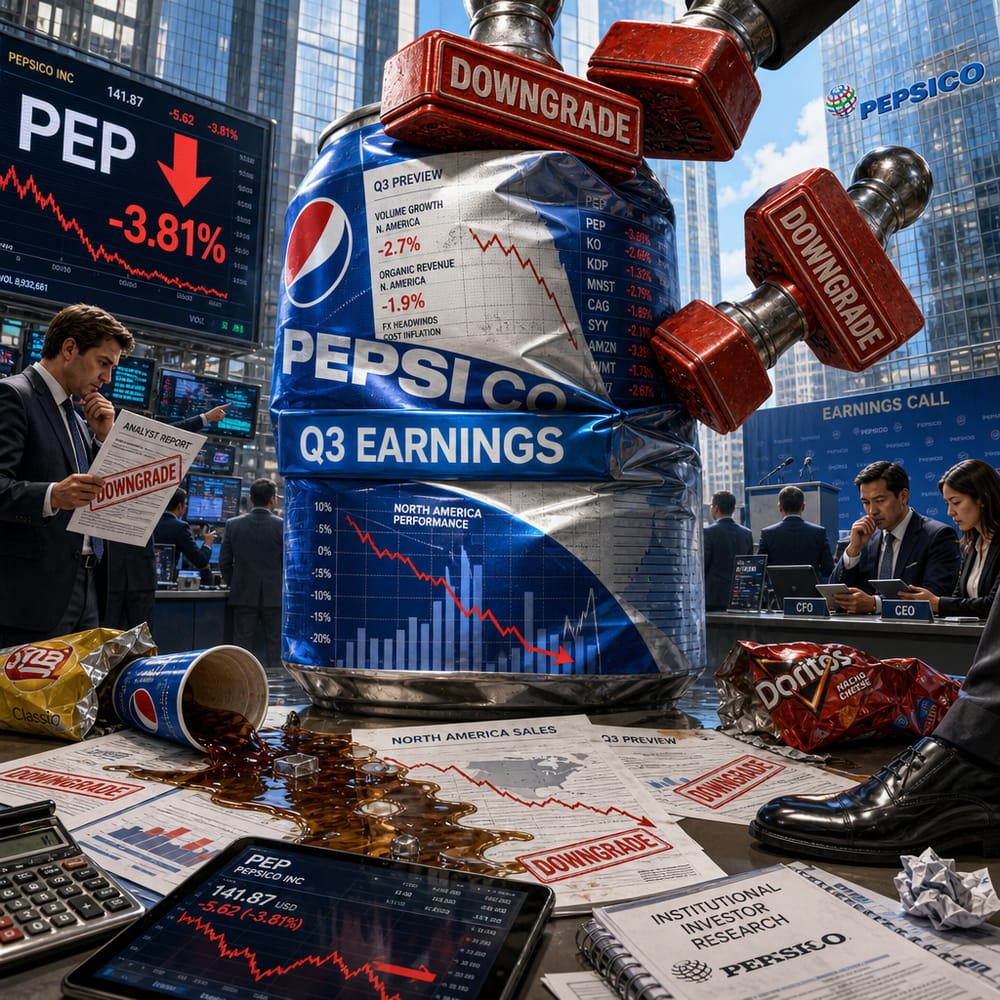
ANALYSTS RAISE EYEBROWS AS PEPSICO FACES DOWNGRADES AHEAD OF EARNINGS
PepsiCo is about to uncork its Q3 earnings, and the fizz might be flatter than a day-old soda. Analysts have been busy taking their red pens to PepsiCo’s report cards, casting doubt on the company’s North American performance. So, why are the finance geeks suddenly losing their taste for Pepsi? Let’s dive in.
First, a bit of context. PepsiCo, that stalwart of snack aisles and soda fridges, has been finding itself stuck in something of a North American rut. While the brand is a hit party guest around the globe, back home, it’s having trouble convincing folks it’s still the life of the fiesta.
WHAT'S THE BUZZ WITH THE STOCK?
When analysts downgrade a stock, it’s a bit like getting a Dear John letter—hard to miss and a signal that maybe it’s time to reevaluate your investment crush. Recently, some analysts have turned a little frosty on PepsiCo, highlighting the company’s sluggish North American mojo as a reason for concern.
Despite a splashy 2% premarket bounce, these downgrades are a classic case of cold feet that could rain on PepsiCo’s parade, especially if the upcoming earnings report doesn't offer some sparkling surprises. Investors might decide to pop open a different brand—or perhaps just stick to water.
So, why the downgrades? The root cause seems to be PepsiCo’s struggle to shake off a North American slowdown. While the company is performing a cha-cha-cha internationally, with upbeat sales in various markets, it’s stuck doing the two-step in its own backyard. And investors are starting to worry if PepsiCo's domestic dance card is empty.
WHAT’S THE CRYSTAL BALL SAYING ABOUT Q3?
As the curtains rise on PepsiCo’s earnings this quarter, expectations are a mixed bag. Analysts are counting calories, carbs, and cash flow, hoping to find some sweet spots in an otherwise caution-laced report. The company has already cut its full-year earnings forecast, a sign that things might stay tough in the North American market for a while. The original projection of core earnings per share growth was between 5% and 7%. Now, it's down to a more modest 2.5% to 3.5%.
While PepsiCo has historically managed to outshine Wall Street expectations, the key question this time is whether the international gains can cover up the North American flubs. A decent performance abroad is a good look on the company, but it's not enough to completely overshadow the challenges on its home turf.
THE RIPPLE EFFECT ON CONSUMER STAPLES
PepsiCo is more than just a single stock; it's a bellwether in the consumer staples sector. When big players like PepsiCo stumble, it can send shockwaves through the entire industry. After all, if a giant like PepsiCo is having trouble popping sales at home, what does that mean for everyone else shelving snacks and sodas?
The consumer staples sector—home to all those products you toss into your cart without a second thought—might find itself in a tricky spot. If PepsiCo’s performance echoes through the sector, investors could start questioning the stability of these stocks. A lackluster report could trigger a more cautious approach from investors who are already skittish with rising Treasury yields and soaring oil prices creating a stormy market environment.
BOTTOM LINE
As we wait for PepsiCo to drop its Q3 earnings, Wall Street is holding its breath, and analysts have their calculators at the ready. If you’re invested in PepsiCo or the consumer staples sector, this might be the perfect time to grab a snack and stay tuned. While PepsiCo’s not sunk yet, it’s going to need more than just bubbly international sales to satisfy the home crowd.
So, whether you're a fan of the brand or just a curious investor, keep your ear to the ground. PepsiCo's fortunes might just signal a broader trend in how the giants of consumer staples are faring in a post-pandemic world, where nothing is quite as it was before. Grab your popcorn; this show could get interesting.
This article is for informational purposes only and is not investment advice. Always do your own research or consult a licensed financial professional before making investment decisions.
© Copyright 2024. All Rights Reserved.
© Copyright 2024. All Rights Reserved.