

PCE Shows Fastest Inflation Rate in 3 Years
Monday, July 27, 2026
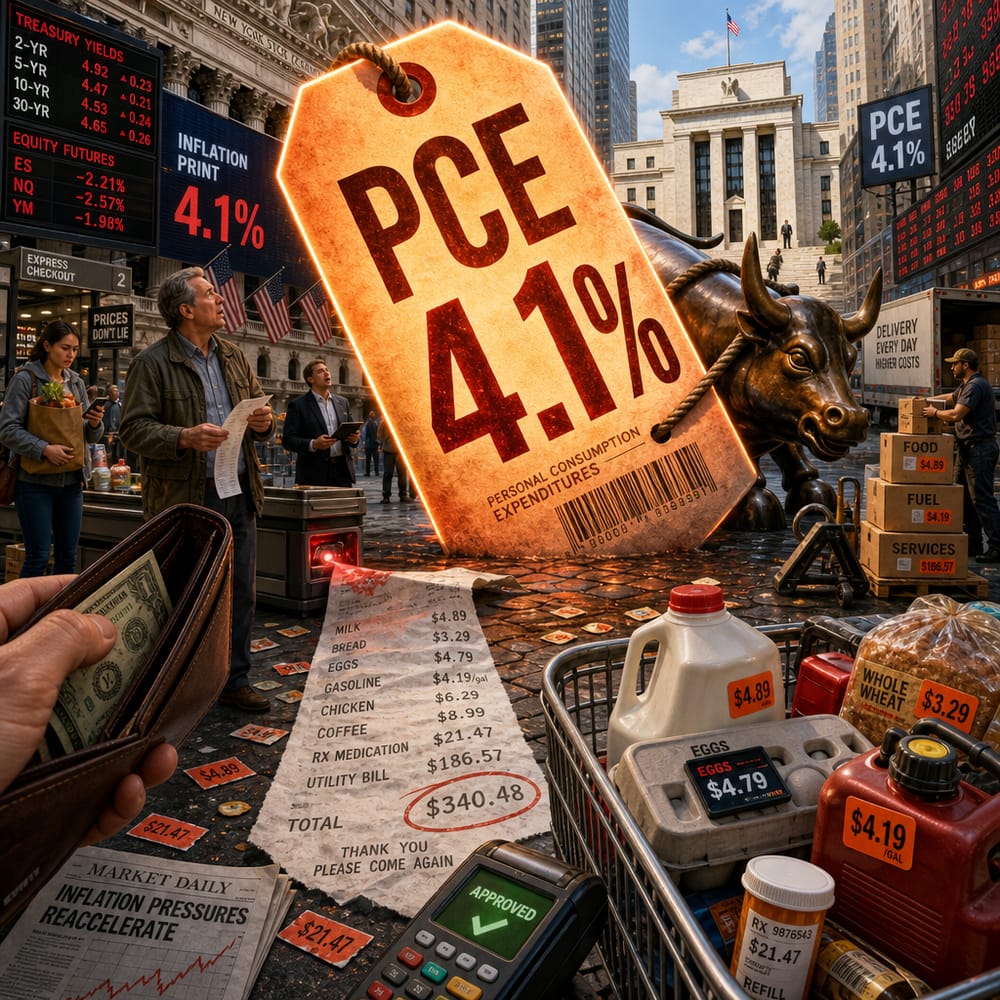
INFLATION IS BACK: WHY YOU SHOULD CARE ABOUT MAY'S PCE SURGE
Did you feel that? It's the financial world taking a collective gulp as May's PCE inflation figures hit the headlines at 4.1%. That's the fastest annual pace since April 2023, and it’s got everyone from Wall Street to Main Street buzzing. But what exactly is driving this inflationary juggernaut, and why should you care? Let's dive into the numbers and decode what this could mean for your wallet and the wider economy.
WHAT ON EARTH IS PCE?
First things first. PCE, or Personal Consumption Expenditures, is a fancy term for the prices of goods and services that you, dear consumer, are shelling out for. Unlike the more famous Consumer Price Index (CPI), PCE covers a broader array of expenditures and is the Federal Reserve's pet metric for inflation. If PCE is rising, it means the cost of living is on the up and the Fed might start getting twitchy about interest rates.
WHAT'S DRIVING THE INFLATION ENGINE?
So why the surge? May's PCE inflation reached a steamy 4.1%, with core PCE — which strips out the notoriously volatile food and energy prices — slightly overshooting expectations. Several culprits are at play here, like an Agatha Christie mystery where everyone’s guilty to some degree.
First, let's talk about the elephant in the room: oil prices. Despite recent wobbles, oil had a strong showing earlier in the year, and this has a knock-on effect on everything from transportation to the price of your avocado toast.
Another player is the robust labor market, which is a double-edged sword. Yes, more people with jobs is great, but it also means higher wages, and employers often pass these costs onto consumers — you guessed it — you and me!
And if that wasn't enough, good old supply chain woes are still lurking in the background like the ghost of Christmas past, keeping prices buoyant even as the world gets back to business as usual.
WILL THE FED PLAY HARD TO GET?
Here’s the million-dollar question: what will the Federal Reserve do about it? The Fed’s main party trick is setting interest rates, and higher inflation often means it’s time to start tightening the policy purse strings. Think of interest rates like the brake pedal on the economy. Press down too hard and you risk throttling growth; tap too lightly and inflation roars ahead.
The current uptick in PCE will undoubtedly weigh on the Fed’s hawkish side. While they’ve been patient so far, the pressure is on. A move to raise rates could be on the horizon, which typically ripples through everything from mortgage rates to your credit card APR.
WHAT DOES THIS MEAN FOR YOU?
Now, you might be thinking, "This sounds like a Fed problem, why should I care?" But when the Fed sneezes, markets catch a cold. A change in the Fed’s stance can lead to a higher cost of borrowing, which might curb spending and investment. For you, it could mean reconsidering that home refinance or that shiny new car you’ve been eyeing.
Stock markets also don’t take kindly to uncertainty. Sectors like tech, which rely heavily on borrowed money, might feel the squeeze more acutely, while assets like bonds might start looking more attractive as yields rise with interest rates.
THE BOTTOM LINE
So there you have it. May's PCE surge is like a shot of espresso for the economy — jolting and a little unsettling. As inflation accelerates, the Fed is likely to weigh in with policy adjustments, and that could mean changes for your investments, your loans, and even your savings.
Keep an eye on the Fed's next move because it could be the key to navigating the economic terrain in the coming months. In the meantime, maybe skip that extra shot of espresso — prices might just be ticking upwards!
This article is for informational purposes only and is not investment advice. Always do your own research or consult a licensed financial professional before making investment decisions.
© Copyright 2024. All Rights Reserved.
© Copyright 2024. All Rights Reserved.