

PCE Inflation Report Due Aug 26 Could Be Market-Moving
Saturday, August 22, 2026
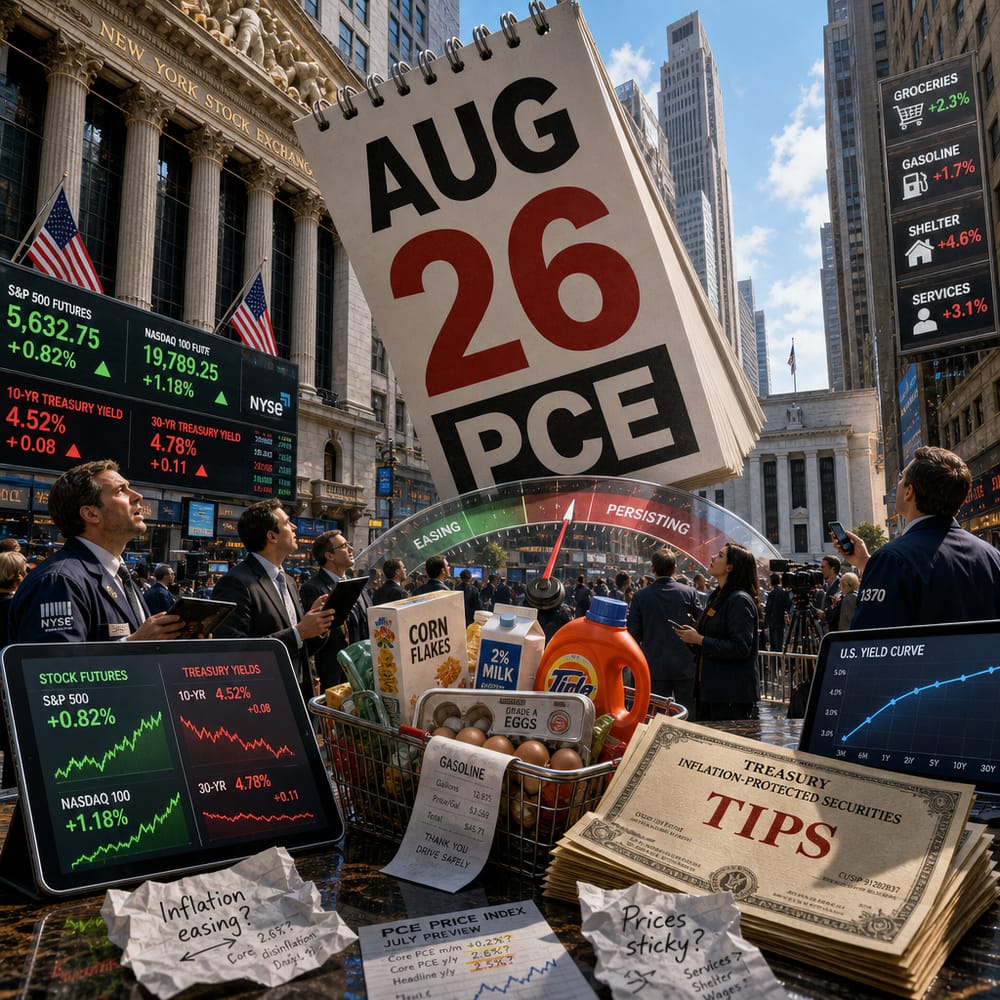
THE COOL KIDS ARE WATCHING PCE INFLATION: SHOULD YOU JOIN THEM?
Hold on to your wallets, folks, because the financial world is bracing itself for one spicy PCE inflation report. You might be asking, "PCE what now?" That's the Personal Consumption Expenditures price index, the Federal Reserve's favorite inflation measure. It's the economic equivalent of the cool kids' table — crucial, influential, and a bit intimidating.
But why should you, the savvy retail investor scrolling through this on your phone, care about a bunch of economists hyperventilating over some numbers? Because, my friend, those numbers could make waves big enough to splash right into your investment portfolio.
LET'S TALK NUMBERS
So, what's the forecast, you ask? Analysts expect the PCE to show whether inflation is finally cooling or if it’s going to keep burning a hole in our pockets. Expectations are mixed, with some betting on a slight dip and others whispering that inflationary pressures might still be hanging around like that uninvited guest who just won’t leave the party.
If the numbers show inflation is easing, that could be a sign the Federal Reserve might loosen its grip on interest rates. Think of it as the Fed saying, "Chill, we've got this under control." But if the report screams persistent inflation, brace yourself for the Fed to turn into a strict schoolteacher, possibly hiking those rates to tame the price beast.
FEDERAL RESERVE: THE PARTY PLANNER
Now, why all this fuss about the Fed? Because their decisions can make or break market trends. The Fed’s job is essentially the economic equivalent of planning a party: get the mood – or in this case, the economy – just right. If inflation is too high, they play the bad cop by raising interest rates, making borrowing more expensive and cooling off spending. Too low, and they might cut rates, encouraging a spending spree.
The upcoming PCE report is their go-to playlist for this economic dance party. If inflation seems well-behaved, we might see the Fed ease on rate hikes, a move likely to jazz up markets. But if inflation’s still a rebel without a cause, get ready for the Fed to walk in with its stern face and potentially hike rates again.
MARKET IMPLICATIONS: STOCKS, BONDS, AND BEYOND
So, what does this mean for your portfolio? Well, consumer goods stocks could feel the heat or the cool depending on the report. High inflation typically makes consumer goods pricier, squeezing consumer wallets and potentially lowering demand. But if inflation relaxes, it could lead to a consumer spending rebound, giving stocks in this sector a reason to smile.
Then there are inflation-linked bonds, those nifty financial tools that adjust their payouts based on inflation. They're like economic chameleons, adapting to the inflation landscape. Persistent inflation could make these bonds more attractive, as they’d offer higher payouts. But if inflation cools, their appeal might take a hit.
WHAT TO WATCH FOR
In this economic thriller, keep an eye on those expected figures. If inflation shows signs of easing, watch for a market rally as investors breathe a collective sigh of relief. Sectors like tech and consumer goods could see renewed interest, with investors looking for growth opportunities.
But if the report indicates stubborn inflation, brace yourself for potential market turbulence. Higher interest rates can make borrowing pricier for companies, possibly slowing down growth and, in turn, impacting stock prices. Investors might seek shelter in stable, income-generating assets like bonds or dividend stocks.
In essence, the PCE report is not just another batch of numbers. It's a potential market mover with the power to sway the Fed's next dance move. So even if economic data isn’t usually your jam, this is one playlist you might want to tune in to. After all, in the ever-evolving market game, it's the informed investor who stays ahead — and maybe, just maybe, gets to sit at the cool kids' table.
This article is for informational purposes only and is not investment advice. Always do your own research or consult a licensed financial professional before making investment decisions.
© Copyright 2024. All Rights Reserved.
© Copyright 2024. All Rights Reserved.