

PCE Inflation Remains Sticky at 3.7% Year-Over-Year
Saturday, August 29, 2026
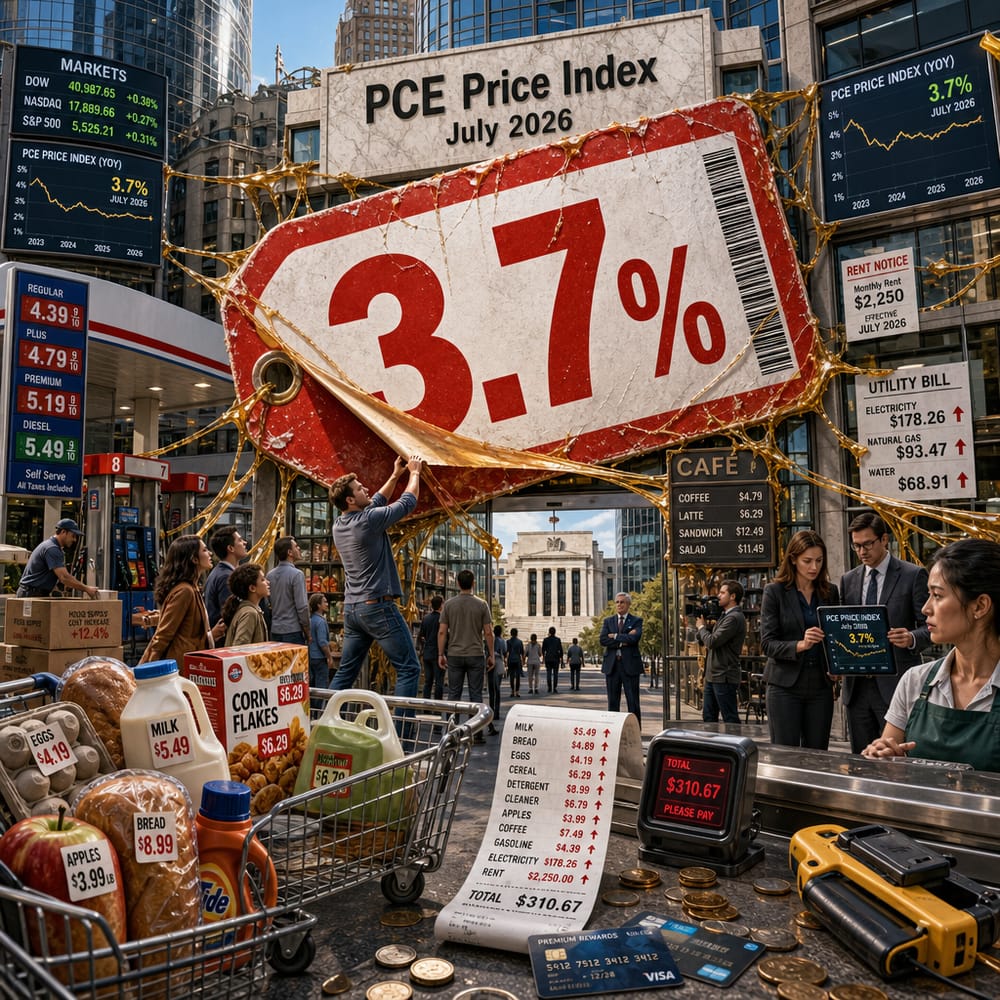
PCE Inflation Remains Sticky at 3.7% Year-Over-Year
Hold on to your wallets, folks. It seems like inflation just won't take a hint and leave the party. The latest report shows that the Personal Consumption Expenditures (PCE) Price Index, which is the Federal Reserve's go-to measure for inflation, remains as sticky as a two-year-old with a lollipop at 3.7% year-over-year for July 2026. And if you're wondering why this matters, well, strap in because this bumpy financial ride is far from over.
STICKY SITUATION: WHAT’S BEHIND PERSISTENT INFLATION?
You might be asking, "What's keeping prices high when I've been desperately waiting for them to calm down?" Well, inflation's stubbornness is the result of a perfect storm of factors. First, let's talk about those lingering supply chain hiccups. Despite improvements, they're like that last Jenga piece refusing to budge, continuing to cause delays and price hikes across industries. The ongoing geopolitical tensions certainly aren’t helping, either, adding another layer of uncertainty to global trade.
And then there’s the labor market. With more people employed and wages ticking upwards, consumers have more cash to splash. This might sound fantastic for your paycheck, but it also keeps the demand for goods and services sizzling hot. Throw in a pinch of rising energy prices—because, of course, we’re all still at the mercy of those volatile oil markets—and you've got a recipe for persistent inflation.
FED'S HAWKISH STANCE: WHAT’S NEXT?
With inflation refusing to play nice, the Fed's patience is wearing thinner than a New York pizza slice. The PCE data is the Fed's Bible when it comes to inflation, and this steady 3.7% rate isn't the divine intervention they were hoping for. The Fed has already made it clear that they're prepared to keep interest rates high to tame these pesky price increases. And just when you thought they might loosen the reins, this PCE reading might have them tightening their grip even further.
Fed Chairman Kevin Warsh recently called inflation "concerning" at a prominent gathering in Jackson Hole, Wyoming. While he played coy, offering no clear direction on interest rates, the underlying message was clear: the Fed is ready to keep playing hardball. Higher interest rates may not be the news you wanted to hear if you're looking to borrow or invest, but for the Fed, it's the necessary bitter pill to curb inflation.
WHAT DOES THIS MEAN FOR YOUR PORTFOLIO?
So, what should everyday investors do as inflation continues to tap dance on our financial nerves? Well, for starters, don’t panic. With the Fed likely to remain hawkish, keeping an eye on how interest rates evolve is crucial. Stocks in sectors that historically perform well during high inflation periods, like consumer staples, utilities, and real estate, might be worth a closer look. These sectors tend to offer stability and sometimes even dividends when the going gets tough.
On the flip side, tech stocks that rely on cheap borrowing might feel the pinch if rates go up further. So, while those Nvidia and SpaceX stocks are hot topics, remember that high valuations and future rate hikes could add some rain to those parade plans.
Investors might also want to consider inflation-protected securities or Treasury Inflation-Protected Securities (TIPS). These government bonds are indexed to inflation, offering a potential hedge as prices continue to rise.
With inflation still refusing to back down, the Fed's decisions in the coming months will be under the microscope. Whether you're a seasoned investor or just someone trying to keep the grocery bill in check, understanding these dynamics will be key to navigating this economic rollercoaster.
So, keep your eyes peeled and your investment strategies flexible. In the meantime, let's just hope that PCE inflation decides to take its sticky self elsewhere sooner rather than later. After all, who doesn’t love a good financial twist and turn every now and then?
This article is for informational purposes only and is not investment advice. Always do your own research or consult a licensed financial professional before making investment decisions.
© Copyright 2024. All Rights Reserved.
© Copyright 2024. All Rights Reserved.