

PCE Inflation Remains Elevated As Key Gauge, Despite CPI Easing
Saturday, August 29, 2026
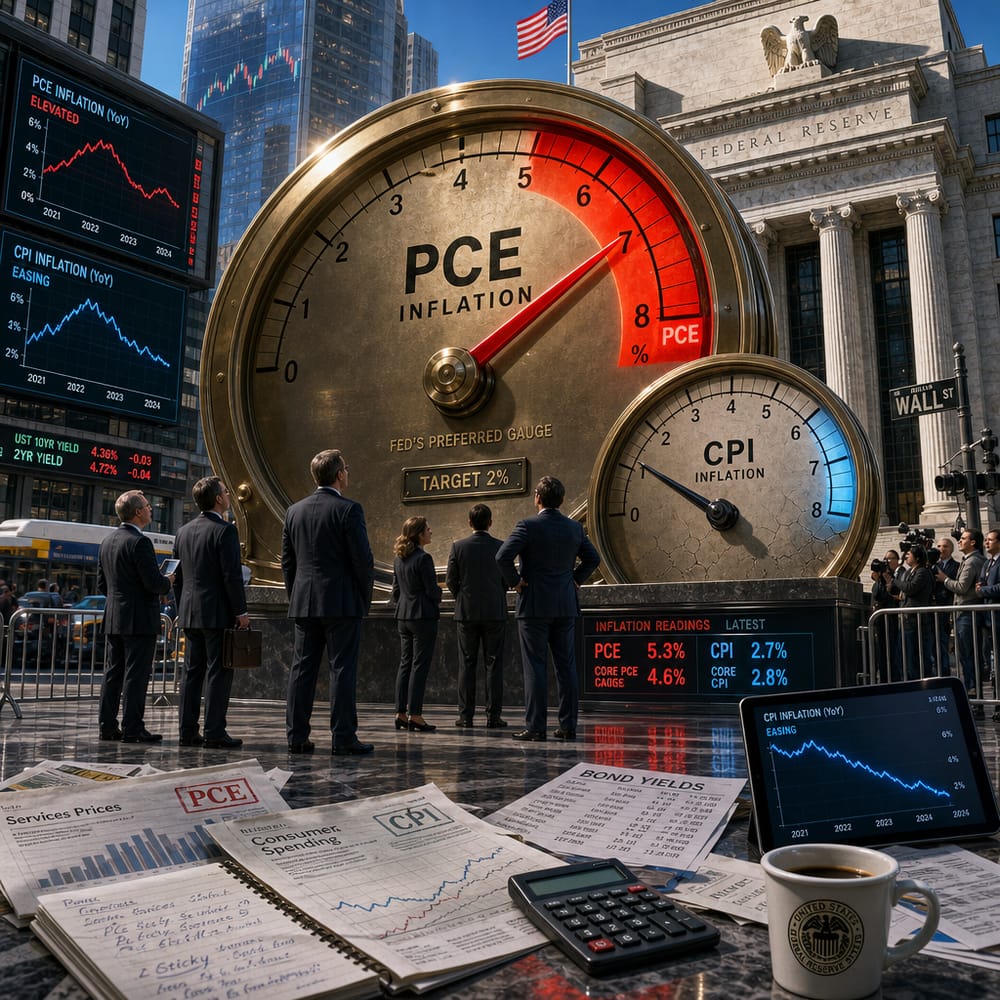
WHEN PCE AND CPI DON’T SEE EYE TO EYE: WHY INFLATION'S MIXED SIGNALS MATTER
If you’ve tuned out the inflation buzz in favor of binge-watching your favorite series, it's time for a quick financial reality check—because inflation isn't done making headlines. You see, the two reports that typically have the Fed glued to their screens, the Consumer Price Index (CPI) and the Personal Consumption Expenditures (PCE) price index, are sending mixed signals. And in a world where inflation is everyone's business, this divergence is more than just a blip on the radar.
With CPI cooling, you might think inflation is chilling out. But hold up—PCE isn't quite ready to play along. Think of CPI as that friend who gets excited over a sale, while PCE is the skeptical one who checks the fine print. While the CPI dipped to a more relaxed pace, the PCE—the Fed’s inflation yardstick of choice—remains stubbornly elevated. And when it comes to the Federal Reserve, it's what they prefer to measure that really counts.
WHY PCE REFUSES TO COOL OFF
First, let's decode the numbers. CPI took a step back, showing inflation at a seemingly calmer rate. It tracks prices consumers pay for goods and services, from the grocery store to the gas pump. But enter the PCE, which gives a broader picture by including goods and services tucked away within government and employer spending. It’s also a little more nimble, adjusting for shifts in consumer behavior—say when you swap out filet mignon for budget-friendly chicken.
So why is PCE still elevated while CPI is kicking back? It’s like comparing apples to a fruit salad. PCE captures more of those trickle-down costs that CPI overlooks. With services costs, like healthcare, still steaming on high, PCE isn't backing down just because gas prices decided to take a breather.
THE FED'S POLICY PANIC BUTTON
So why does this price index showdown matter? Because the Fed’s got its finger hovering over the interest rate button, and the PCE is their guide. While Wall Street loves to gossip about the Fed’s next move, these mixed inflation messages have everyone unsure. Sure, Chairman Kevin Warsh might have kept mum on interest rates at his last speech in Jackson Hole, but with inflation figures staying “concerning,” it’s clear the Fed isn't ready to break up with its rate-hiking strategy just yet.
Analysts are playing the guessing game too. Despite CPI's softer numbers, many expect the Fed to stay in hawk mode—a fancy way of saying they’ll keep rates high to tame inflation. It’s a bit like disciplining a rebellious teenager; the Fed wants to ensure inflation knows who's boss before cutting it any slack.
WHAT THIS MEANS FOR YOUR WALLET AND BEYOND
For retail investors like you, this CPI-PCE tango isn't just a financial curiosity—it impacts everything from mortgage rates to the price tag on your next car. If the Fed sticks to its guns with high rates, borrowing costs stay elevated. So, whether you’re eyeing a home purchase or contemplating a credit-fueled shopping spree, those interest rates might have you thinking twice.
But it also means keeping an eye on sectors that thrive in high-rate environments. Financials, commodities, and defense stocks can often prove resilient when rates don't budge. Meanwhile, those sectors sensitive to borrowing costs, like tech and consumer discretionary, might face a tougher road ahead.
THE BIGGER PICTURE
So what’s next in this inflation saga? Well, if PCE continues to be the fly in the inflation ointment, expect the Fed to keep its hawkish stance longer than you might like. Meanwhile, investors and economists will keep juggling these mixed messages, hoping for a clearer signal in the months to come.
In the meantime, stay sharp and informed. Whether you’re navigating your 401(k) or simply budgeting for groceries, the CPI-PCE dance is a reminder that inflation isn’t just a number—it’s a driving force behind the financial headlines we can’t afford to ignore.
So, next time someone tosses around CPI or PCE like they’re just alphabet soup, you’ll know that these acronyms aren’t just numbers—they’re the financial GPS guiding the Fed’s next move. And in a world where every cent counts, that’s news worth tuning into.
This article is for informational purposes only and is not investment advice. Always do your own research or consult a licensed financial professional before making investment decisions.
© Copyright 2024. All Rights Reserved.
© Copyright 2024. All Rights Reserved.