

PCE Inflation Remains Elevated
Tuesday, August 04, 2026
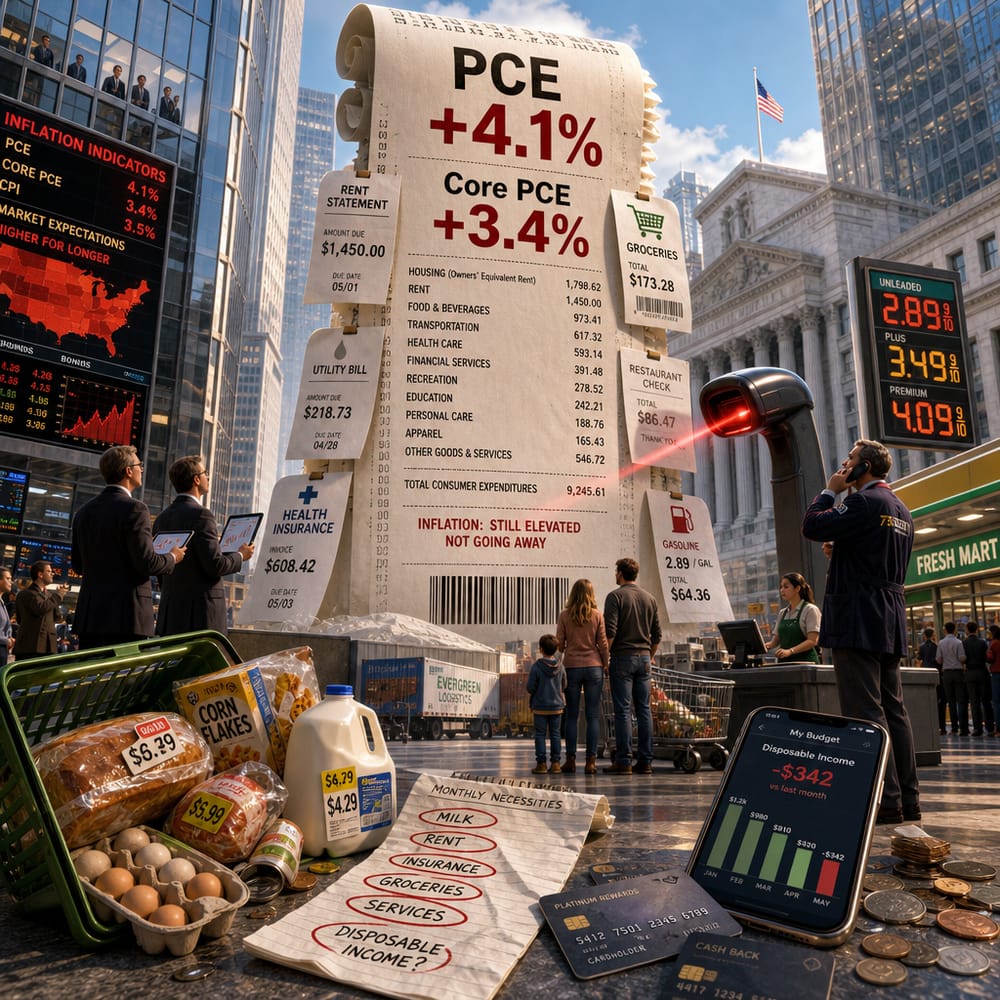
INFLATION: IT’S NOT GOING ANYWHERE, FOLKS
If you’ve ever gone grocery shopping and felt like you were buying gold instead of groceries, you’re not alone. Inflation feels like that one guest at the party who just won’t leave. And May’s Personal Consumption Expenditures (PCE) index numbers are here to remind us that inflation's still got a stronghold on the economy. The PCE index rose 4.1% year-over-year, and if you strip out food and energy—which are about as predictable as a cat’s mood swings—the core PCE was up 3.4%.
WHY YOU SHOULD CARE
The PCE index isn't just another set of numbers to glance over with your morning coffee. It's the Federal Reserve's favorite measure of inflation, the thermometer they use to check the economy's fever. Imagine being a teacher in a classroom overrun with energetic five-year-olds—if you can get one kid to calm down, the rest might follow. The same holds for the Fed and inflation: if they can get this measure in check, maybe the rest of the economy will settle down.
WHAT'S DRIVING PCE INFLATION?
So what's behind this stubborn inflation? It’s a cocktail of issues, really. For starters, the U.S. economy has been on a bit of a spending spree. Consumer demand remains strong, thanks to a resilient labor market and elevated wages. It's like everyone decided they needed a new TV at the same time. And let’s not forget the geopolitical tensions stirring the pot. Turmoil in the Middle East is driving up oil prices, which ripple through to everything from your morning commute to the plastic packaging on your favorite snack.
Persistent supply chain issues have also decided to crash on the inflation couch. Think of it as trying to sip water from a kinked hose—some of it gets through, but not without a lot of sputtering and splashing. These disruptions make it harder for businesses to get products to consumers efficiently, keeping costs high.
FED ON THE HOT SEAT
Now, what’s the Fed to do? They’ve been in this game for a while, trying to slow inflation down without sending the economy into a nosedive. Remember, their chief weapon is the interest rate. When they hike it up, borrowing costs rise, which tends to slow spending and, in theory, inflation. It’s sort of like using a really expensive toll road to deter traffic.
But here's the pickle: with inflation this sticky, the Fed might continue an aggressive stance on rate hikes. This means your credit card debt might feel a bit heavier, and that dream home might stay in the dream phase a little longer. Market watchers are keenly observing Fed chair Jerome Powell like they would the latest season of a gripping crime drama, trying to predict what the next episode—er, meeting—will reveal.
THE MARKET PULSE
Will the Fed’s maneuvers be enough to cool down inflation? That’s the trillion-dollar question. Some investors expect more rate hikes, while others foresee a pause if inflation indicators like the PCE start to improve. The market’s got mood swings of its own—it’s been rallying despite these inflation risks, driven by strong corporate earnings reports in sectors like tech and energy. Palantir and Saudi Aramco have shown us what a bit of market optimism can look like, with revenues and profits outpacing expectations.
But if inflation keeps creeping higher, stocks might face some choppy waters ahead. The Fed’s response will undoubtedly ripple through every sector, from your local coffee shop to the giants on Wall Street.
WHAT SHOULD INVESTORS DO?
For retail investors, this is no time to sleep on the market. Keep an eye on the Fed’s decisions and be ready to pivot as interest rate changes can shake up the economy. Diversification remains key—spread your bets across sectors and keep some dough aside for rainy days or unexpected opportunities.
And hey, don’t forget to breathe. Just like every other challenge the market has thrown, this too shall pass. Inflation might be the uninvited guest, but with the right strategies, investors can still make it through the party in one piece.
This article is for informational purposes only and is not investment advice. Always do your own research or consult a licensed financial professional before making investment decisions.
© Copyright 2024. All Rights Reserved.
© Copyright 2024. All Rights Reserved.