

PCE Inflation Holds Steady—Pressure Persists
Thursday, August 27, 2026
PCE INFLATION HOLDS STEADY—PRESSURE PERSISTS
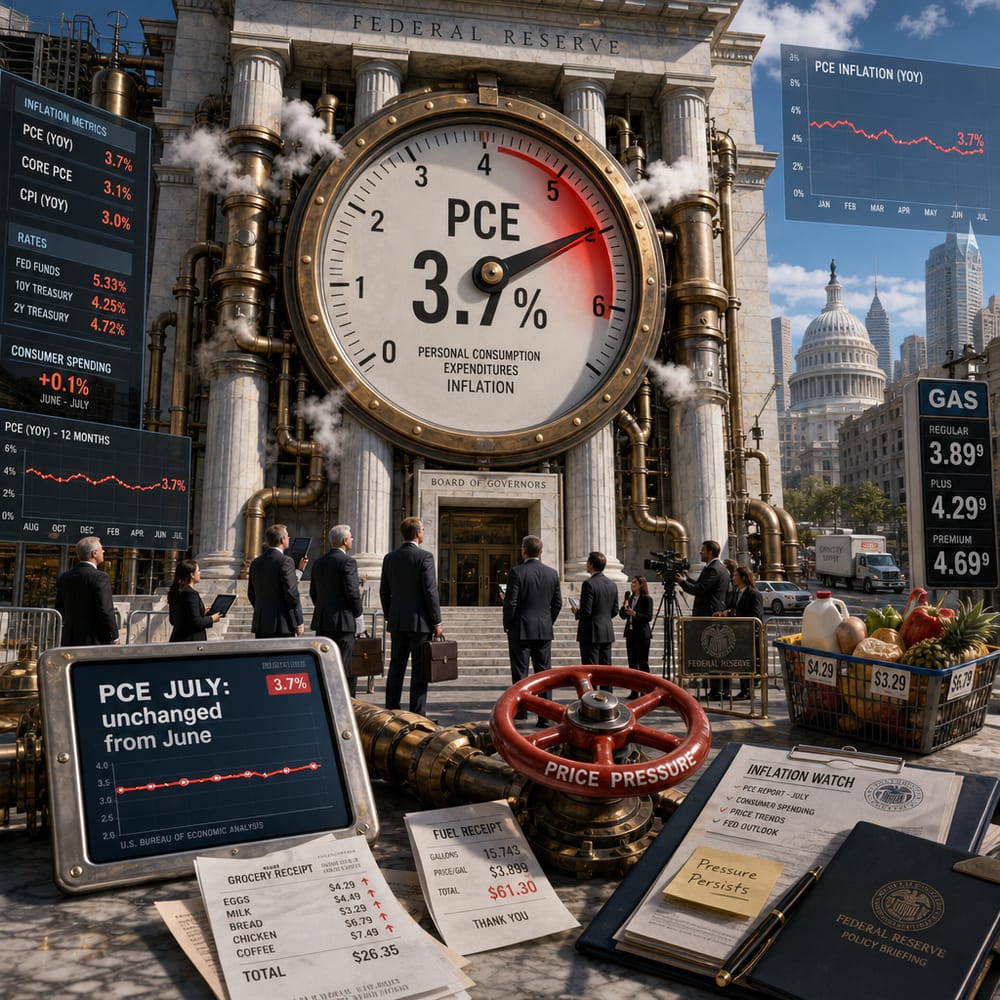
Inflation, the financial bogeyman that just won't quit, decided to stick around for a while longer, based on July's PCE (Personal Consumption Expenditures) numbers. The PCE price index, the Federal Reserve's inflation yardstick of choice, held steady compared to June, with annual inflation sitting uncomfortably at 3.7%. If you're a fan of rollercoasters, this isn't particularly thrilling news. But if you're a fan of economic stability, well, this steady figure is a bit of a chili pepper in your morning coffee.
Beneath this rather lukewarm headline number, the economy is bubbling like a pot of oatmeal left on the stove. Persistent inflation above the Fed’s coveted 2% target is like a fly buzzing around Chair Jerome Powell's office—irritating and impossible to ignore. So what's fueling this persistent inflationary heat, and how might Uncle Sam's central bank respond?
WHAT’S IN THE INFLATION SOUP?
The ingredients in the inflation mix are pretty straightforward. First, there's sticky core inflation. Unlike the family member who refuses to leave after Thanksgiving dinner, core inflation strips out volatile food and energy prices and is stubbornly hovering above target. The little devils of housing and services costs are making sure it stays that way.
Next, there's the "strong" labor market, where wage hikes continue to simmer. While good for the worker, these increases can lead to costs bubbling over into inflation as businesses pass on expenses to consumers. If you’ve been bargain hunting in the electronics aisle recently, you know that those price tags aren't getting any friendlier.
And let's not forget energy prices, which have started conspiring with oil prices to ensure your car’s tank and your wallet feel the pinch. Rising oil prices bump up transportation and production costs, which then sprinkle inflationary pressure throughout the economy like confetti at a surprise party you didn't ask for.
FED'S NEXT MOVE: THE ECONOMIC TAP DANCE
With inflation refusing to back down, what trick does the Fed have up its sleeve next? Enter the much-debated interest rate hike. Raising interest rates is like telling your economy to take a deep breath and chill out. Higher rates increase borrowing costs, which makes spending less attractive and, ideally, reins in inflation.
But it’s a high-wire act. Push rates too high, and you risk nudging the economy toward a recession. Keep them too low, and inflation keeps doing its Hulk routine—getting bigger and more uncontrollable. The Fed’s challenge is to find that Goldilocks rate—just right, without breaking anything.
IMPLICATIONS FOR CONSUMER SPENDING
Persistent inflation isn’t just an abstract concept floating around the Fed's boardroom. It’s an uninvited guest that crashes right into your monthly budget. When inflation is high, and wages aren’t keeping pace, consumers find their purchasing power shrinking like a sweater in a hot wash.
People might then start cutting back on non-essentials, which spells bad news for retailers banking on a big splash during back-to-school seasons or holiday shopping frenzies. The likes of Best Buy, which recently celebrated strong quarterly performance, could find the going tougher if consumer belts tighten.
But inflation also has a way of pushing consumers into buying now rather than later to avoid higher future prices, creating bursts of spending that can temporarily boost retail figures. The question is, can such bursts sustain broader economic growth, or are they just sugar highs in an economy that needs a balanced diet?
THE WIDER MARKET IMPACT
Persistent inflation also has ripple effects across sectors. Tech stocks, like those of Nvidia, might feel the burn if higher interest rates dampen tech investment enthusiasm. Meanwhile, energy stocks could benefit in the short term as oil prices play their inflationary card.
The market landscape is a patchwork quilt of responses—from cautious optimism in tech to bullishness in energy. But the overarching theme is uncertainty. And if there's one thing markets dislike more than bad news, it's uncertain news.
WHAT DOES IT ALL MEAN FOR YOU?
For retail investors, navigating this inflationary landscape is like walking a tightrope without a safety net. Diversification becomes the name of the game. Keeping an eye on sectors like energy and utilities might offer a hedge against rising prices. Gold is another traditional safe haven, especially when inflation is as pesky as a summer mosquito.
As the Fed grapples with its next move, and as inflation continues its unwelcome residence, understanding these dynamics becomes crucial. Whether you're an investor or just someone trying to make sense of what this means for your grocery bill, staying informed is your best defense.
Stay sharp, stay witty, and keep your financial wits about you. The inflation ride isn't over yet, and as they say in the world of finance, "Keep calm and carry on investing."
This article is for informational purposes only and is not investment advice. Always do your own research or consult a licensed financial professional before making investment decisions.
© Copyright 2024. All Rights Reserved.
© Copyright 2024. All Rights Reserved.